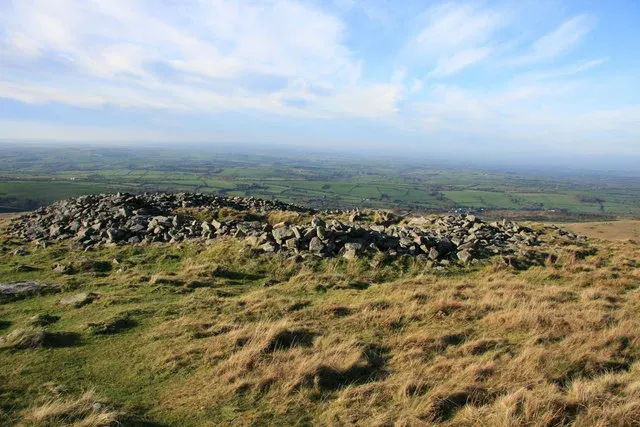
Large round cairn below Yes Tor summit
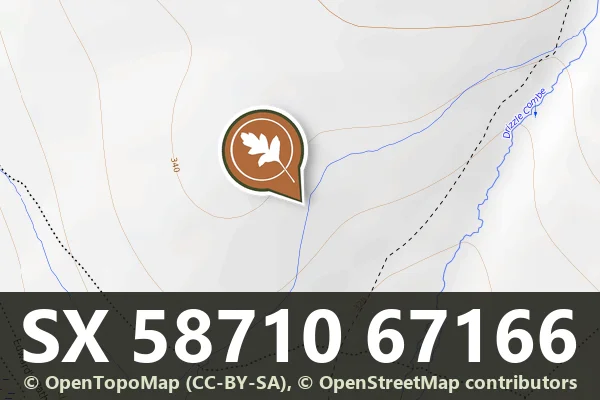
A big round cairn 29 m across and 2 m high just below the summit of Yes Tor, opened by an undocumented dig that left a hollow 7 m by 6 m and a trench 14 m long, with a small shelter 4 m to its south.
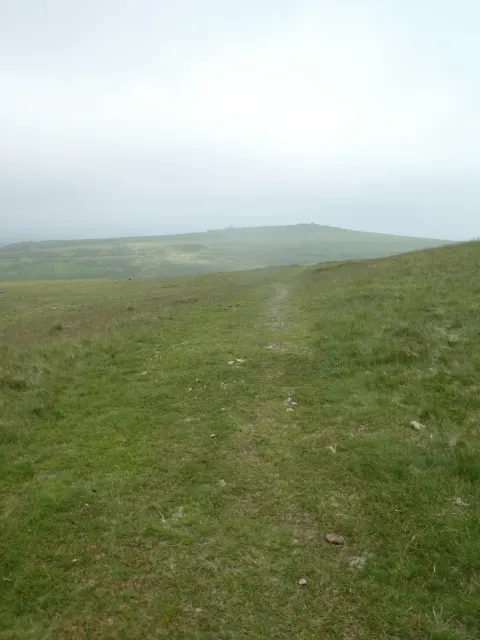
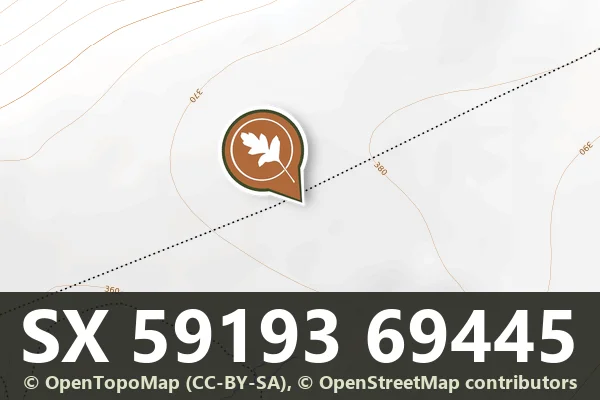
A round cairn 16 m across and 0.8 m high and a small hut circle 7.5 m to its east-north-east, on a narrow natural terrace on a steep slope.
A round cairn 17 m across and 1.5 m high with a kerb and a robbing pit, on Hingston Hill, in direct line with the two end stones of a stone row to its south-west.
A small round cairn 4 m across and 0.6 m high on a south slope above the Plym, with stones that may be a buried kerb, east of Whittenknowles Rocks.
A round cairn 8 m across and 0.8 m high on a narrow shelf of a steep east slope of Black Down above the Moor Brook, with an early hollow and a military trench beside it.
A round cairn 7.3 m across and 0.8 m high on a north-west slope of Cosdon Hill, with edge-set stones that suggest a buried kerb and a hollow on the north side.
A flat-topped round cairn 17 m across and 1.6 m high on the summit of Hangingstone Hill, with an army observation post beside it.
Bronze Age round cairn on the ridge north east of Teignhead Farm, a burial monument from the upland prehistoric landscape.
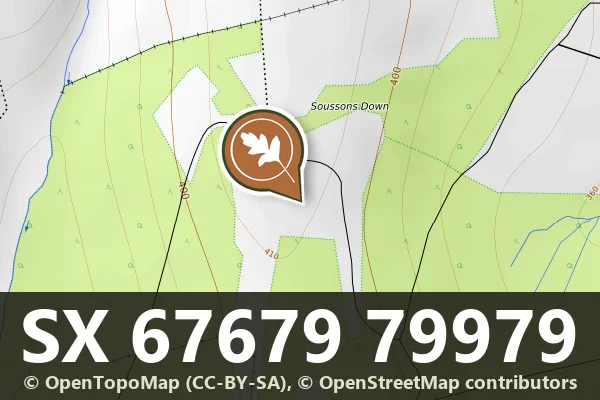
A round cairn 9.7 m across and 0.6 m high on the ridge of Soussons Down, with a pit from an unsuccessful partial dig by the Dartmoor Exploration Committee about 1897.
Plate from Dartmoor Illustrated, page 214, 1900“In Peter Tavy, too, may be seen " the spinners and knitters in the sun ; " and the very old and the very young are often seen together side by side ; and girls with their pitchers filling them with water from the little channels and rivulets that abound throughout the village. These present ...”
Also on Our DartmoorBidlake Mill and leat — A Grade II listed watermill on the River Lew, first mentioned in 1268, rebuilt in 1565 and mostly 17th century, with an overshot wheel that still drives a circular saw.