Round cairn on Standon Hill
A stony round cairn 22 m across and up to 1.8 m high built against a tor near the summit of Standon Hill, with drystone revetments on its north and south edges.
A flat-topped oval cairn 5.5 m by 5 m between the Thirlstone and Watern Tor, with a large granite slab on its north-east edge.
A round cairn 12 m across and 0.6 m high on the summit of Great Gnats' Head, with a kerb of edge-set stones in places and a modern stone pile on top.
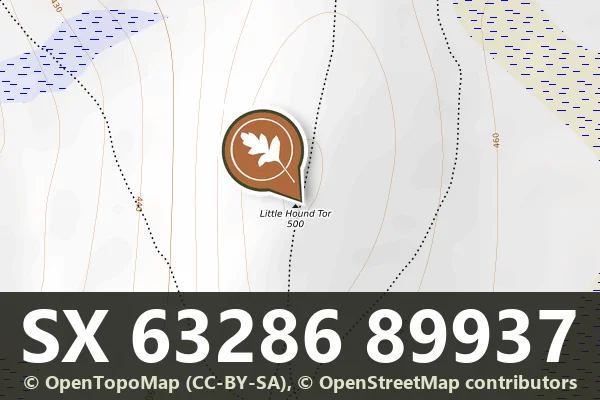
A round cairn on the summit of Little Hound Tor, 10 m across and 0.9 m high, cut by a trench and carrying a modern pile of stones 2 m across.
A prehistoric pound on a west-facing slope of Ingra Tor, 58 m by 54 m inside, with a stone hut circle in the middle.
Prehistoric settlement remains on the high moor southeast of Two Bridges, marked by scattered stone structures and earthworks.
Bronze Age settlement remains west of Holwell Tor, among Dartmoor's extensive prehistoric archaeology.
Prehistoric settlement traces on Smallacombe Rocks, a scheduled monument on the high moor.
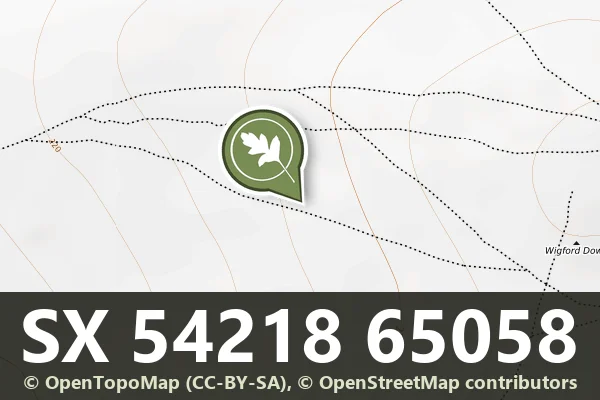
A settlement in the middle of Wigford Down: two hut circles joined by a double-walled droveway, and a medieval longhouse with a stone cut JTCP.
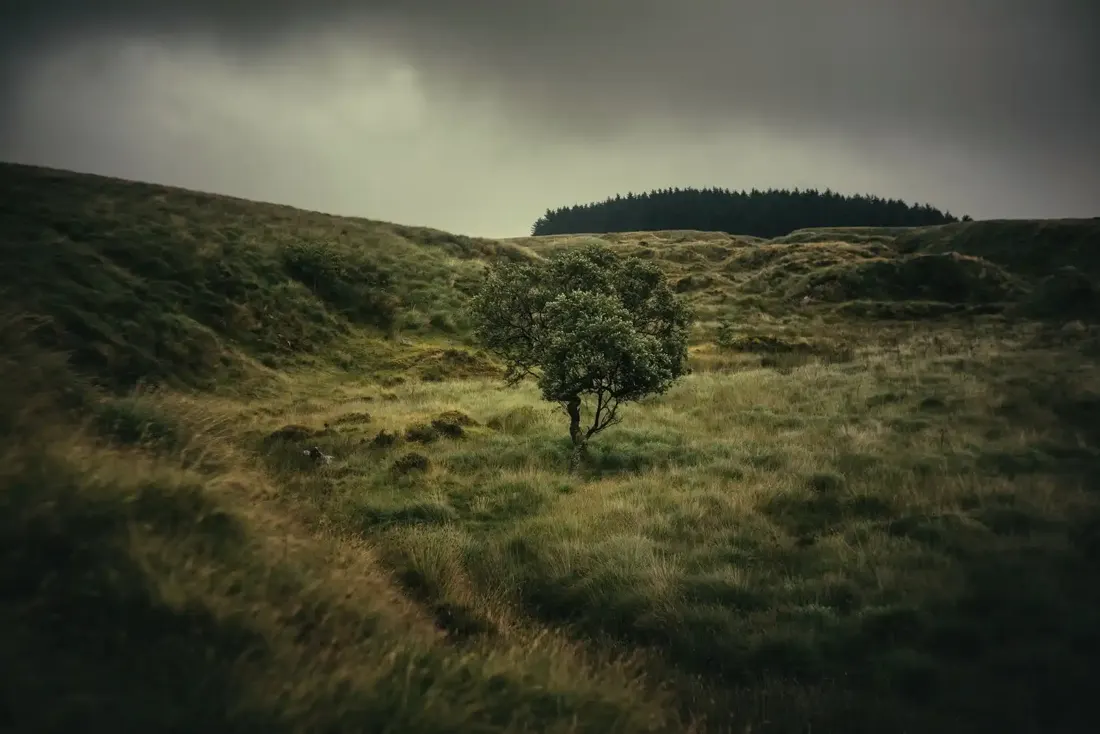
Devils elbow. Photograph by Glavind Strachan Photography“He told me incredible tales of the large, glaring-eyed monsters that had stared at him as he lay in the bog.”
Also on Our DartmoorTravels in Georgian Devon — Four-volume edition (1997-2000) of the Rev John Swete's illustrated journals of 1789-1800, edited by Todd Gray and Margery Rowe. Borrow or buy only.