Brent Moor House
South Brent
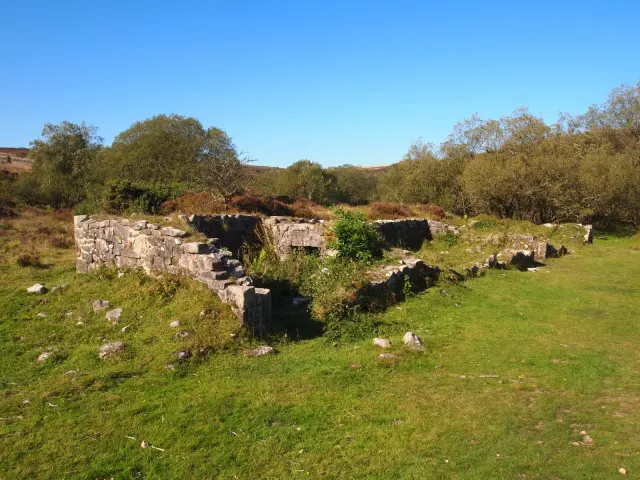
The site of a demolished Victorian mansion beside the River Avon, once a 17th-century farmstead, a hunt master's lodge and a youth hostel; blown up in 1968.
Showing listings tagged “Ruins” Show all listings
South Brent
The site of a demolished Victorian mansion beside the River Avon, once a 17th-century farmstead, a hunt master's lodge and a youth hostel; blown up in 1968.
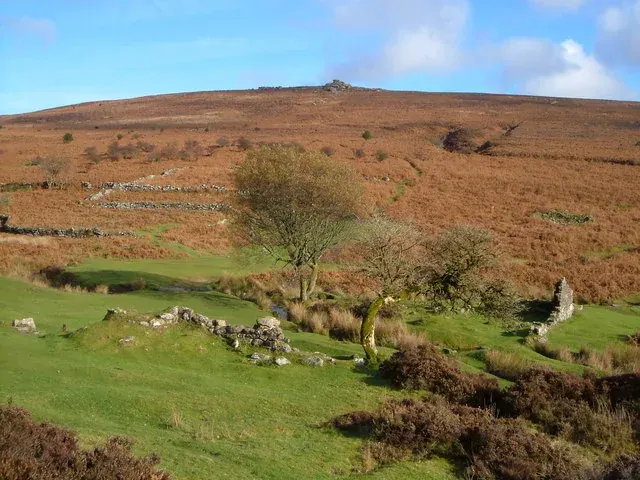
Mary Tavy
Dartmoor's most important copper mine, worked from 1700 to 1925, later the main source of arsenic; its calciners and flues survive beside Cholwell Brook.
Postbridge
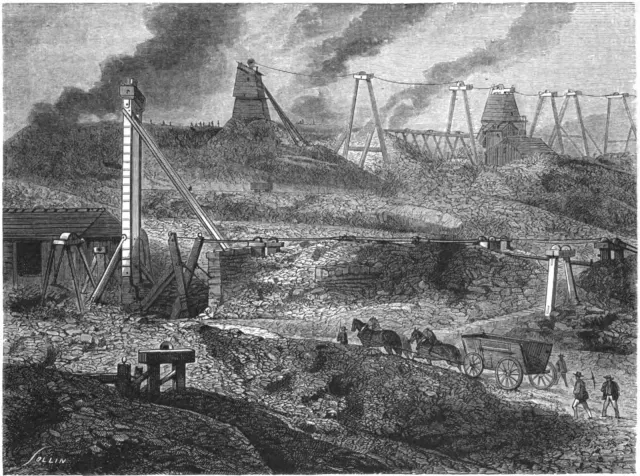
Dartmoor's biggest tin mining complex: two mines either side of the Redwater valley, worked together from 1845 until 1882 and again to 1913.
“...it's now rare to hear the Dartmoor dialect, songs, and stories being told in homes and pubs in the hamlets and villages.”
Who wrote this?
Lustleigh
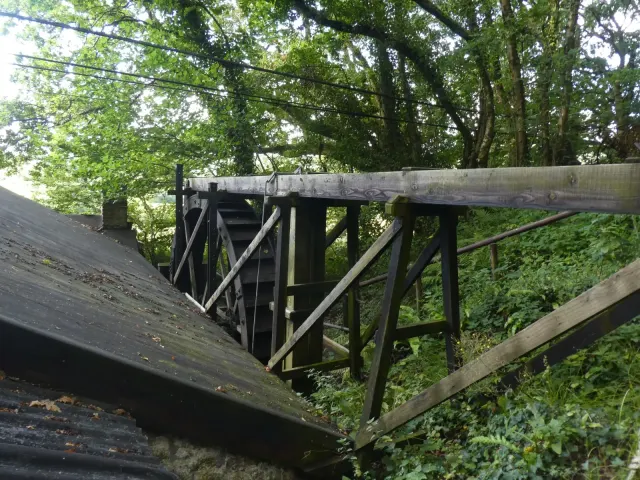
A restored micaceous haematite mine beside the Bovey Tracey to Moretonhampstead road, with working waterwheels and machinery kept by volunteers.
Postbridge
The last tin mine worked on Dartmoor, beside the Redwater Brook; the waste heaps were still being worked until it closed on 12 November 1930.
Gidleigh
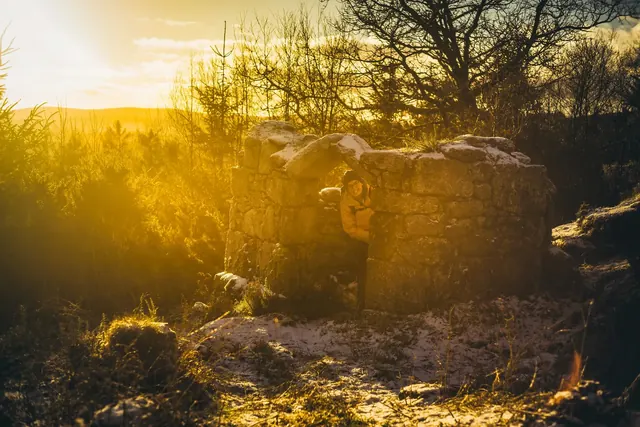
The roofless octagonal tower that remains of a house built on Gidleigh Tor in 1848 for Thomas Levett Princep, who died before he could live in it.
Lydford, Okehampton
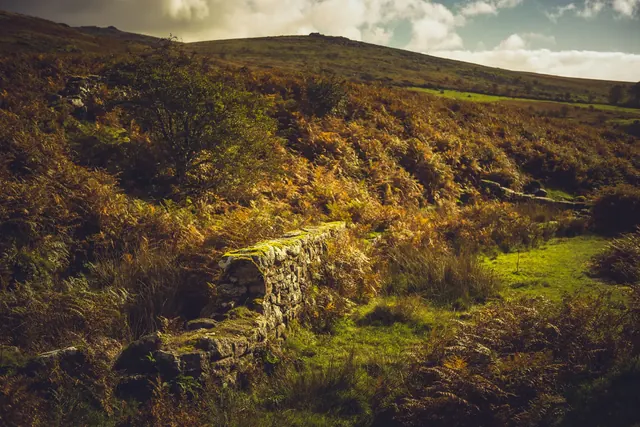
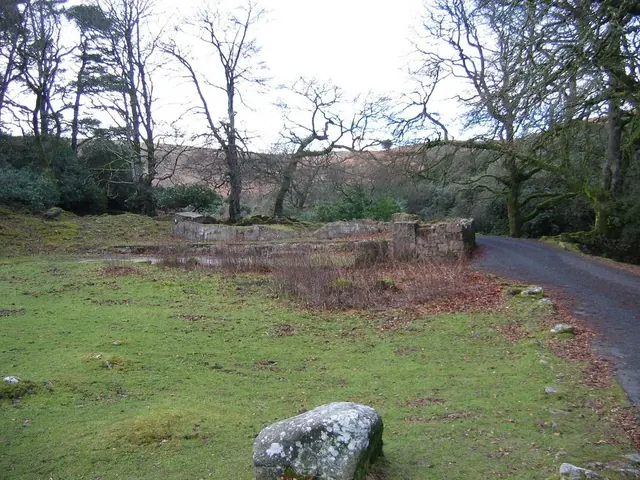
A ruined drystone enclosure on the east bank of the River Lyd, opposite Black Rock below Brat Tor, marked on the 1900s Ordnance Survey map but not on the 1880s one. Its purpose is not recorded and we have found no written description.
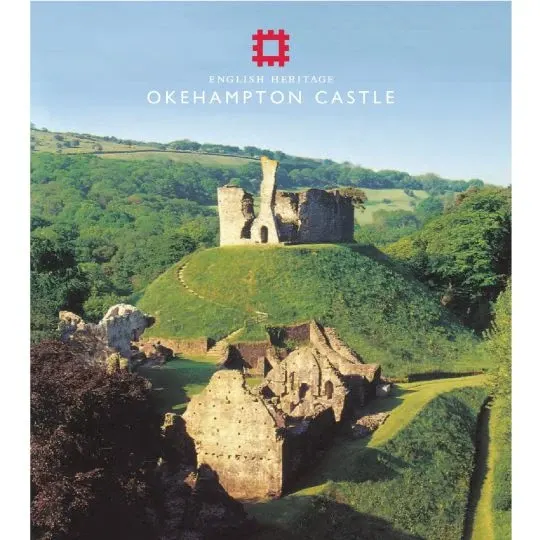
Alan Endacott's English Heritage guidebook to Okehampton Castle, telling the story of its 500 years as a Courtenay family stronghold on the edge of Dartmoor.
Meavy
A brook flowing off the flanks of Sheeps Tor through the Burrator woods, past the ruins of Narrator farm, to feed Burrator Reservoir and the River Meavy.
Plate from A Hundred Years on Dartmoor, page 105, 1901“'Tis my legs. They bain't contented, like. 'Tis no odds where I put 'em, they wun't bide contented, no place.”
Also on Our DartmoorBearacleave North Tor — Bearacleave North Tor, known locally as the Walrus, is a prominent granite formation deep within Bearacleave Wood, just north of Bovey Tracey.