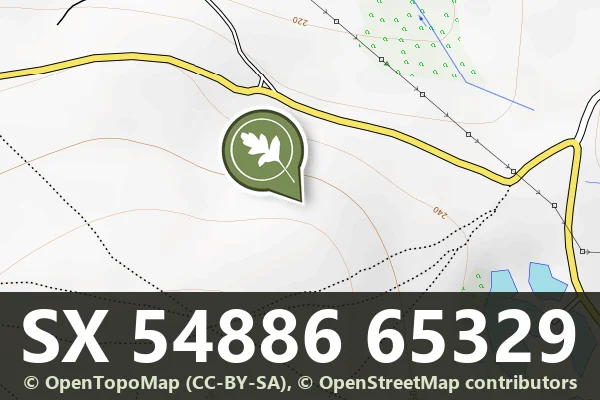
Hut circle settlement south of Durance, Wigford Down
A partly enclosed settlement of five standing hut circles, with at least two more known from cropmarks, inside the Wigford Down coaxial field system.
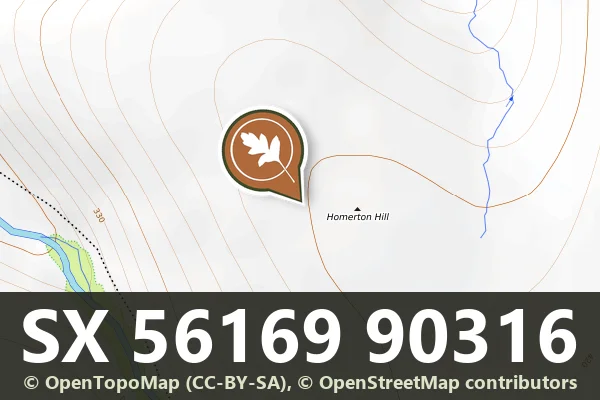
Seven cairns, 3 to 5.7 m across and 0.8 to 1.1 m high, part of a cairnfield on the west slope of Homerton Hill above the West Okement.
“It is only when the thick white fog comes down upon the moor that these poor creatures ever dream of freedom.”
Who wrote this?
Six pillow mounds in Crockern Newtake, two end to end 31.5 m and 55.5 m long, with edges of drystone walling and edge-set stones, an outlying part of the Longaford warren.
Sixty hut circles, three cooking hearths and a stone-roofed cache at Watern Oke, one of the largest unenclosed settlements on Dartmoor, dug in 1905.
A cairnfield of ten mounds, 3.5 to 7.5 m across, scattered round the edge of a field on a south-facing slope above the Willsworthy Brook.
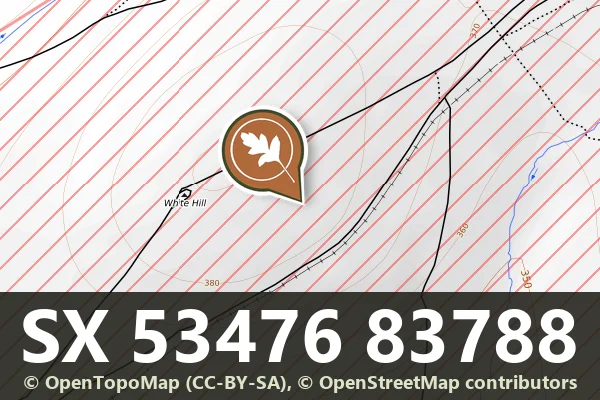
A small oval cairn, 4 m by 3 m and 0.8 m high, at the south end of five cairns on the north-east slope of White Hill.
Remains of a medieval or post-medieval farmstead in the moorland landscape south west of Black Tor.
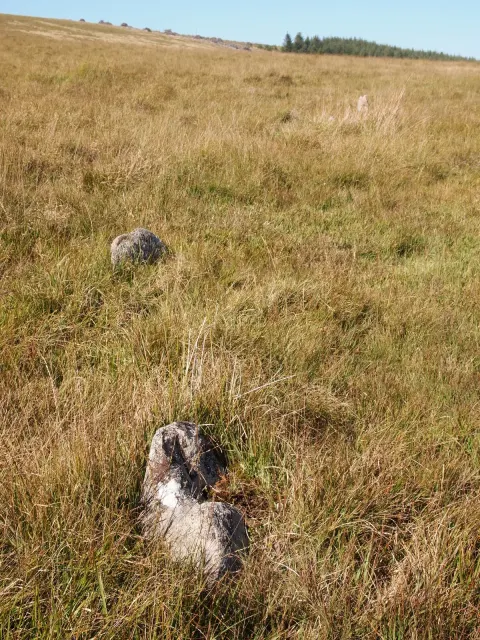
A double stone row 95.4 m long on the south slope of Higher White Tor, with 12 stones standing and 24 fallen, the tallest 0.75 m.
Bronze Age stone alignment and cairn on the open moor east of Stannon Brook, a scheduled monument.
Photograph by Glavind Strachan Photography“A lonely, desolate spot, forsaken even by the cattle and wild ponies of the forest, but yet affording a far off glimpse of the cultivated world beyond those hills which form a barrier to the north.”
Also on Our DartmoorDrizzlecombe Bronze Age Complex — A scattered Bronze Age landscape of stone circles, cairns and burial mounds spread across open moorland, testament to 4,000 years of Dartmoor's deepest past.