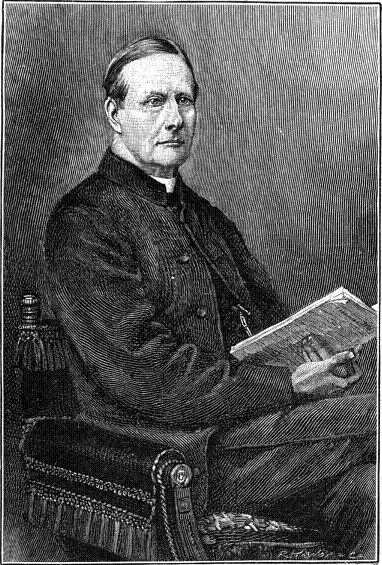
Sabine Baring-Gould (1834–1924) was the squire-parson of Lew Trenchard on the western edge of Dartmoor: rector of his own parish, lord of his own manor, and one of the most prolific English writers of his age, with over a thousand publications to his name.
He is remembered for the hymn “Onward, Christian Soldiers” and for a vast output of novels, folklore, saints’ lives and travel, but Dartmoor and Devon were his home ground. His A Book of Dartmoor (1900) is still a classic survey of the moor; his novels Urith, Eve and Guavas the Tinner are set among its tors and tin-workings; and his Songs of the West rescued the folk songs of Devon and Cornwall from the memories of old country singers.
Folk singer Jim Causley has recorded several albums of songs Baring-Gould collected, including a 2024 album marking the centenary of his death.
In 1893 Baring-Gould co-founded the Dartmoor Exploration Committee with fellow antiquarian Richard Nicholls Worth, digging sixteen of the hut circles at Grimspound in Dartmoor's first scientific archaeological excavation, published in the Transactions of the Devonshire Association, Vol. 26 (1894), pp.101-121.
His 1884 Dartmoor vampire story, Margery of Quether, is set explicitly at Brent Tor.
Our Dartmoor doesn't track you and runs no adverts. We use one cookie to make the
site work, and some pages load videos, maps or optional social media panels from other sites, the panels only if you choose to show them.