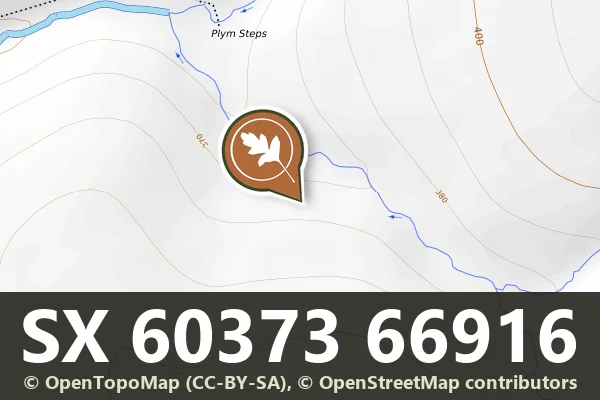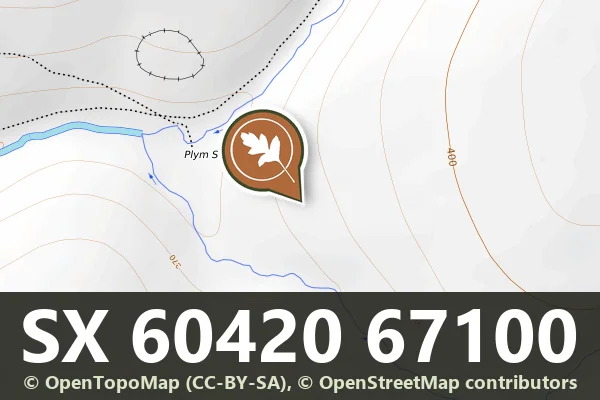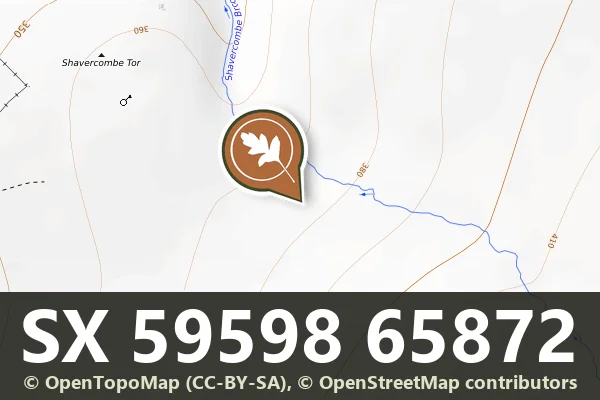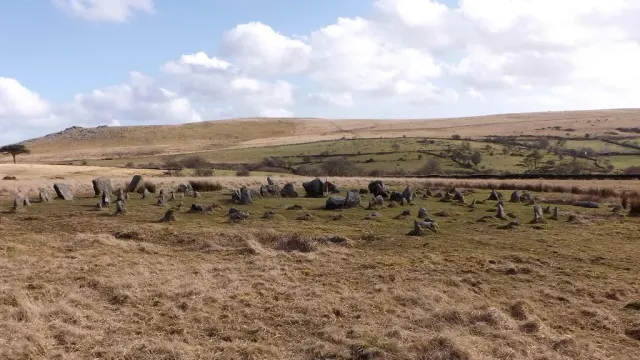
Cairn north-east of the Yellowmead stone circles
A small cairn 4 m across and 0.3 m high, 50 m north-east of the Yellowmead stone circles, with four stones of a kerb on its west and south sides.
Old books sometimes spell "Black Tor" differently. Which of these is one of those spellings?
A cairn with a cist 1.7 m long, retained by nine kerbstones up to 1 m high, 40 m east of the Willings Walls reave, with the cover stone 2.3 m long displaced.
A cairn 7 m across with part of its kerb and a cist 1.2 m long whose west side slab is vein quartz, near the head of a southern tributary of the Langcombe Brook.
A cairn 6 m across with an off-centre cist 1.7 m long, six kerb stones and the cover stone lying beside it, on a north-west slope north of Whittenknowles Rocks.
A small cairn 4 m across with a stone cist 1.18 m long, dug in 1914 when charcoal was found, above the Sheepstor leat north-east of Drizzlecombe.
Bronze Age burial monument with a stone burial chamber, situated south of Langcombe Brook on Dartmoor.
A cairn 5.5 m across with a kerb of eight stones and an irregular cist, 0.6 m deep, with its cover stone on the east side, above where the Langcombe Brook meets the Plym.
A cairn 5 m across with a low kerb of at least eight stones and a cist 1 m by 0.7 m with its four slabs in place, 400 m south-east of Shavercombe Tor.
A cairn 5 m across with a cist 1.4 m long, with its side and end slabs but no cover stone, south-west of the Drizzlecombe stone alignments.
Photograph by Glavind Strachan Photography“This shaggy monster, heather-clad, with unctuous black fen rolling ten feet thick over its granite ribs, was his God.”
Also on Our DartmoorEylesbarrow Reave by Brisworthy Plantation — A 300 m stretch of the Eylesbarrow watershed reave running north-east from Brisworthy Plantation up the west slope of Ringmoor Down, up to 2 m wide and 0.4 m high, cut at a cairn.