Chambered cairn, Buttern Hill (south)
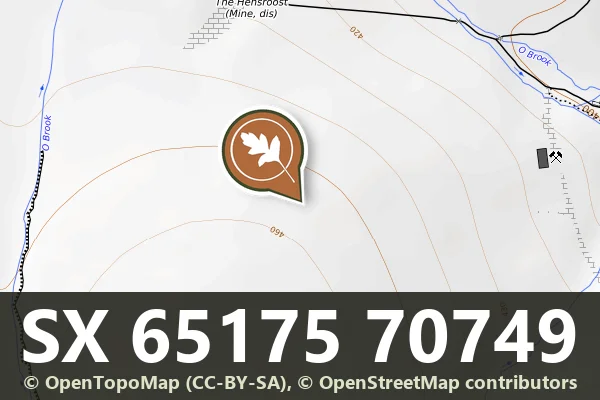
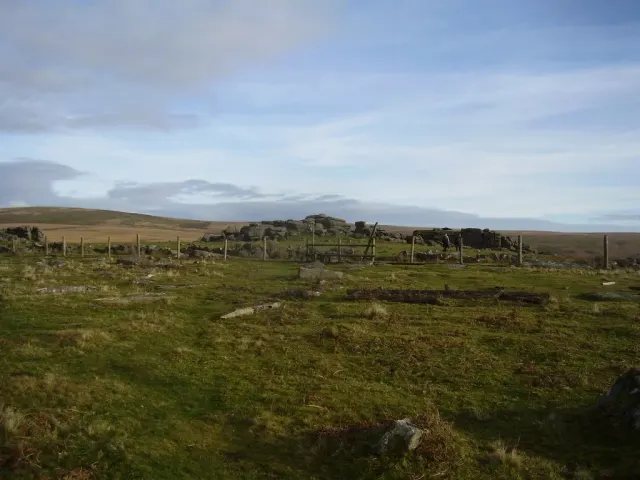
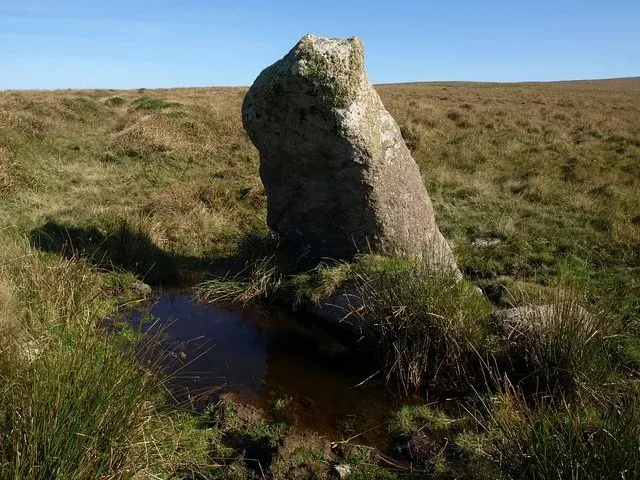
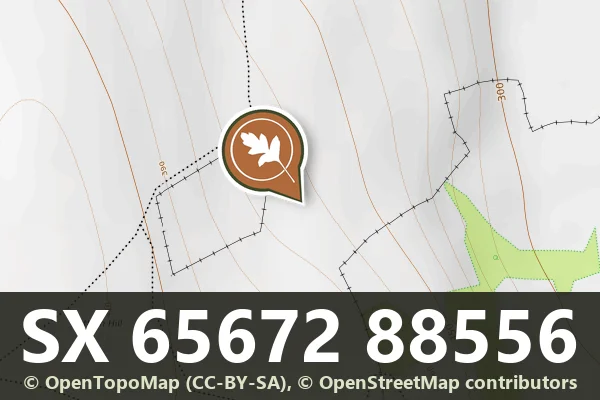
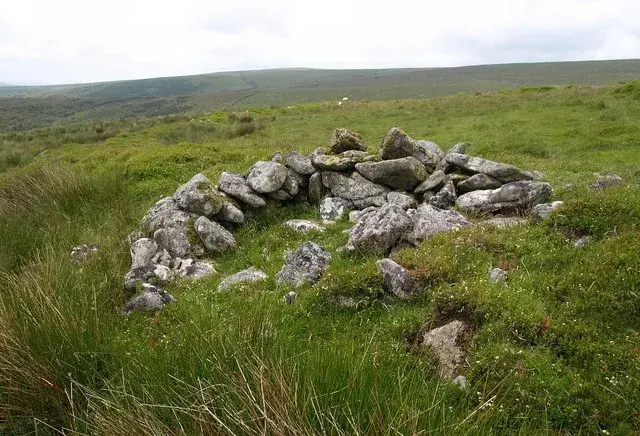
A chambered cairn 10 m by 6.5 m with seven stones of a chamber and passage, two forming a portal entrance, on Buttern Hill, next to a leat bank.
“The only signs of life are the furry inhabitants of the warren, and, perchance, a herd of Dartmoor ponies, wild as the country over which they roam, and a few sheep or cattle grazing on the slopes.”
Who wrote this?
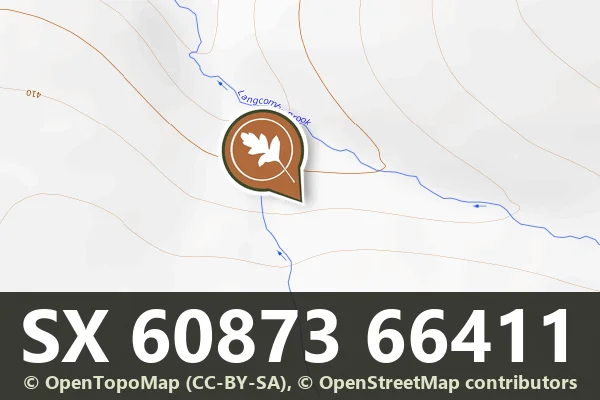
A small cist, 0.72 m by 0.5 m and 0.3 m deep, aligned east to west and just standing above the ground, with no visible mound, above Langcombe Brook.
A small stone cist, 0.68 m by 0.22 m, with upright slabs up to 0.6 m high, on the eastern edge of a large hut circle settlement above the Yealm.
A cairn ringed by edge-set slabs 4.1 m across with a cist 0.82 m by 0.52 m and 0.82 m deep, revealed by excavation, on Skir Hill above the O Brook.
The Whitehorse Hill cist near the summit, 0.4 m wide, with its capstone still in place, once visible in a peat island, covered in 2001 by a protective drystone wall 3 m long.
A small cist 0.9 m by 0.9 m with its north-west end and side slabs in place and traces of a kerb but no mound, on a west slope below Roughtor Plantation.
A cist 1.2 m long and 0.5 m deep, with its east side and cover stone moved but lying beside it, 200 m south-west of Gutter Tor, with no mound.
A hillfort on Cranbrook Down with a square enclosure 160 m across, ramparts and ditches on three sides, and two entrances, partly dug by Baring-Gould in 1901.
A 600 m prehistoric reave running up the south slope of Lee Moor towards Cholwich Town Reave North, a bank up to 2 m wide with a ditch, tied to the Hanging Stone and ending at a cairn.
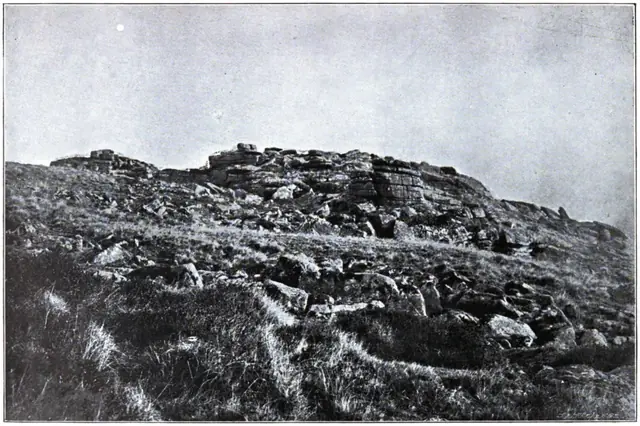
Plate from Dartmoor Illustrated, page 140, 1900“the soil swampy, ever shrouded in vapour, dreary, wet and aguish, and, indeed, what other can be expected from a spot said to be placed in the midst of 40,000 acres of marshy ground .... the soil has been partially drained, and a town (Princetown) has been built .... but we believe it to be pretty ...”
Also on Our DartmoorStable near Walreddon Manor — A Grade II* listed 17th-century granite stable and cart shed beside Walreddon Manor, with six rows of pigeon holes in one gable.