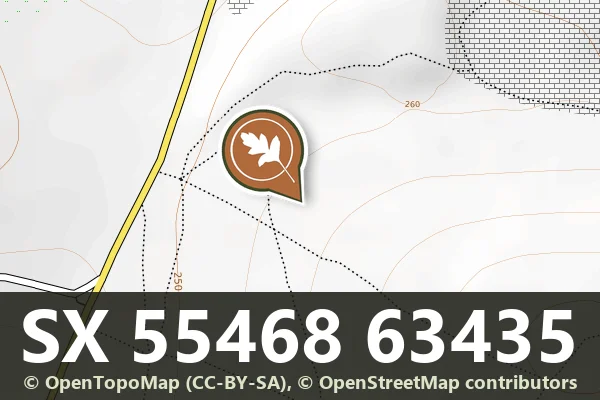
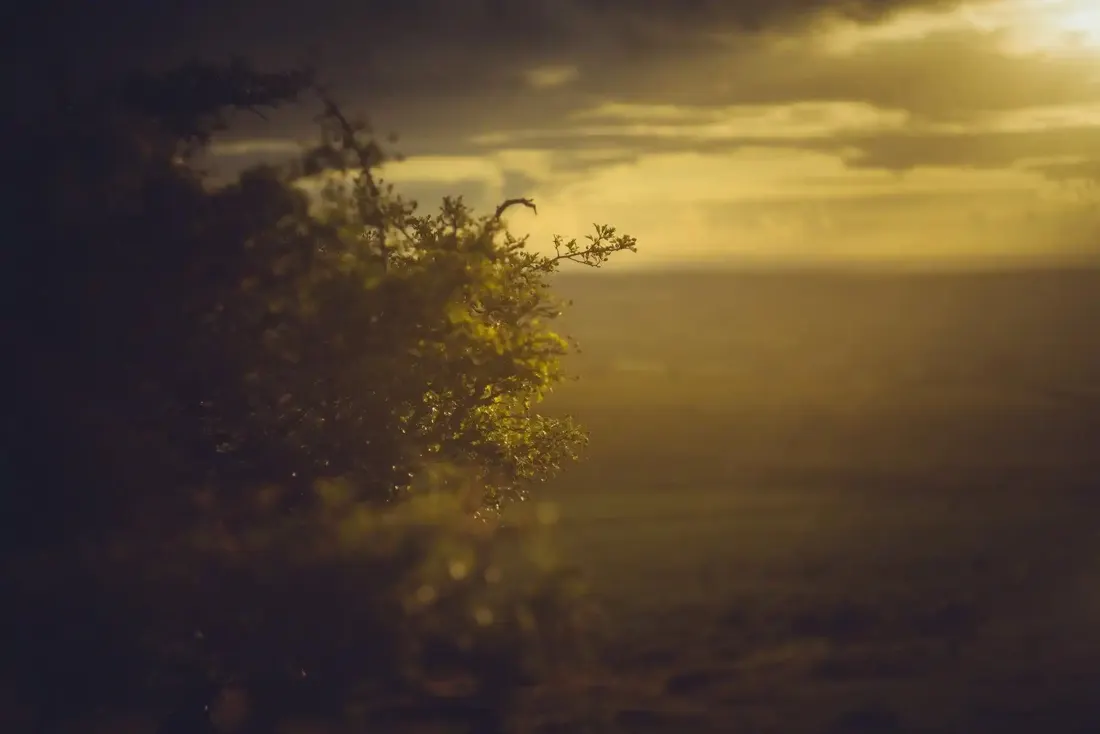
Ring cairn on Great Nodden summit
A ring cairn on the summit of Great Nodden: a bank of small stones 2.3 m wide around a space 8 m across, with a modern cairn on its west side.
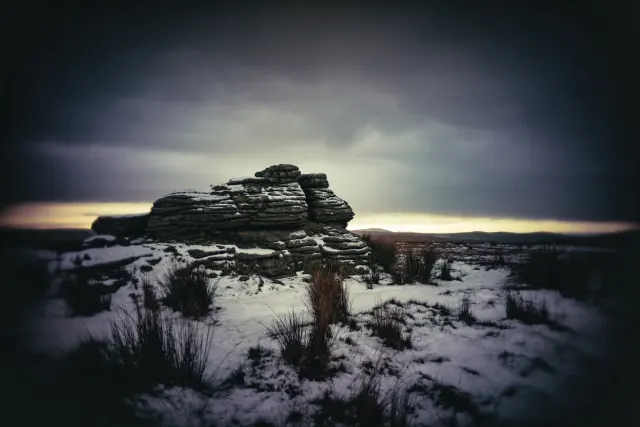

Which Dartmoor tor is this?
An incomplete ring cairn 19.5 m across inside a rubble bank 2 m wide, with an oval mound 9.7 m by 7.2 m in the middle and two tin prospecting pits cut into its west side, on Holne Moor.
A ring cairn 22 m across and 0.9 m high on Holne Ridge, with an outer bank on three sides that makes it 30.4 m across overall.
A ring cairn on the summit of Shell Top: a ring of granite stones 20 m across and 0.8 m wide, up to 0.3 m high, with a 3 m gap on the north-west.
A ring cairn 6.5 m across on a ridge south-west of Hound Tor, of at least 19 close-set granite stones round a central cist with both end stones and its west side slab still showing.
A 700 m reave with a bank 4 m wide and 1 m high, with traces of upright-stone facing and a later ditch, between the Eylesbarrow watershed reave and Roughtor Plantation.
A kerbed cairn with a cist, 8.2 m across, in the Wigford Down coaxial field system, re-examined by Worth in 1900.
A platform cairn up to 9 m across and 0.3 m high, ringed by a kerb of 11 stones, on Shaugh Moor.
A round cairn up to 7 m across and 0.5 m high on North Hessary Tor, ringed by a partly buried ditch.
Photograph by Glavind Strachan Photography“Not likely; you don't come in here. The policeman's about the place, and I don't want 'ee," was her cheering reply.”
Also on Our DartmoorRobert Heckford — Retired solicitor and moth researcher whose decades of work on the life histories of small moths led to a species, Ectoedemia heckfordi, being named after him.