
Bridges & Crossings
New Bridge
A listed stone bridge crossing a Dartmoor watercourse, likely medieval or early modern in origin.


A listed stone bridge crossing a Dartmoor watercourse, likely medieval or early modern in origin.

A Grade II* listed former Dartmoor longhouse at Forder, Gidleigh, on a steep slope, with a thatched roof and the inner room sunk into the hillside.
“The peat glowed as though it were red-hot, and night brooded on the eastern face of every hill.”
Who wrote this?

A Grade II* listed farmhouse on the high moor, likely medieval or early modern in origin, with later additions reflecting centuries of moorland life.

Listed building on Dartmoor. Historic England list entry 1260196.

A Grade II* listed outbuilding north of Neadon Upper Hall, likely 19th century, with adjoining dog kennel and steps.

Scheduled monument of experimental military earthworks on Okehampton Moor, likely 19th-century artillery fortifications.

Scheduled Monument remains of target railways built for the Okehampton Artillery Range on F Range, Dartmoor.
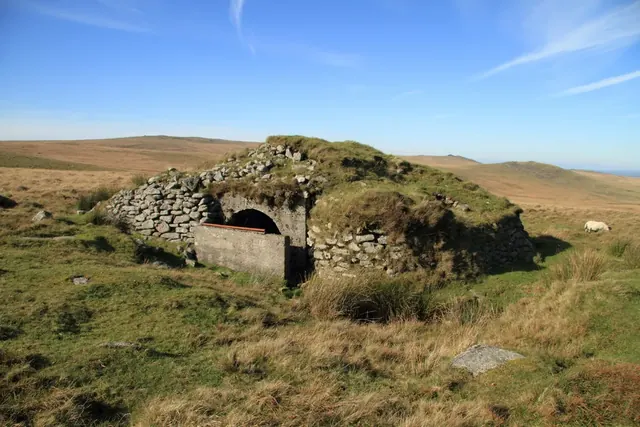
Observation Post 16 and its target butts, 737 m north-east of the summit of Okement Hill: a concrete shelter under a mound 3.9 m high and two shell-damaged butts, in an area of craters.
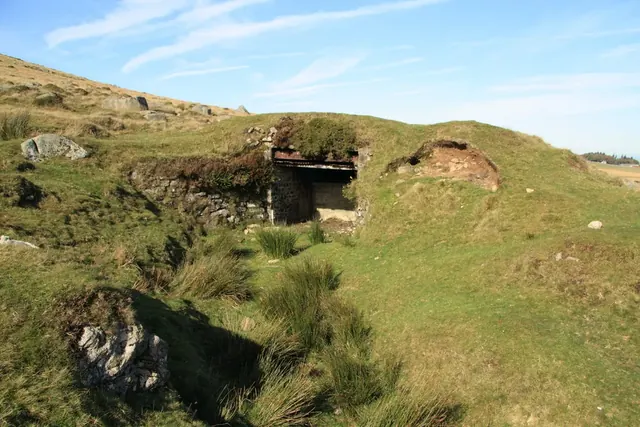
Observation Post 6 and the incline target carrier railway of about 1895 on East Mill Tor: a turf-covered concrete-lined shelter 6.4 m by 2.5 m and a curving cutting of about 20-inch gauge, ending at Skit Bottom.
 Photograph by Glavind Strachan Photography
“And desolate as Dartmoor is, with thousands of acres now destitute even of a turf-cutter's cabin, considerable vestiges of antient dwellings may still be traced in various parts of the Forest and its precincts.”
Also on Our DartmoorWest Cottages — Weathered stone cottages slowly surrendering to Dartmoor, their empty windows framing moorland sky.
