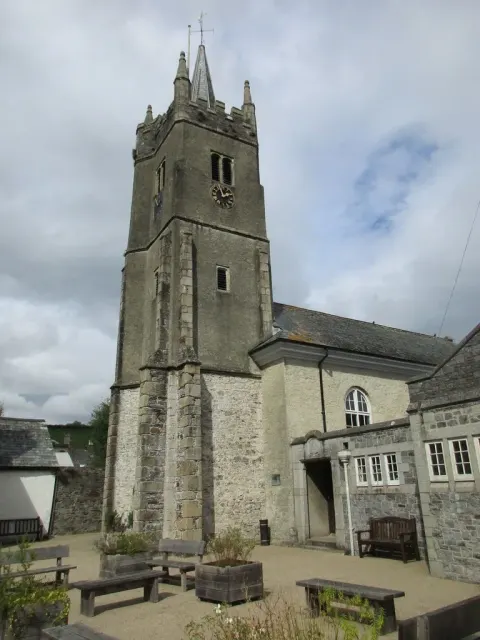
Churches & Chapels
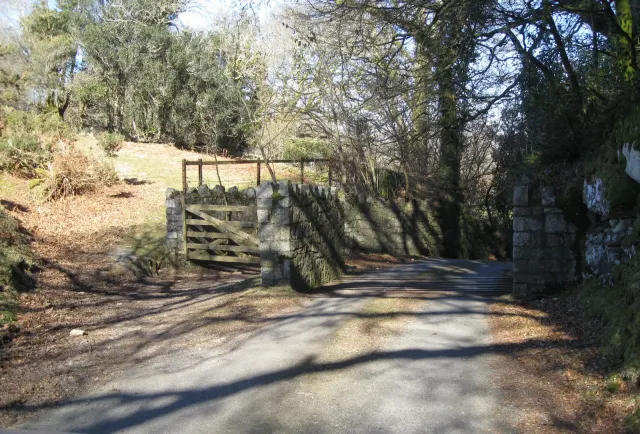
Gate Piers, Front of Chapel of St Lawrence
Grade II* listed gate piers and boundary wall fronting a small chapel, likely medieval in origin.


Grade II* listed gate piers and boundary wall fronting a small chapel, likely medieval in origin.

A Grade II* listed farmhouse on the high moor, likely medieval or early post-medieval in origin.

A bowl barrow 35 m across and 2.1 m high at the north end of Lydford, said to be the site of the Lydford gallows.

An octagonal-topped granite socket stone, 1.02 m by 1 m, beside the road south of Greenwell Girt; the cross it once held marked a medieval route.
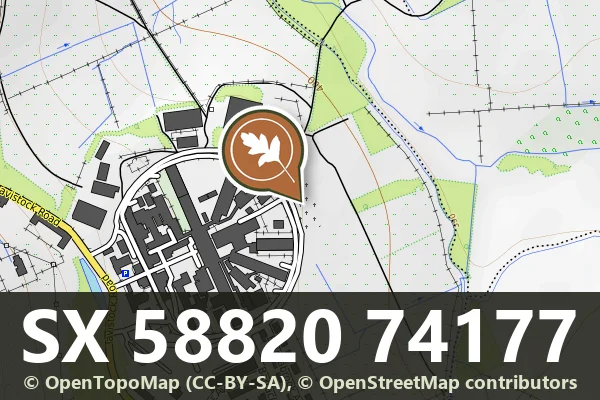
The American Prisoner of War Cemetery north of Dartmoor Prison, laid out in 1866-8 for the 271 Americans who died there in 1812-15, with a granite obelisk made by convicts and a memorial gate given in 1928.
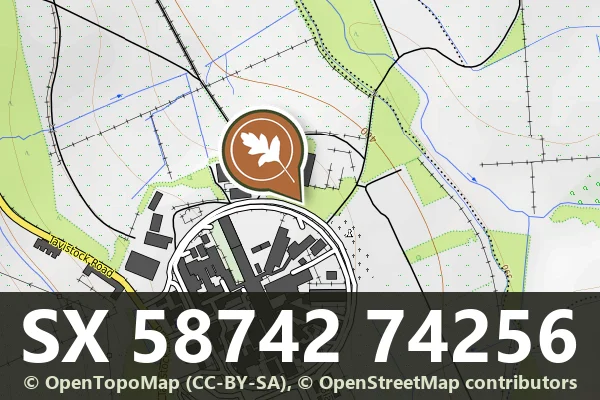
The French Prisoner of War Cemetery north of Dartmoor Prison, laid out in 1865-8 for the French prisoners who died there in 1809-16, with a granite obelisk made by convicts in 1865.

A listed farmhouse on the open moor, likely medieval in origin, with the character of generations of moorland settlement.

A Grade II* listed farmhouse on the high moor, likely built in the medieval or early modern period as a working farm.
A Grade I listed farmhouse with surviving stables and garden walls, typical of upland Dartmoor agricultural settlement.
 Photograph by Glavind Strachan Photography
“Happily, for a moment the curtain of mist lifted, and I saw on the horizon, standing up boldly, the stones of the great circle that is planted on the crest.”
Also on Our DartmoorTinners Hut — A weathered stone shelter hidden in Dartmoor's high moorland, built by tin miners centuries ago.
