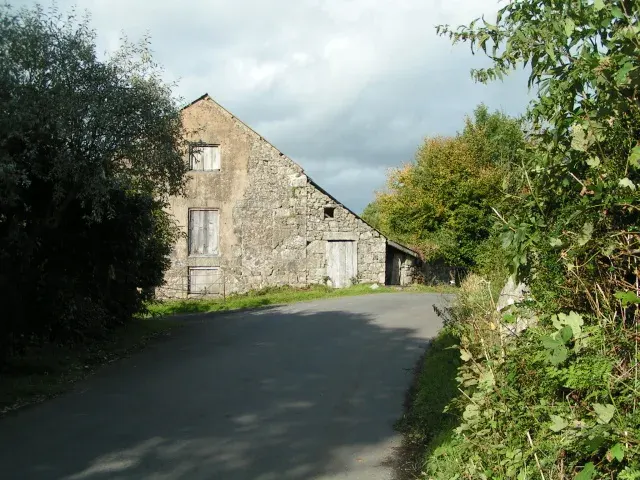
Old School House Approximately near Yeo Farmhouse
A Grade II* listed schoolhouse standing near Yeo Farmhouse, likely built in the 18th or 19th century on the northern Dartmoor moorland.
A Grade II* listed farmhouse on Dartmoor, likely dating from the medieval or early modern period, standing in the moorland landscape.
A Grade II* listed farmhouse on Dartmoor, likely built in the medieval or early modern period and representative of the moor's agricultural heritage.
Scheduled monument remains of a medieval Benedictine abbey in Tavistock town, founded in the 10th century.
The Taw River tin blowing mill: a drystone building 9.5 m by 4.7 m inside with furnace stones, wheelpit, leat, reservoir, tailrace and dressing floor, where tin slag has been found.
Buckfast Abbey's north gate and part of its outer court: the 12th-century gate arch, buried guesthouse and guest hall remains, and the abbey's history from before 1018 to the Dissolution and 1882.
The remains of Longstone Manor House on a promontory in Burrator Reservoir: an early 17th-century house 14.5 m by 6.5 m with walls up to 4 m high, a sunken cobbled track, outbuildings under the waterline and a granite wind strew dated 1637.
Three boundary stones marking the limits of a medieval warren on the open moor south of Headland Warren Farm.
Three massive pounds on Huntingdon Warren with up to 24 hut circles, a cairn, a warrener's shelter and up to five pillow mounds.
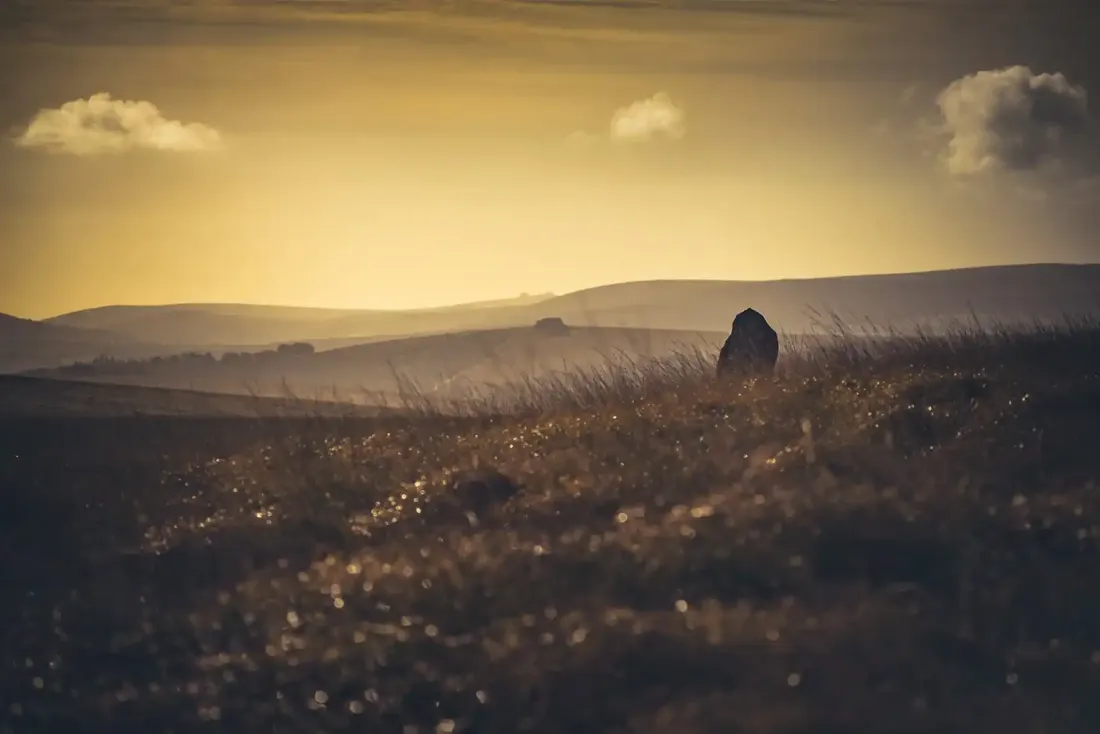
White moor menhir. Photograph by Glavind Strachan Photography“Dreary, in one sense, they may be, but they yet influence and attract, for here we behold nature in her most wild form.”
Also on Our DartmoorVinneylake (ruins) — Crumbling stone foundations scattered across open moorland, revealing traces of a lost settlement on Dartmoor's high ground.