Historic England's scheduling record (list entry 1019607) describes part of the north-west of the outer court of Buckfast Abbey: the standing arch of the North Gate, the buried remains of outer-court buildings and courtyards, the standing remains of a kitchen and service block, and the buried remains of the medieval guesthouse and the Abbot's guest hall. The abbey is on the west bank of the River Dart on the southern edge of Dartmoor, just north of Buckfastleigh.
The abbey was first a Benedictine house, was founded by at least 1018, and was granted by King Stephen in 1136 to the Abbot of Savigny in Normandy. In 1147 it passed to the Cistercians and became one of the richest Cistercian abbeys in the south of England. It was in monastic hands until the Dissolution in 1539. After that the outer-court buildings became a farm, until French Benedictines bought the site in 1882. The Benedictine rule came back, Boniface Natter was blessed as first abbot in 1903, and the new church was consecrated in 1932 and finished in 1938. The plan follows the Cistercian division into an inner court, for the monks, and an outer court for guests and visitors.
The medieval survivals are the 14th-century guesthouse, the 15th-century Abbot's guest hall (later known as Abbey Farm) and the southern arch of the North Gate. Excavation by Brown showed the guesthouse grew from a smaller 12th-century building of similar use, and that the guest hall overlies earlier remains including 12th-century drains. Digging south of the guesthouse found what was taken for its kitchen, and to the north a complex in use from the late 13th or early 14th century into the 15th, with a cobbled courtyard, restored and then replaced by a smaller, narrower building late in the 15th century. East of the guesthouse a trench showed signs of wooden buildings and Dissolution deposits from the stripping of the monastic buildings in the 16th century. A precinct wall once enclosed the abbey on at least three sides, with the Dart on the fourth, but in the 13th century the outer court was enlarged and the west wall robbed of its stone, and its robber trench has been found.
The North Gate, probably the main entrance to the abbey, would have had an inner and outer arch in the precinct wall. Its southern inner arch survives almost complete, probably 12th century with extensive later alteration. The east passage wall of the gatehouse survives inside a building still in use and is excluded, though the ground under it is included. The standing guesthouse, the guest hall, the post-medieval cow shed, the 1881 Methodist chapel and modern surfaces are excluded too, but the ground under them is included.
Sources: Historic England list entry 1019607, which cites Clutterbuck, Buckfast Abbey: A History (1995), Robinson (ed), The Cistercian Abbeys of Britain (1998), Brown, 'Excavations and Building Recording at Buckfast Abbey, Devon' (Devon Archaeological Society Proceedings 46, 1988), pages 13 to 89, Brown's 1999 report and Hall's unpublished archive plan, Buckfast Abbey: Abbey Farm (1991). David Lovell has added a photograph dated 10 July 2018 in a comment on the Historic England page; I have not used it.
Period: Medieval
Status: Scheduled monument (Historic England list entry 1019607)
Grid reference: SX 7405 6737 (approximate, from the listing's coordinates)
Dartefacts is a database of Dartmoor sites with far more close-up detail than we can show here, and it is the best place to go deeper. Dartefacts is free to use, and nobody has to pay to look things up. If you want more, a yearly subscription adds 10-figure grid references, map zoom down to 1:25,000 and lists to tick off the places you have visited, and it helps keep the site going. We would encourage you to subscribe.
Amicombe brook. Photograph by Glavind Strachan Photography
“I never don't like two faces under one hat.”
Also on Our DartmoorPillow mounds near Blackaton Cross — Three pillow mounds in two scheduled monuments in the Blacka Brook valley below Great Trowlesworthy Tor, two of them among older tin streamworks.
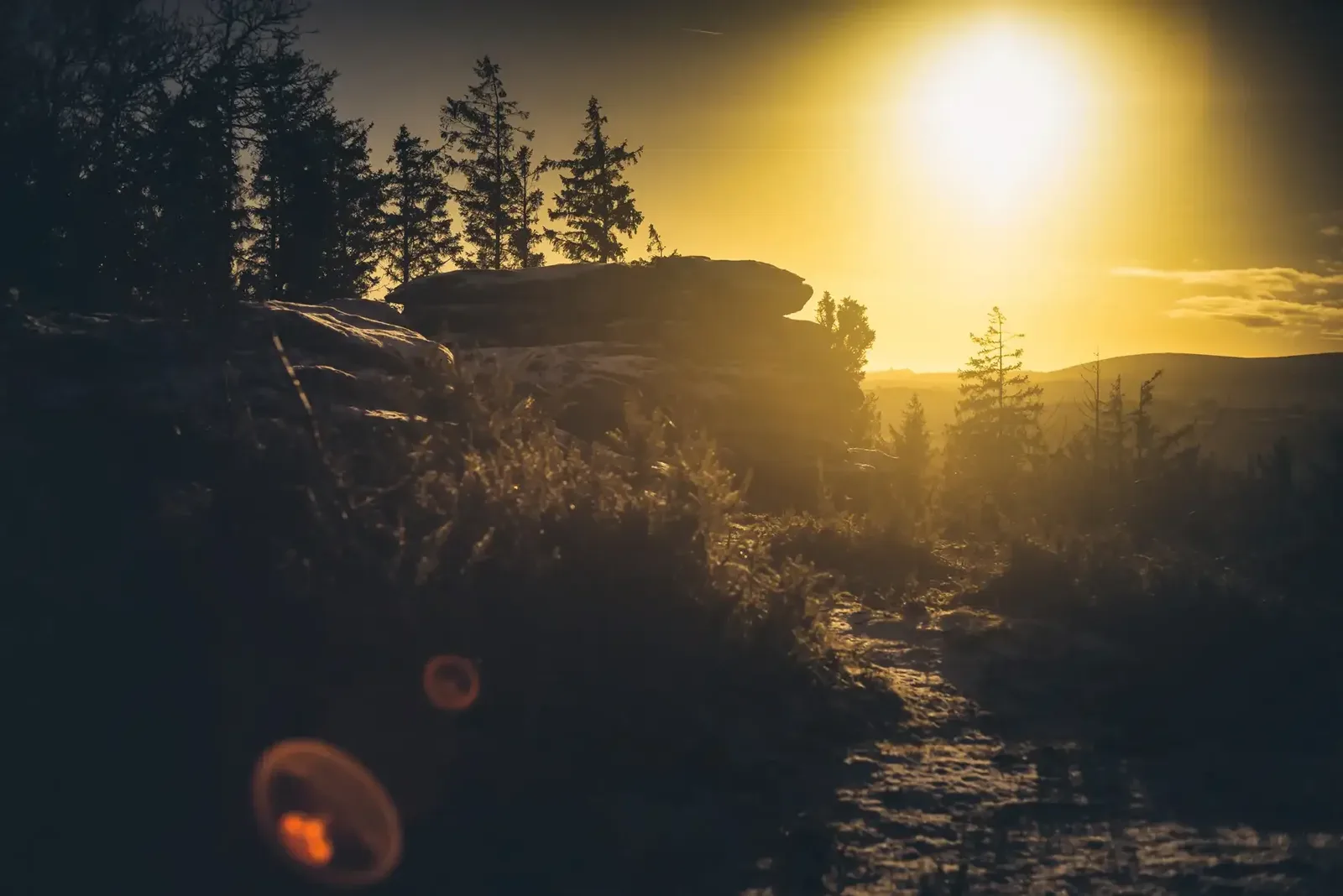
Dartmoor quizPhotograph by Glavind Strachan Photography
Which Dartmoor tor is this?
Know another Dartmoor place, tor or landmark we should include? Suggest a listing, it is free.
Our Dartmoor doesn't track you and runs no adverts. We use one cookie to make the
site work, and some pages load videos, maps or optional social media panels from other sites, the panels only if you choose to show them.



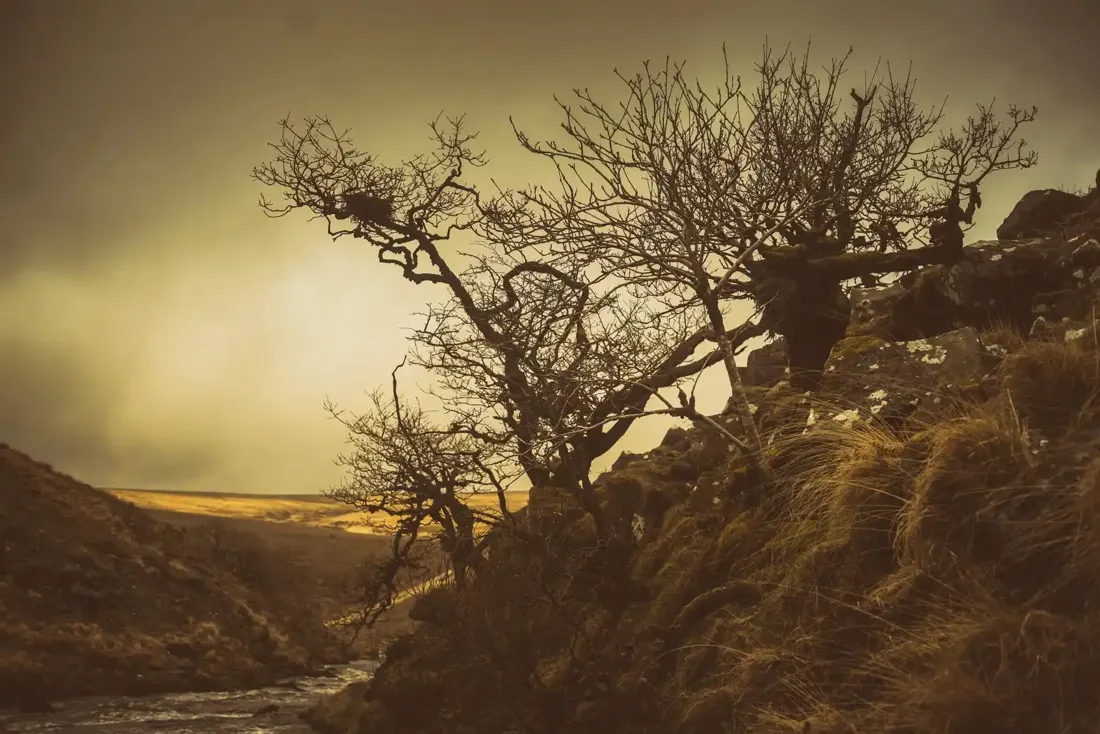 Amicombe brook. Photograph by Glavind Strachan Photography
