Cairn and cist above Deadman's Bottom, north of Grim's Grave
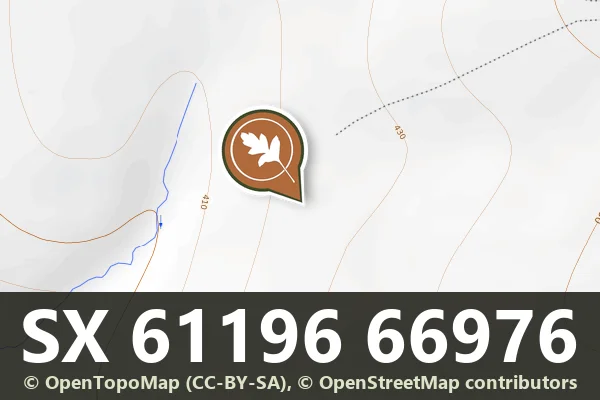
A round cairn 5.5 m across with a cist 0.86 m by 0.48 m still under a displaced 1.44 m cover slab, overlooking Deadman's Bottom.
A round cairn 6 m across and 0.7 m high on Black Down with a damaged cist 0.9 m long, its two end slabs in place and the side stones removed, and a kerb round the north-west edge.
A kerbed round cairn 4.7 m across with a cist 1.04 m by 0.6 m, part excavated in 1900 by the Dartmoor Exploration Committee, who found a flint scraper, on the south-west side of Crow Tor.
A flat-topped round cairn 9 m across and 0.5 m high with a stone cist on its south side, on a north-facing slope above the Walla Brook.
Bronze Age enclosure and burial cairn on the northeastern slopes above Archerton, marked by a stone cist.
A medieval cross 1.7 m high, repaired with iron clamps, set in a hedge at the road junction 150 m east of Shaugh Prior church.
An incomplete stone circle 29.6 m across on a ridge between the West Dart and Swincombe valleys, with nine stones standing.
A coffin-shaped cross without arms, 1.7 m high, with a relief cross on one face and an incised cross on the other, moved in 1873 and re-set in 1900; possibly a Christianised standing stone.
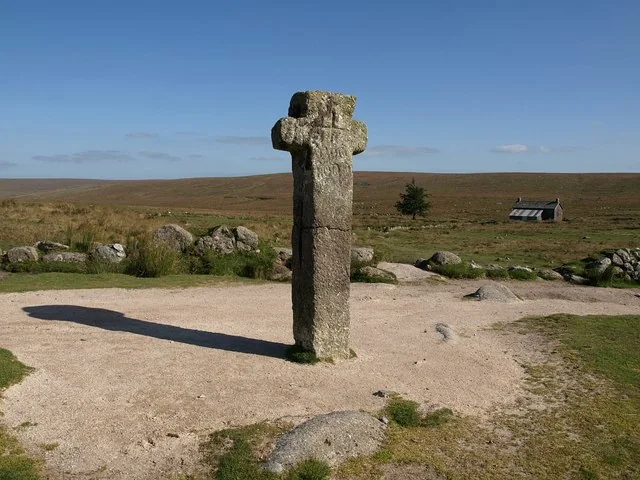
Dartmoor's largest wayside cross, 2.07 m tall, called Siward's Cross in the 1240 bounds and Nun's Cross by 1699, at a meeting of old moorland tracks.
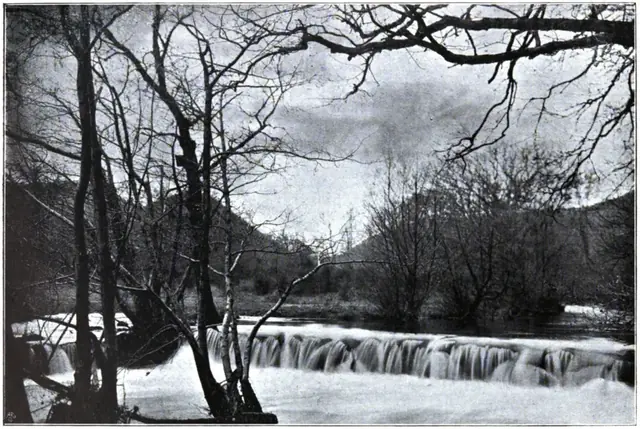
Plate from Dartmoor Illustrated, page 126, 1900“Away to the northward is seen the boggy land in the neighbourhood of Erme Head, with the distant tors peeping over the dark brown ridges.”
Also on Our DartmoorDrizzlecombe South Row — A Bronze Age burial row of standing stones emerging from the open moorland, weathered by millennia of Dartmoor wind and rain.