
← Browse Prehistoric Settlements · Browse the directory
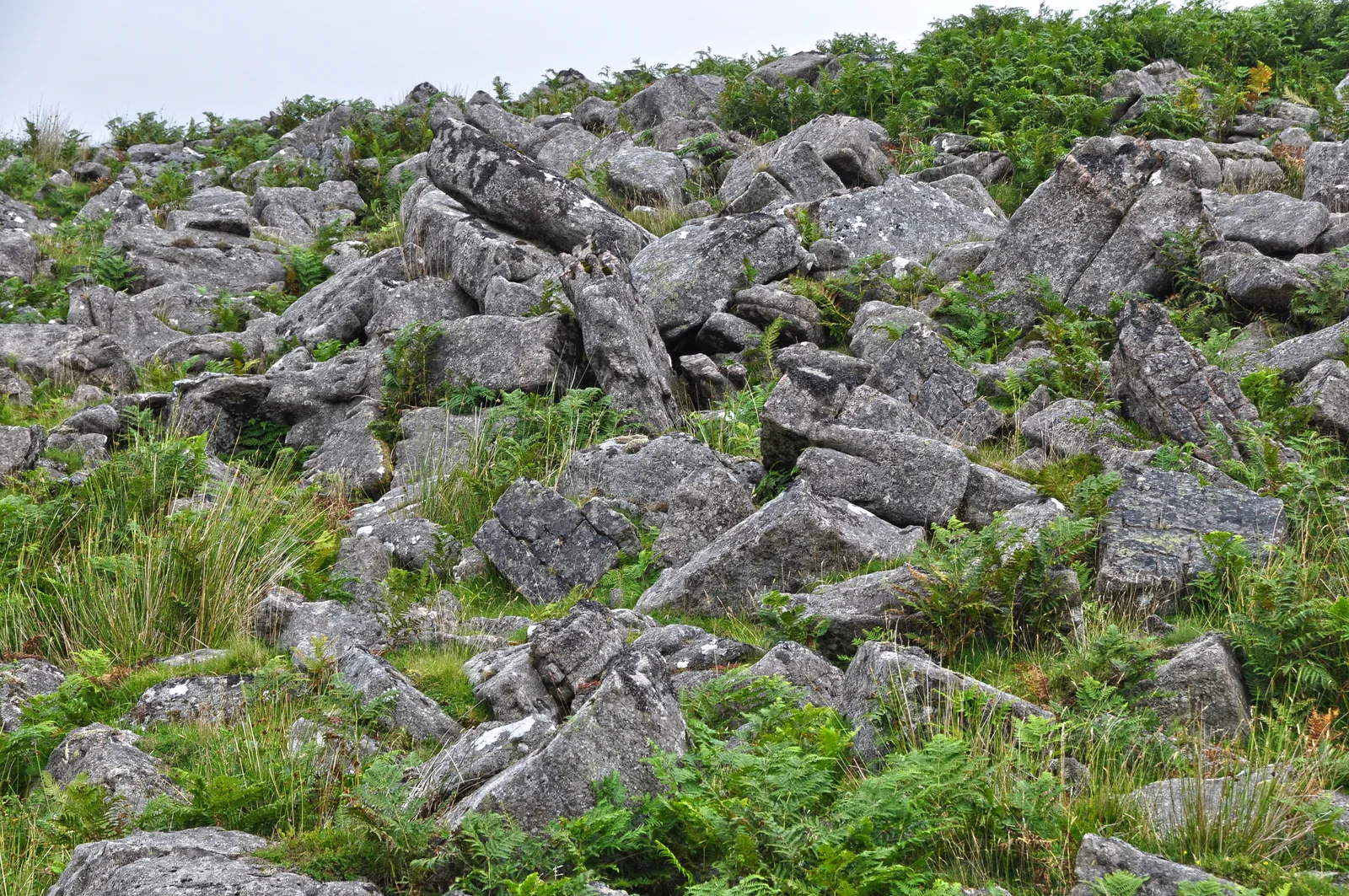
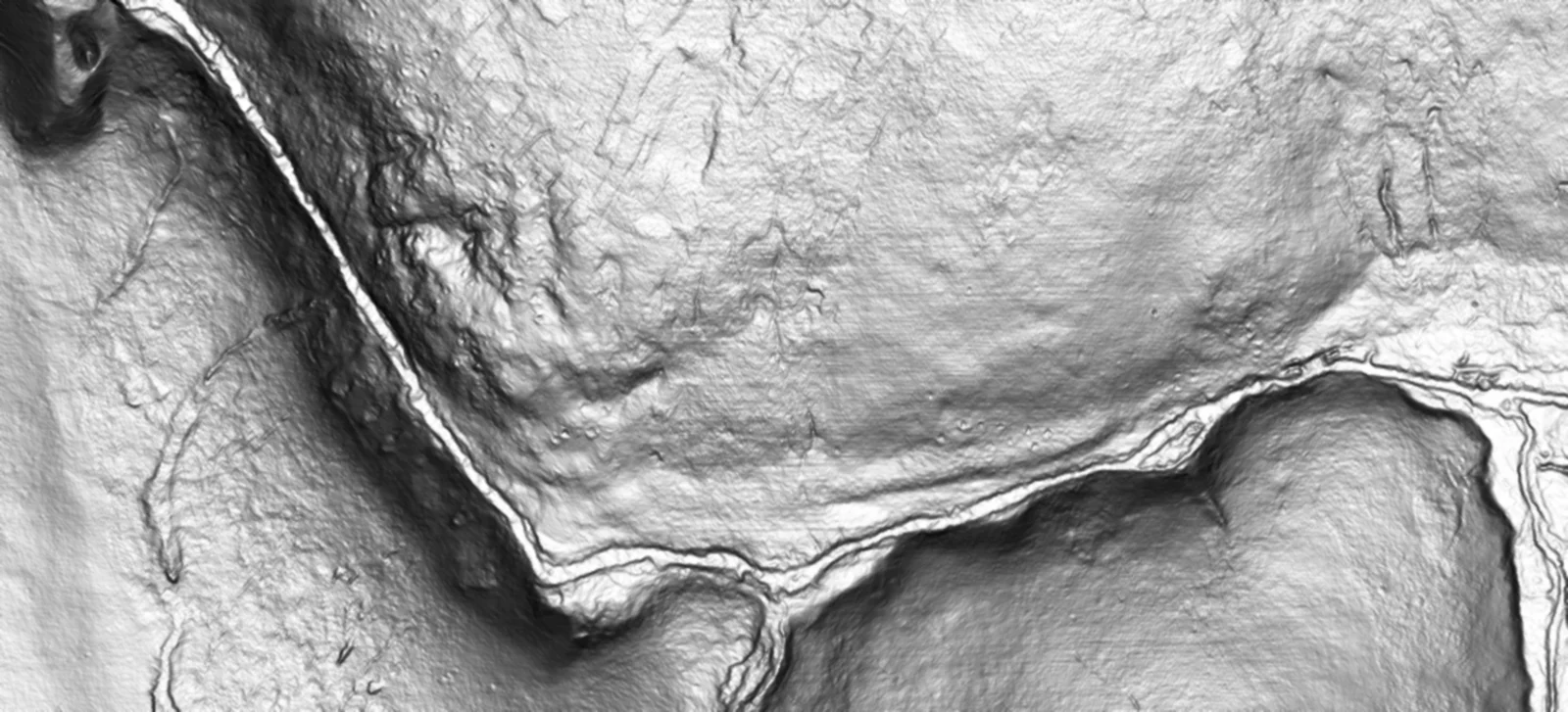
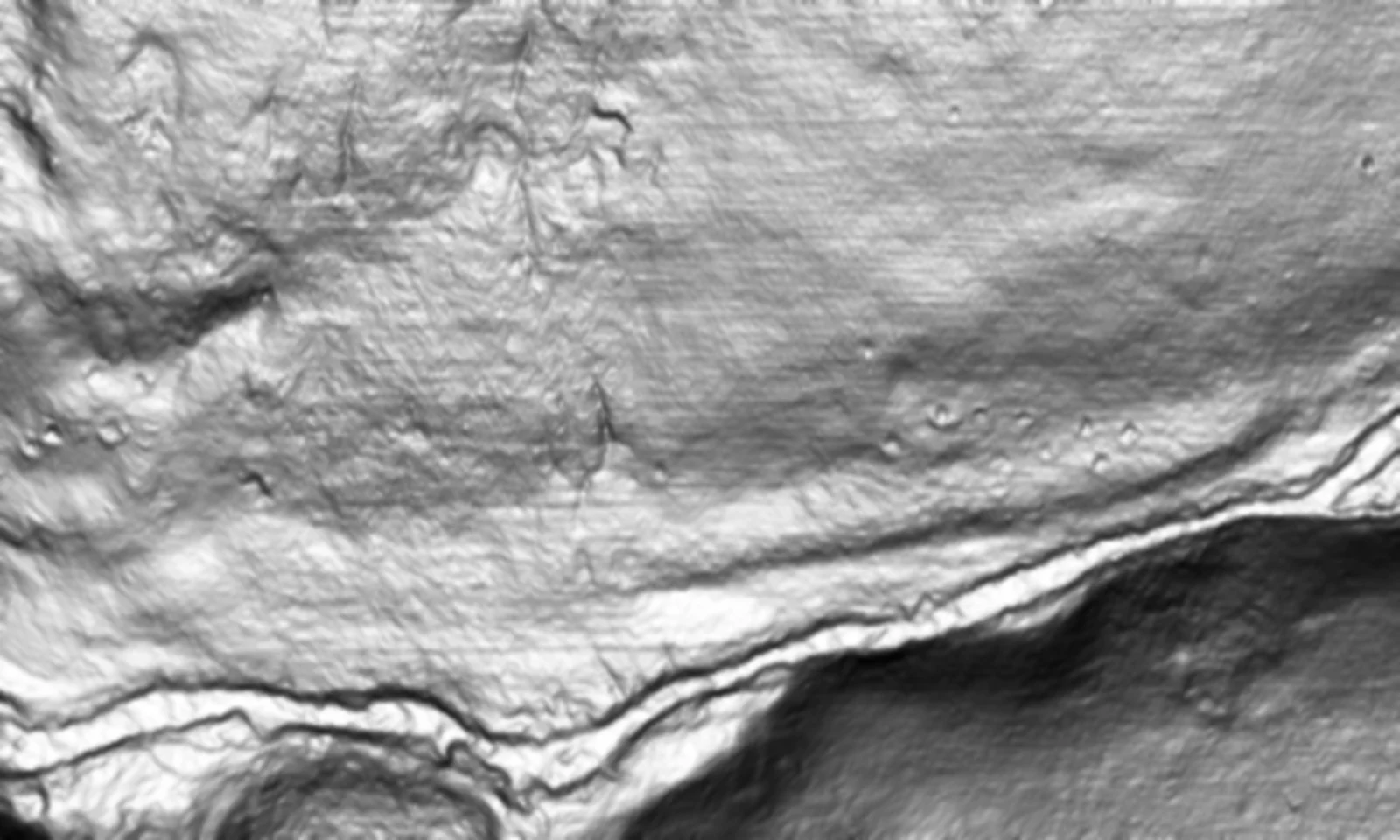
Watern Oke is a hill on the north side of the River Tavy, where the Rattle Brook runs in, in the Forest of Dartmoor. On its south-facing slope, among patches of clitter, lie dozens of stone hut circles, one of the largest unenclosed settlements on the moor. The huts have no surrounding wall. Some are joined to short lengths of boundary wall, and many have hearths. Historic England schedules the settlement in ten separate entries, which are gathered here.
How big it is
The biggest entry alone has sixty huts, 1.5 to 6.6 metres across inside, with walls averaging 0.79 metres high. Thirty-four of those huts hold hearths, five have porches and twenty-nine are attached to boundary walls. Counting all the entries, Historic England describes it as forming one of the largest unenclosed hut circle settlements on Dartmoor. The Rev. Irvine Anderson, who dug it, put the settlement 400 yards east of where the Tavy and the Rattle Brook meet, running for half a mile, and counted ninety-four huts explored and two unexplored. Hansford Worth, in his survey of Dartmoor's pounds, calls it a group of 60 huts with only some slight connecting walls and no certain pound, with another group of 18 huts nearby. The 1977 survey Dartmoor: A New Study speaks of a village of some eighty houses on the Tavy.
The 1905 excavation
In the summer of 1905 Anderson, then Rector of Mary Tavy, camped on the hill while men dug the huts for weeks. The Dartmoor Exploration Committee published his account in the Devonshire Association Transactions in 1906. Historic England's records say fifty-six huts were partly excavated in June and July 1905, and that considerable quantities of charcoal were found with cooking stones, sling and rubbing stones, pottery and flint. A Romano-British glass bead suggests the huts were used at more than one period. Some of the pottery is decorated with a plaited-cord technique that belongs to a later phase of the Bronze Age, according to the 1977 survey.
Later buildings
Not everything here is prehistoric. One entry takes in a medieval shieling, a rectangular one-room building 7.4 metres by 3 metres inside with a fireplace in its south-west corner. Another has a rectangular tinners' building, medieval or later, built on top of an earlier hut, with a rubbing stone, pottery, a flint arrowhead and a corroded iron knife among its finds. A tiny corbelled building 1.2 metres by 0.9 metres, roofed with a stone lintel, is too small to shelter anyone and is more likely a storage cache.
Not the Thirlstone
Watern Oke is not Watern Tor. The Thirlstone, the pierced rock that gave its name to a part of Watern Tor, lies about seven kilometres east, on the other side of the moor, and has its own listing: Watern Tor. Rowe (1848) and Crossing (1914) both say the name comes from the Old English word for to pierce.
The huts, one by one
Each scheduled group has its own listing, linked below, with sizes, doorways and what the 1905 dig found in it. The hut counts do not add up to Anderson's, because Historic England's entries cover only some of what he dug.
- Period: Bronze Age, with a medieval shieling and later tinners' building
- Status: Scheduled monument (ten Historic England entries, listed above)
- Size: about half a mile long; sixty huts in the largest entry, ninety-four counted by the 1905 excavator
- Grid reference: SX 5664 8339 (approximate centre)
Contact us if you have information about this listing
Official record
Explore the area
Go deeper with Dartefacts
Dartefacts is a database of Dartmoor sites with far more close-up detail than we can show here, and it is the best place to go deeper. Dartefacts is free to use, and nobody has to pay to look things up. If you want more, a yearly subscription adds 10-figure grid references, map zoom down to 1:25,000 and lists to tick off the places you have visited, and it helps keep the site going. We would encourage you to subscribe.
Thoughts
Be the first to share a thought about Watern Oke hut circle settlement.
Share a thoughtKnow another Dartmoor place, tor or landmark we should include? Suggest a listing, it is free.
Suggest a listing