
Tors & Landmarks
Sampford Tor
Sampford Tor is a small group of rocks on Sampford Spiney common, just below the larger Pew Tor.


The granite tors of Dartmoor, including the ones whose names end in Rocks, Rock or Stone.
A tor is a large free-standing outcrop of rock that rises abruptly from gentler slopes on a hill or ridge. The word comes from Old Welsh and means a cluster or heap. On Dartmoor the tors are granite, emplaced about 280 million years ago. They survive where widely spaced joints in the granite let blocks of rock outlast the weathering that turned the rest into sandy gravel (growan).
Dating of 28 Dartmoor tors found that most have been exposed for less than 100,000 years, and none for more than 200,000. They probably emerged at the start of the last major ice age.
The highest point on Dartmoor is High Willhays, at 621 metres, near Okehampton. Yes Tor stands about a kilometre to the north along the same ridge and is slightly lower.
Which outcrops count as tors is a decision for people far better qualified than this directory. We follow the Tors of Dartmoor database, the Treks and Tors list and Tor Bagger: if one of them lists it as a tor, it is listed here as one. Hills and mounds that none of them list are on the Hills and Mounds page.
This page lists the tors and other named landmarks in the directory. Use the map to see where they are, and open a listing for its grid reference and further sources.
Sources: Wikipedia, Tor (rock) and High Willhays.
Sampford Tor is a small group of rocks on Sampford Spiney common, just below the larger Pew Tor.

A small tor on the East Okement below the Belstone group, also known as Skir Tor, close to the Okehampton firing range.
“Even the half-wild cattle which range the other parts of the moor at pleasure, seem to shun the swampy steppes of the central wilderness.”
Which book is this from?

A small tor, usually called Scorhill Rocks, on the hillside above the North Teign near the Scorhill stone circle in Gidleigh parish.

A low, scattered group of non-granite outcrops near Stephen's Grave, with views across the moor.

A scatter of boulder outcrops on North Bovey Common near Hookney Tor, reached easily from the Two Moors Way, with wide views eastward.
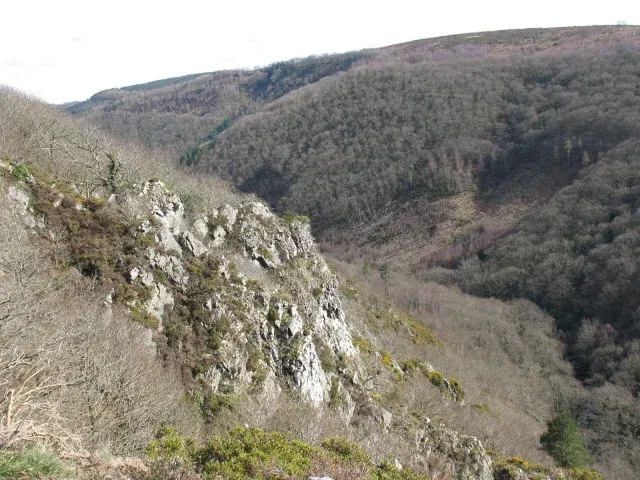
Drewsteignton
Two crags of shale, not granite, high above the Teign Gorge below Castle Drogo, with the Hunter's Path running a few metres from the summit.
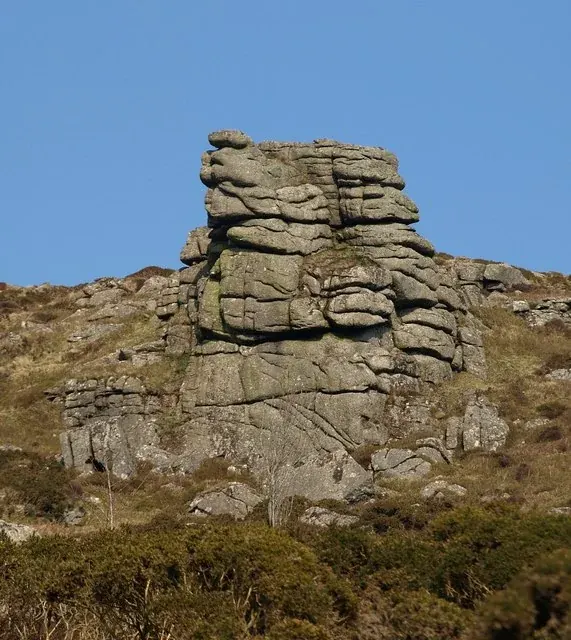
Widecombe-in-the-Moor, Newton Abbot
A granite rock stack on the south-west shoulder of Chinkwell Tor above Widecombe in the Moor, also called Sharpy Tor, best seen from Thornhill Lane.
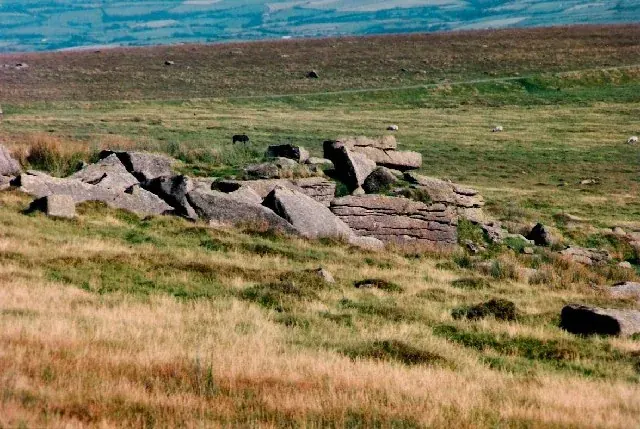
Harford, Ivybridge
A granite tor on a spur above the Erme valley, 6 km north of Ivybridge, dropping almost sheer to Piles Copse, with views to Plymouth and the South Hams.
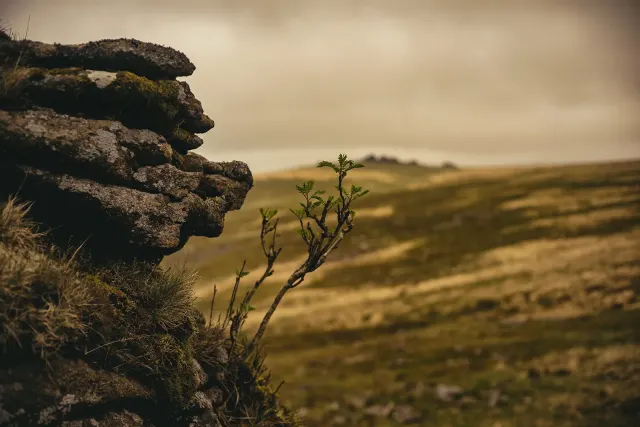
Lydford
The highest of the Sharp Tors, a granite tor of 519 m on the north moor that moormen call Lydford Sharp, with views over North Devon and Cornwall.
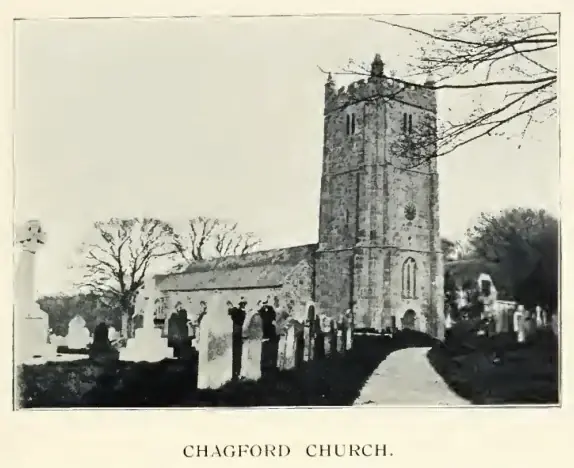 Plate from A Hundred Years on Dartmoor, page 55, 1901
“throughout the winter it is quite a different thing ; in the darkness, fog, and often snow, there is not much to admire in the files of spectral convicts marching across the yards into Chapel.”
Also on Our DartmoorPlatform cairn near Fordsland Ledge — A platform cairn 13.9 m across and 1.1 m high near Fordsland Ledge, with a stone-lined pit in the middle and a partly buried kerb.
