Skip to content

← Browse the directory

Tors

The granite tors of Dartmoor, including the ones whose names end in Rocks, Rock or Stone.

A tor is a large free-standing outcrop of rock that rises abruptly from gentler slopes on a hill or ridge. The word comes from Old Welsh and means a cluster or heap. On Dartmoor the tors are granite, emplaced about 280 million years ago. They survive where widely spaced joints in the granite let blocks of rock outlast the weathering that turned the rest into sandy gravel (growan).

Dating of 28 Dartmoor tors found that most have been exposed for less than 100,000 years, and none for more than 200,000. They probably emerged at the start of the last major ice age.

The highest point on Dartmoor is High Willhays, at 621 metres, near Okehampton. Yes Tor stands about a kilometre to the north along the same ridge and is slightly lower.

Which outcrops count as tors is a decision for people far better qualified than this directory. We follow the Tors of Dartmoor database, the Treks and Tors list and Tor Bagger: if one of them lists it as a tor, it is listed here as one. Hills and mounds that none of them list are on the Hills and Mounds page.

This page lists the tors and other named landmarks in the directory. Use the map to see where they are, and open a listing for its grid reference and further sources.

Sources: Wikipedia, Tor (rock) and High Willhays.

Share
View on map
Roos Tor
Tors & Landmarks

Roos Tor

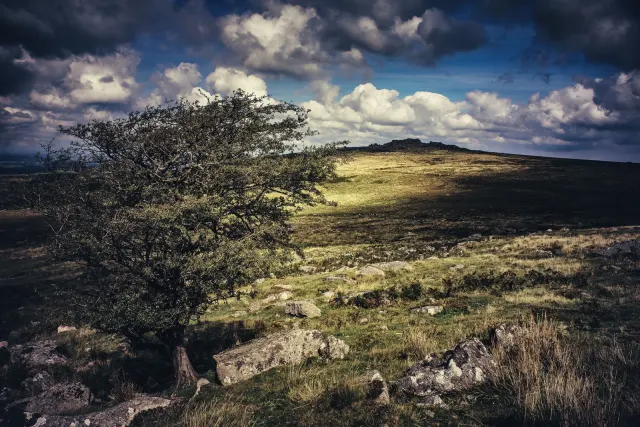
A fine pile south of Langstone Moor, last in a line of tors that runs from the Staple Tors, with boundary stones round it and a military flag post on top.
Rough Tor
Tors & Landmarks

Rough Tor

Yelverton

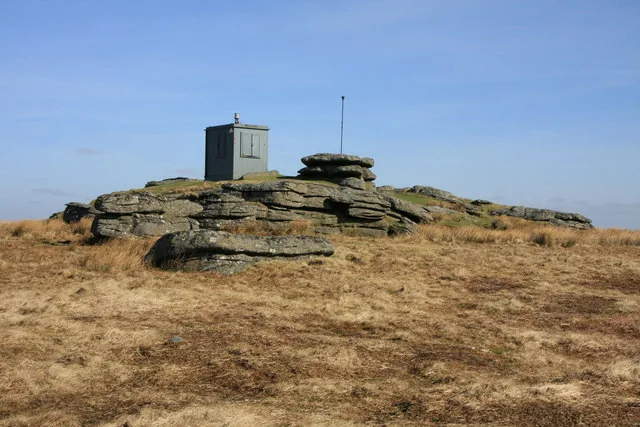
A flattish tor west of the West Dart, north of Two Bridges, inside the Merrivale firing range, with military huts and poles on its summit.

Rowden Tor
Tors & Landmarks

Rowden Tor

A lesser known tor, 349 m high, west of Widecombe in the Moor near Jordan, across from Wind Tor.

Dartmoor quiz

What is the earliest known written record of the Childe the Hunter legend?

Tristram Risdon's Survey of Devon around 1632. The earliest source is real and datable: Tristram Risdon's Survey of Devon, written around 1632, already tells the horse story.

Worth a visit
Rowtor
Tors & Landmarks

Rowtor

A small tor on the northern edge of Dartmoor, east of West Mill Tor and on the edge of the Okehampton firing range, with plenty of granite on top.

Royal Hill
Tors & Landmarks

Royal Hill

The high point of Tor Royal Newtake near Princetown, named for the Prince of Wales, with a scatter of Bronze Age kistvaens on its slopes including the Crock of Gold.

Rugglestone Rock
Tors & Landmarks

Rugglestone Rock

A logan rock below Top Tor near Widecombe in the Moor, computed by old writers at about 110 tons and long said to move only with the church key.

Rundelstone Tor
Tors & Landmarks

Rundelstone Tor

A modest granite tor on central Dartmoor with clear views across the high moor and surrounding valleys.

Ryder's Hill
Tors & Landmarks

Ryder's Hill

The highest point of southern Dartmoor, a broad hill with two standing stones, a low cairn and a triangulation pillar on its summit.

Saddle Tor
Tors & Landmarks

Saddle Tor

A tor between Hay Tor and Rippon Tor on Bagtor Down, with good outcrops, car parking along the B3387 and views towards the sea at Teignmouth.