Tors & Landmarks
Roos Tor
A granite tor with curious boundary stones and a flagpole, once part of a military firing range.

The granite tors of Dartmoor, including the ones whose names end in Rocks, Rock or Stone.
A tor is a large free-standing outcrop of rock that rises abruptly from gentler slopes on a hill or ridge. The word comes from Old Welsh and means a cluster or heap. On Dartmoor the tors are granite, emplaced about 280 million years ago. They survive where widely spaced joints in the granite let blocks of rock outlast the weathering that turned the rest into sandy gravel (growan).
Dating of 28 Dartmoor tors found that most have been exposed for less than 100,000 years, and none for more than 200,000. They probably emerged at the start of the last major ice age.
The highest point on Dartmoor is High Willhays, at 621 metres, near Okehampton. Yes Tor stands about a kilometre to the north along the same ridge and is slightly lower.
Which outcrops count as tors is a decision for people far better qualified than this directory. We follow the Tors of Dartmoor database, the Treks and Tors list and Tor Bagger: if one of them lists it as a tor, it is listed here as one. Hills and mounds that none of them list are on the Hills and Mounds page.
This page lists the tors and other named landmarks in the directory. Use the map to see where they are, and open a listing for its grid reference and further sources.
Sources: Wikipedia, Tor (rock) and High Willhays.
A granite tor with curious boundary stones and a flagpole, once part of a military firing range.

A flat tor with military structures on its summit, located deep in Dartmoor north of Two Bridges.

A quiet tor with memorial plates to Dr Jeffrey Wentworth Malim and his wife Mary, set atop Rowden Ball.
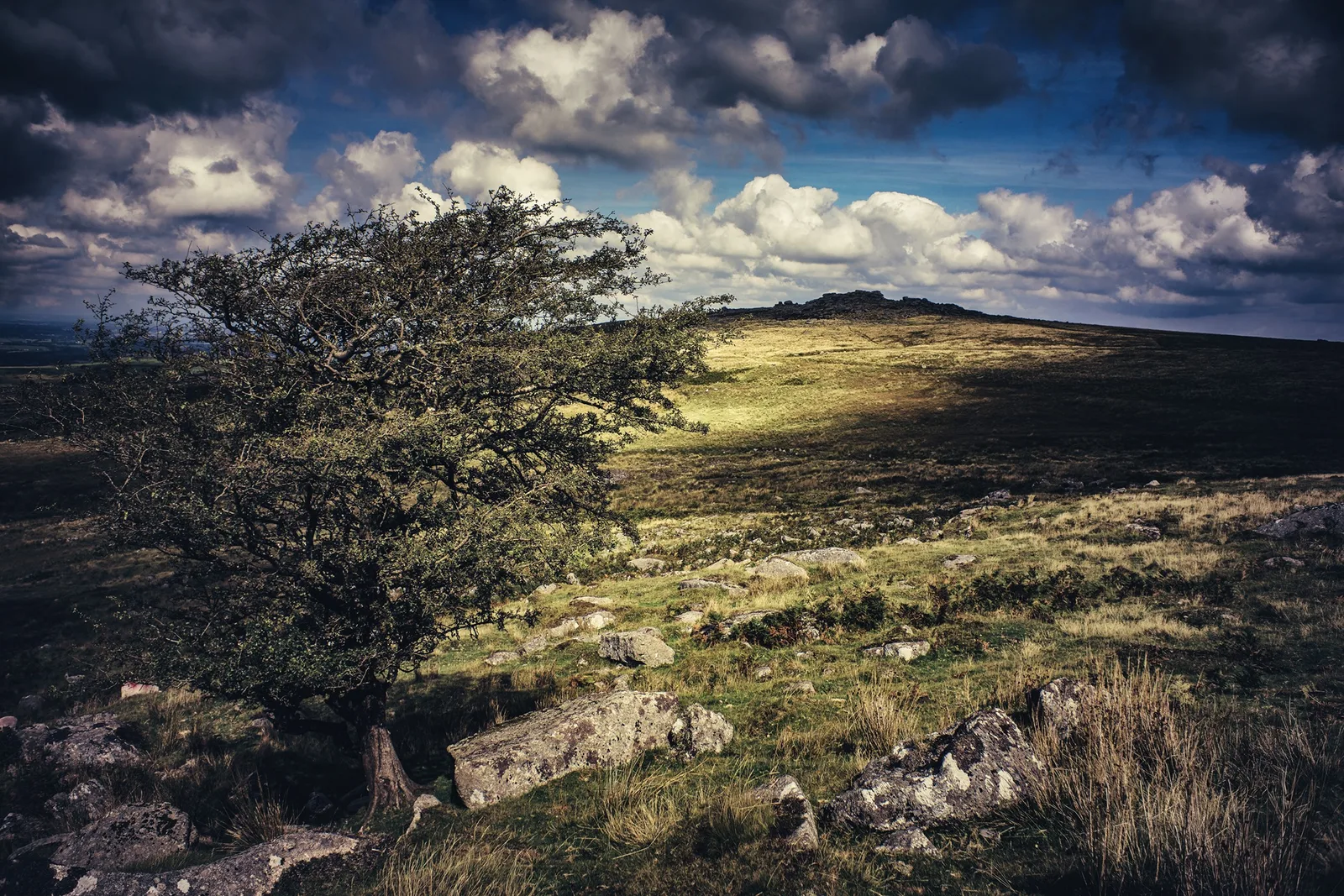
A modest tor on Dartmoor's northern edge, near Okehampton Camp and the firing range.

A hill with Bronze Age tombs and views to Longaford Tor, marked by the Crock of Gold cist.

A granite rock with a loggable stone, located near Venton and Widecombe in the Moor.

A modest granite tor on central Dartmoor with clear views across the high moor and surrounding valleys.

Ryder's Hill features two standing stones, a cairn, and a triangulation pillar on its summit.

A large, well-frequented tor with two granite masses separated by short grass, resembling a saddle from certain angles.