

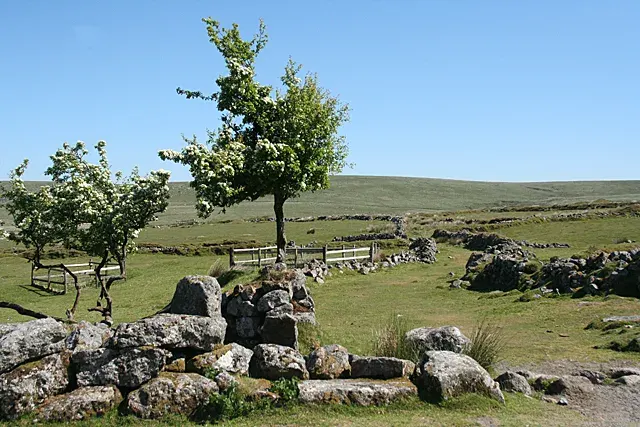
Industrial Archaeology
Tin mines, blowing houses, tramways and quarries - the moor's industrial past.
View on map

Other Heritage Sites
Alluvial tin streamwork near the Brim Brook
An alluvial tin streamwork beside the Brim Brook with three blocks of dumps, each with its own leat, and three tinners' buildings cut into the dumps, the largest 8.6 m long.

Prehistoric Settlements
Cosdon Hill hut circle settlements, Taw Marsh reave and tin mill
At least 54 hut circles in four clusters either side of the Taw Marsh reave on Cosdon Hill, six clearance cairns, a tin streamwork and one of the smallest tin mills on Dartmoor.

Industrial Archaeology
Deserted medieval settlement south of Meldon Quarry
A deserted medieval settlement of up to four longhouses and a later farmstead of two buildings on the lower north slopes of Black Down, south of Meldon quarry.

Industrial Archaeology
Keaglesborough Mine near Norsworthy Bridge
Scheduled monument combining a tin mine and farmstead on the north-eastern moor above Norsworthy Bridge.
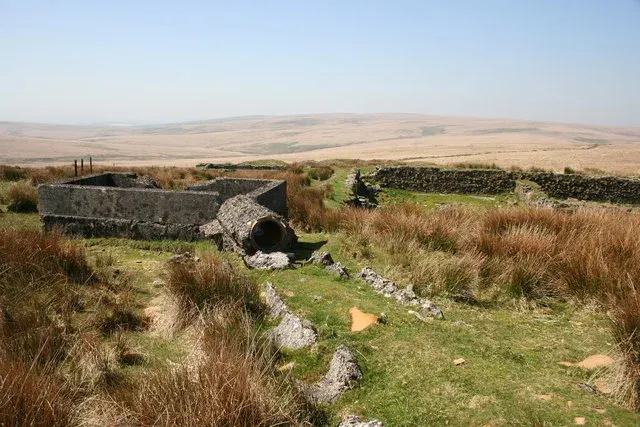
Industrial Archaeology
Redlake China Clay Settlement Ponds
Industrial relics of Dartmoor's china clay era: Victorian settlement ponds and iron pipework carved into the moorland.
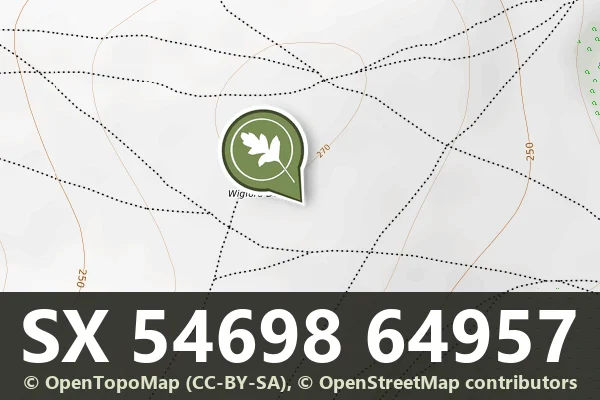
Prehistoric Settlements
Ring cairn and kerbed cairn on Wigford Down
A ring cairn and a kerbed round cairn within the Wigford Down coaxial field system, above the Plym and Meavy valleys.

Prehistoric Settlements
Settlement remains around Trowlesworthy Warren House
Five scheduled monuments east of Trowlesworthy Warren House: two hut circle settlements, an enclosure, a cairn with a cist and a V-shaped gully.
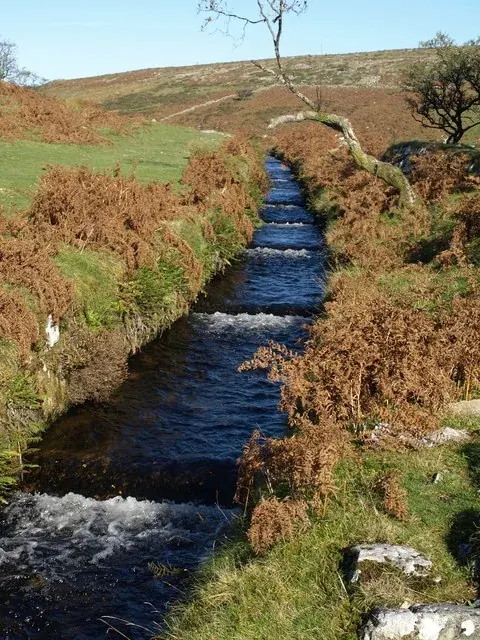
Prehistoric Settlements
Settlements and hut circles on Raddick Hill
Walkhampton, Yelverton
Three enclosed Bronze Age settlements and a pair of huts on the west-facing slope of Raddick Hill above the River Meavy: 26 hut circles in four scheduled monuments.
Page 8 of 9
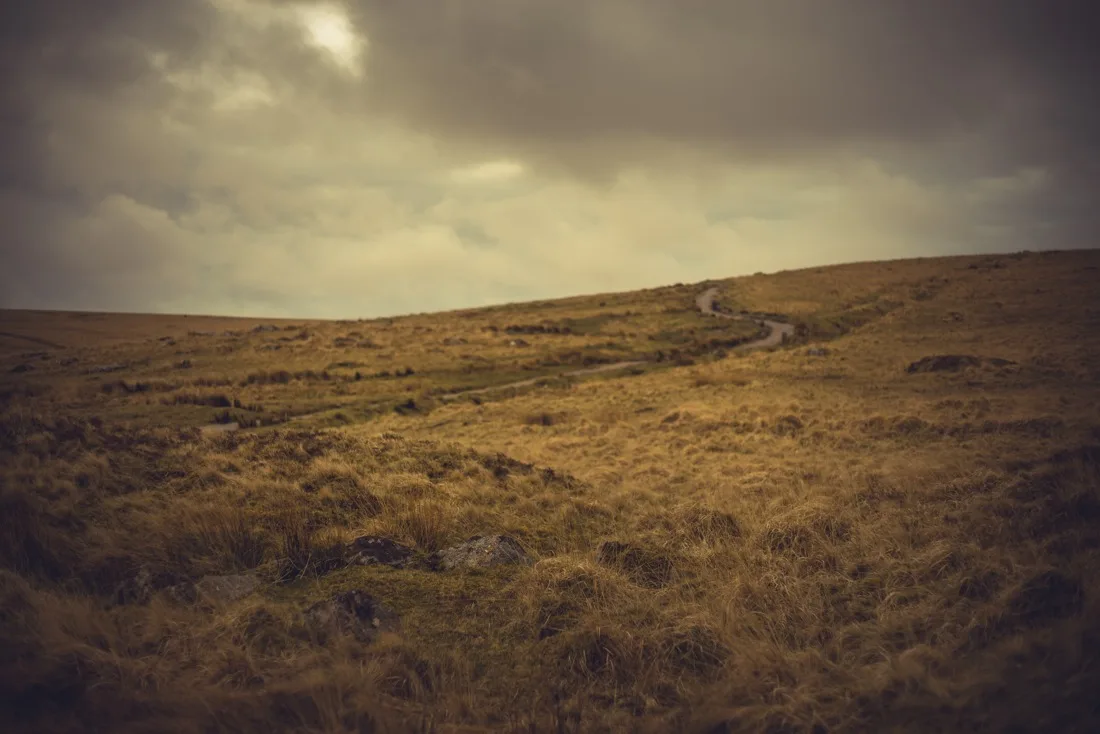 Photograph by Glavind Strachan Photography
“Therefore the little river divides and leaps and tumbles foaming over the mossy granite, or creeps beneath the boulders by invisible ways.”
Also on Our DartmoorOkement Hill — A modest hill with an observation post, flanked by Hangingstone Hill and High Willhays.
