Tinners' shelter, Cut Combe Water
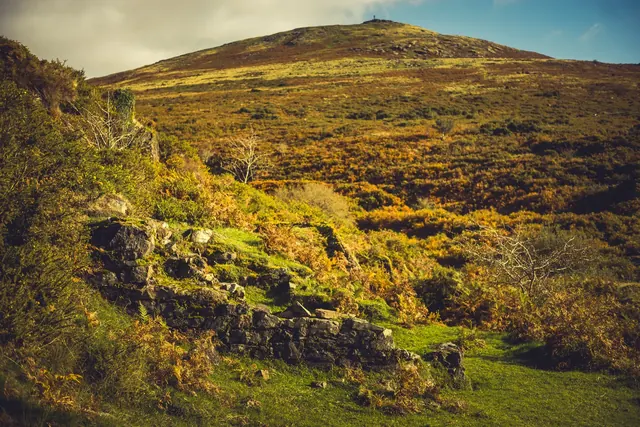
A tinners' shelter 5.4 m by 2.9 m inside, a drystone wall up to 0.75 m high with an entrance gap, a recess that may be a cupboard and a raised platform, above Cut Combe Water.
Tin mines, blowing houses, tramways and quarries - the moor's industrial past.
A tinners' shelter 5.4 m by 2.9 m inside, a drystone wall up to 0.75 m high with an entrance gap, a recess that may be a cupboard and a raised platform, above Cut Combe Water.

Which Dartmoor place is this?
Scheduled Monument with tinworks, field systems, settlements, warren and Bronze Age cairns near Headland Warren.
Scheduled Monument with tin workings and Bronze Age remains scattered across the Meavy valley floor and tor slopes.
The Upper Merrivale tin works on the Walkham: a blowing mill 11.1 m long and two stamping mills, excavated from 1991 to 1996 by the Dartmoor Tinworking Research Group, with dressing floors and an unfinished mould stone.
Kingsett, Tavistock
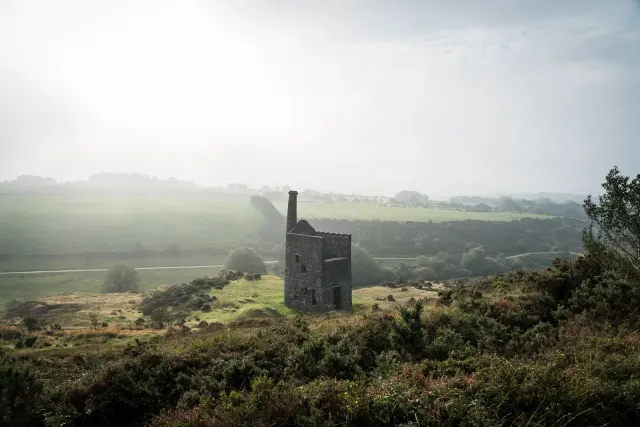
The dramatic stone ruins of a tin mine engine house stand sentinel on the open moor, a monument to Dartmoor's industrial past.
Horndon, Tavistock
Crumbling stone ruins of a 19th-century tin mine nestled in Dartmoor's moorland, a haunting reminder of the region's industrial past.
Remains of a tin mine shaft and workings on the western edge of Eylesbarrow.
Lydford, Okehampton
Wheal Mary Emma was a small tin mine beside the River Lyd below Brat Tor, worked from 1849 and named for its owner's ten-year-old daughter. Its capped shaft, dressing floor, smithy and office ruins survive on the slope above the river, close to the Captain Hunter Memorial.
A big Whitchurch Common landscape: two eluvial tin streamworks (one 1.2 km long and up to 4 m deep), a coaxial field system, cairns, ring cairns, two hut circle settlements, two medieval farmsteads and Second World War gun and mortar pits.