
Industrial Archaeology
Tin mines, blowing houses, tramways and quarries - the moor's industrial past.
View on map
Industrial Archaeology
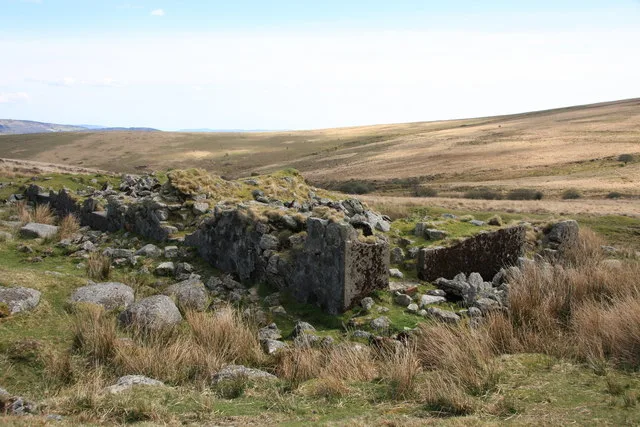
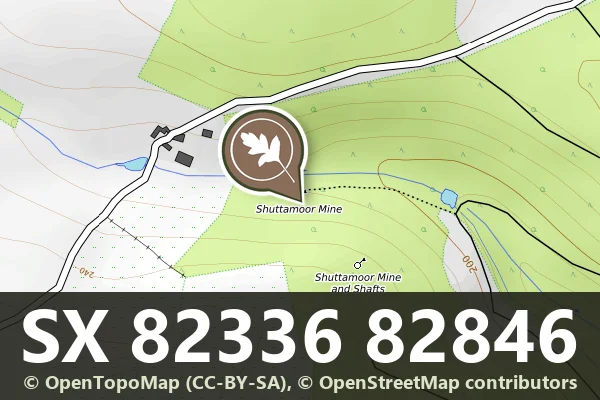
Shuttamoor Mine
Scattered stone foundations and collapsed workings mark this tin mine deep on Dartmoor's open moorland.
Industrial Archaeology
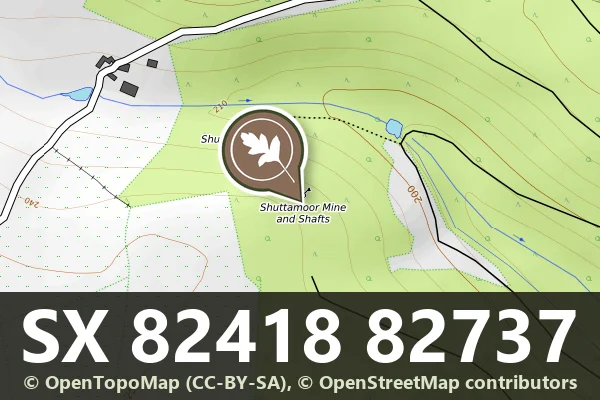
Shuttamoor Mine and Shafts
Abandoned tin mine shafts dotting the open moorland, remnants of Dartmoor's industrial heyday.
Industrial Archaeology
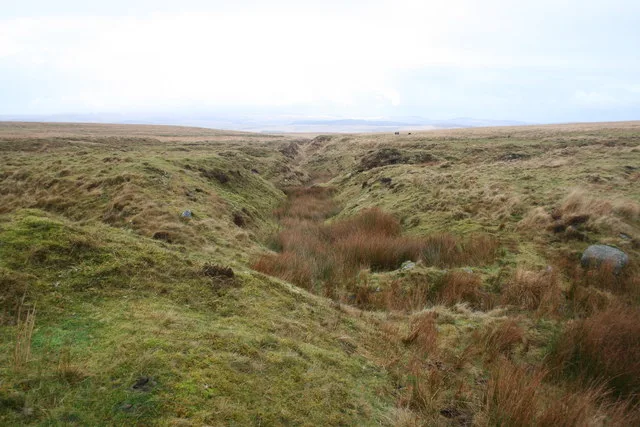
Skir Gut (Tinners' Gully)
A steep granite gully scarred by centuries of tin streaming, where tinners carved their livelihood from Dartmoor's moorland.
Industrial Archaeology
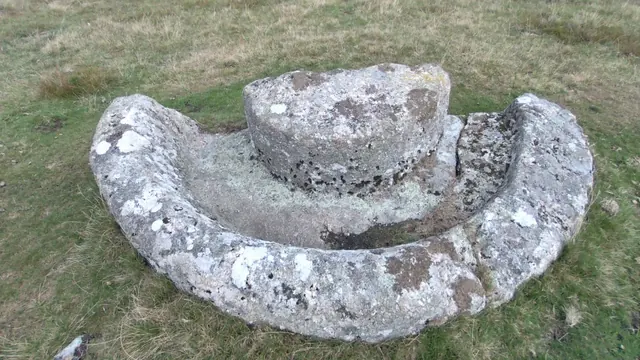
Sourton Apple Crusher
Half of an abandoned granite pound-stone, 7 ft 6 in across, on the open moor east of the western rocks of Sourton Tors: an apple crusher given up after it was damaged in transport.
Industrial Archaeology
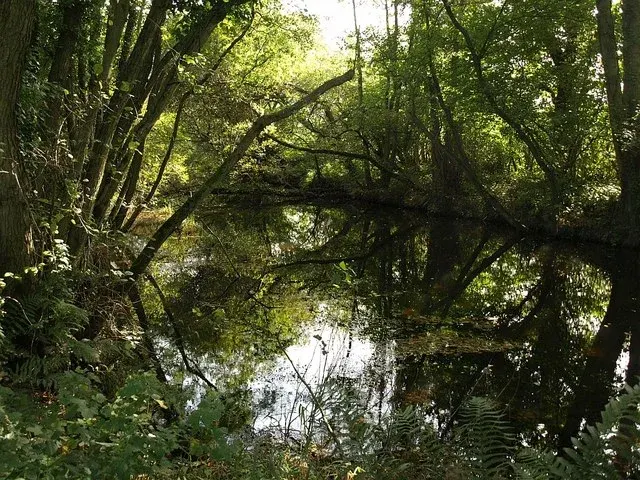
Stover Canal
Teigngrace
A canal built by James Templer, linking the Haytor Granite Tramway to the tidal River Teign at Teignmouth. Granite quarried at Haytor and Holwell travelled this route, including stone for the new London Bridge completed in 1831.

Industrial Archaeology
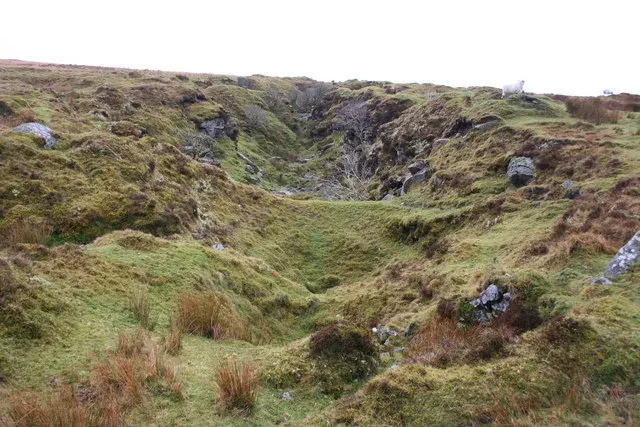
Taw River tin blowing mill near Tawcroft
The Taw River tin blowing mill: a drystone building 9.5 m by 4.7 m inside with furnace stones, wheelpit, leat, reservoir, tailrace and dressing floor, where tin slag has been found.

Industrial Archaeology
Tin blowing mill, Teignhead Farm
A tin blowing mill 13.6 m long on the North Teign below Teignhead Farm, with its furnace stones, wheelpit and two mould stones for the molten tin.
Page 6 of 10