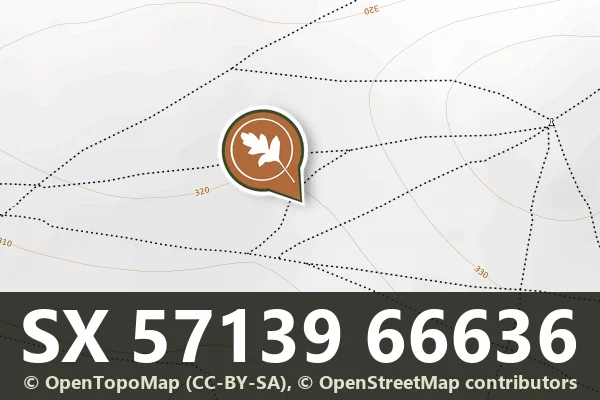
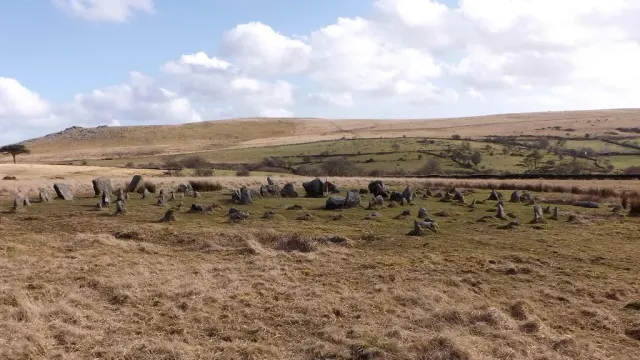
Cairn near the south side of Eylesbarrow Reave
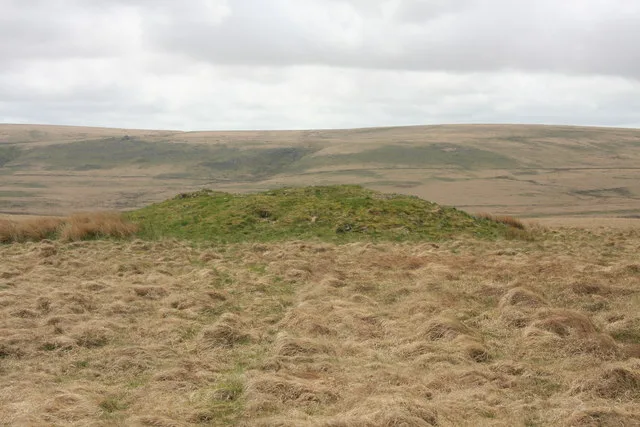
A cairn 17 m across and 0.3 m high, with traces of an inner ring, beside the south side of the Eylesbarrow reave on a spur running west from Gutter Tor.
Dartmoor's archaeology and heritage - antiquities, historic buildings and museums.
A cairn 17 m across and 0.3 m high, with traces of an inner ring, beside the south side of the Eylesbarrow reave on a spur running west from Gutter Tor.
A small cairn 4 m across and 0.3 m high, 50 m north-east of the Yellowmead stone circles, with four stones of a kerb on its west and south sides.
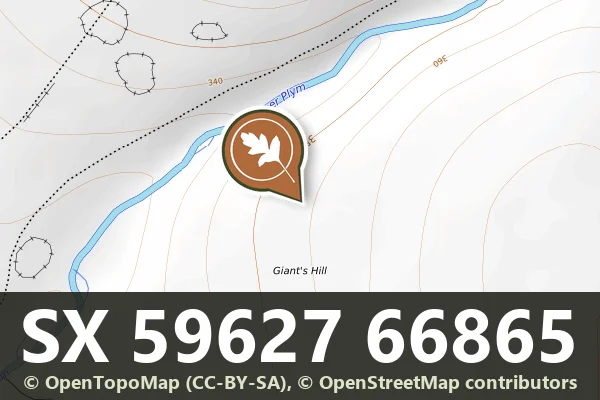
A heather-covered cairn 9 m across and 0.6 m high with a central hollow, within 100 m of several enclosures with hut circles on Giant's Hill.
A small cairn, 6 m by 3 m and 0.7 m high, in a line of five on the north-east slope of White Hill.
A cairn 15 m by 6 m and up to 1 m high on the south slope of White Tor, partly dug by the Dartmoor Exploration Committee in 1899, one of at least fourteen cairns there.
An irregular turf-covered cairn 11 m across and up to 0.5 m high, one of several on the south-west slope of Penn Beacon.
A Bronze Age cairn standing near Eylesbarrow Reave on central Dartmoor.
A turf-covered cairn of stones 10.7 m across and 0.6 m high on a spur south-west of Gutter Tor, 200 m south-east of the Eylesbarrow reave.
Tolmen stone. Photograph by Glavind Strachan Photography“I solemnly swear to you, sir," said he, "nothing will ever induce me to set foot on Dartmoor again. If I chance to see it from the Hoe, sir, I'll avert my eyes. How can people think to come here for pleasure — for pleasure, sir! But there, Chinamen eat birds'-nests. There are depraved appetites ...”
Also on Our DartmoorGibbet Hill — John Bainbridge's 2023 novel of Dartmoor in 1817, a standalone prequel to his William Quest series, following Jonas Lyddon amid the enclosure of the moor's common land.