Three Boys
Teignworthy, Chagford
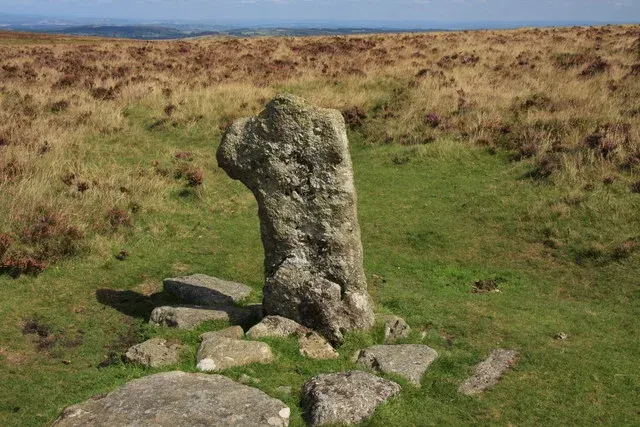
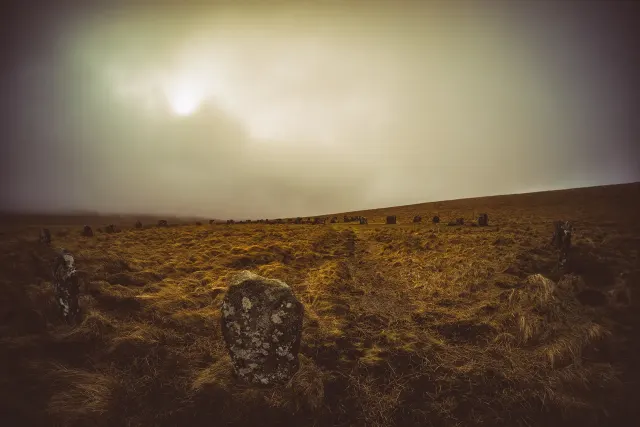
Three granite pillars at the end of a stone avenue near Fernworthy, mostly removed about 1816 to build walls and gateposts; one still stands, five feet high.
Teignworthy, Chagford
Three granite pillars at the end of a stone avenue near Fernworthy, mostly removed about 1816 to build walls and gateposts; one still stands, five feet high.
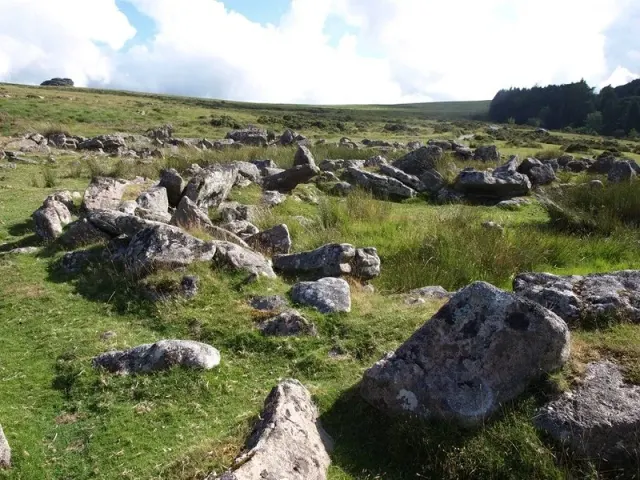
Two close, incomplete stone circles near Sittaford Tor, named for their likeness to a flock of sheep, with the route Crossing gives and the 1901 story.
A Bronze Age settlement of stone-built roundhouses huddled on the open moor, their circular walls still legible after thousands of years.
Chagford
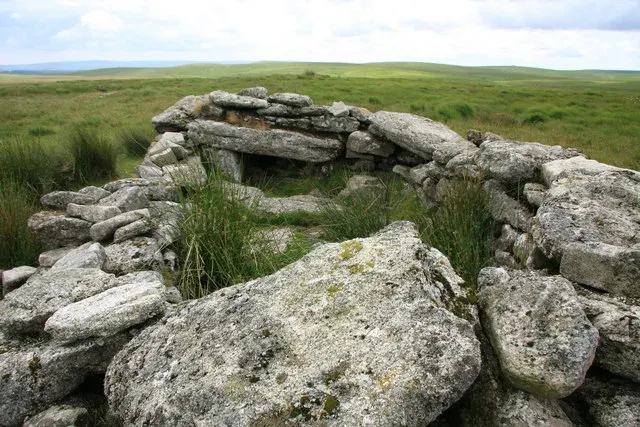
Crumbling stone foundations scattered across open moorland, marking where a longhouse once sheltered livestock and people on Dartmoor's windswept slopes.
What is the earliest known name for the Walla Brook near Wallabrook Clapper Bridge?
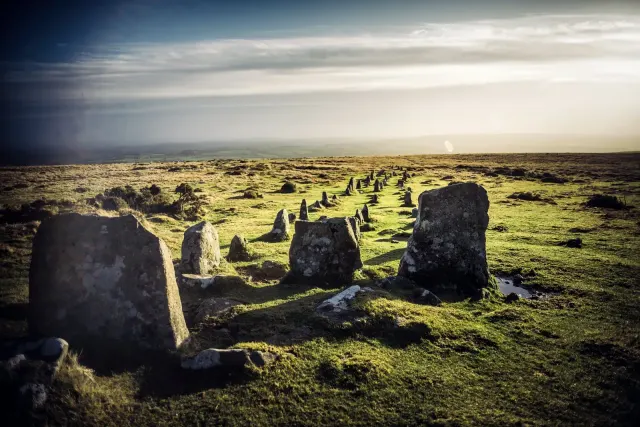
Bronze Age stone rows stretching across open moorland.
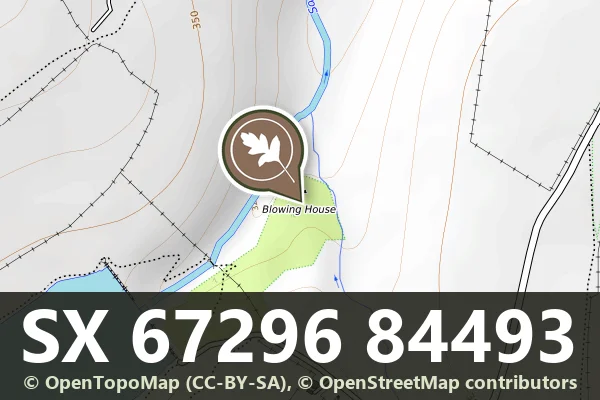
Ruined tin smelting works tucked into Dartmoor's moorland, where 18th-century industry shaped the landscape.
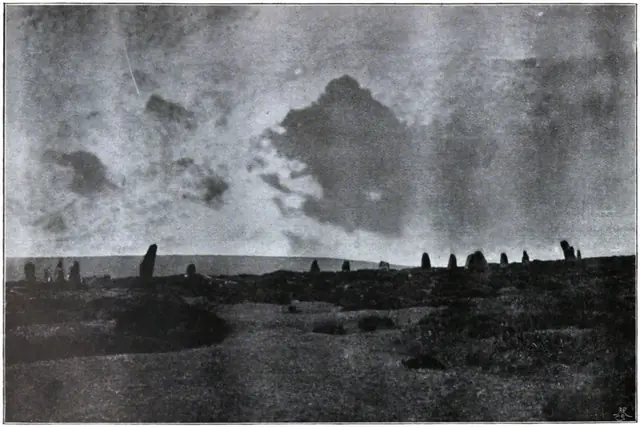
Plate from Dartmoor Illustrated, page 70, 1900“He listened, and distinctly heard one, in a louder tone than the rest, exclaim, "The oven's hot!" "Bake me a cake, then," instantly cried the hungry ploughman.”
Also on Our DartmoorEastern cairn with a cist, Langcombe Brook — A cairn 5 m across and 0.2 m high with a square cist 1 m by 1 m, all its end and side slabs in place, on a west slope between the Langcombe Brook and Deadman's Bottom.