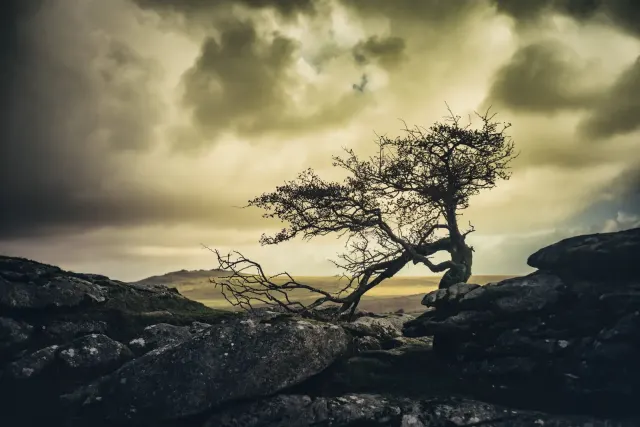
Hartland Tor
A tor on the East Dart above Post Bridge, usually passed on the way to Sandy Hole Pass and the East Dart waterfall, with old enclosures nearby.
The granite tors of Dartmoor, including the ones whose names end in Rocks, Rock or Stone.
A tor is a large free-standing outcrop of rock that rises abruptly from gentler slopes on a hill or ridge. The word comes from Old Welsh and means a cluster or heap. On Dartmoor the tors are granite, emplaced about 280 million years ago. They survive where widely spaced joints in the granite let blocks of rock outlast the weathering that turned the rest into sandy gravel (growan).
Dating of 28 Dartmoor tors found that most have been exposed for less than 100,000 years, and none for more than 200,000. They probably emerged at the start of the last major ice age.
The highest point on Dartmoor is High Willhays, at 621 metres, near Okehampton. Yes Tor stands about a kilometre to the north along the same ridge and is slightly lower.
Which outcrops count as tors is a decision for people far better qualified than this directory. We follow the Tors of Dartmoor database, the Treks and Tors list and Tor Bagger: if one of them lists it as a tor, it is listed here as one. Hills and mounds that none of them list are on the Hills and Mounds page.
This page lists the tors and other named landmarks in the directory. Use the map to see where they are, and open a listing for its grid reference and further sources.
Sources: Wikipedia, Tor (rock) and High Willhays.
A tor on the East Dart above Post Bridge, usually passed on the way to Sandy Hole Pass and the East Dart waterfall, with old enclosures nearby.
Lustleigh
Hatherleigh Tor is a small granite peak located near Lustleigh, east of the A382. It is part of the East Dartmoor landscape, often overshadowed by more famous tors but still a notable feature.
“the country doctor, in hail, rain, snow, or storm, must turn out of a warm bed and ride, often to the dreary waste of Dartmoor, through rough roads and darkness, at the call of humanity,”
Which book is this from?
The best-known tor on the eastern edge of Dartmoor, easy to reach from the road, with a granite quarry and tramway history and a name spelled Haytor, Hay Tor or Hey Tor.
A small tor on the common north of Sampford Spiney, close to Pew Tor, with views across to Vixen Tor and no military firing range nearby.
Hedge Down Tor sits on the northern edge of Hedge Down, accessible via ladder stiles from the west.
A tor on the side of Lee Moor above the Plym valley, opposite Ditsworthy Warren, reached most easily from Great Trowlesworthy Tor.
A small tor about 100 metres from North Hessary Tor, 496 m high, with wide views east and north.
A broad moorland hill in Dean parish between the Wallabrook, the Avon and the Brock Hill stream, with some of the finest pounds and hut circles on Dartmoor.
The highest point on Dartmoor and in southern England at 621 metres, with five scheduled cairns on the summit ridge and neighbouring Yes Tor.