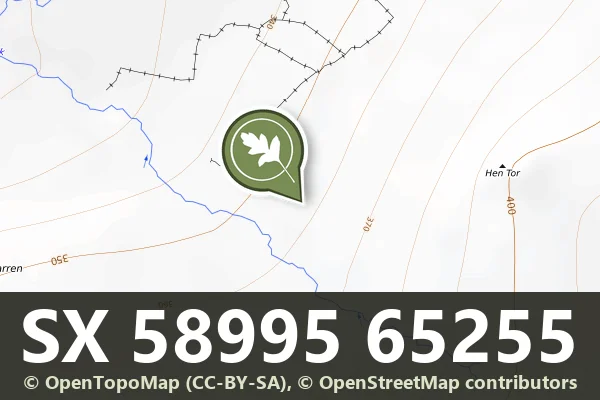
Small enclosure near Ranny Brook
A small oval enclosure 18 m by 16 m with a bank 0.5 m wide, 200 m east of an agglomerated enclosure near Yealm Steps.
Hut circles, enclosures, pounds and reaves - where prehistoric Dartmoor lived and farmed.
A small oval enclosure 18 m by 16 m with a bank 0.5 m wide, 200 m east of an agglomerated enclosure near Yealm Steps.
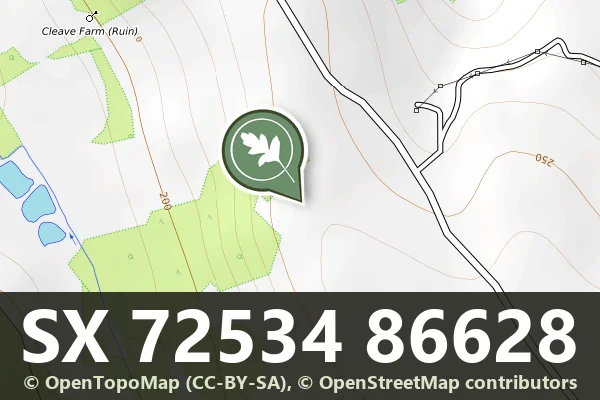
An almost square enclosure, 20 m by 20 m, terraced into a south-west-facing slope near Meacombe.
Three hut circles in a line at the north end of Vogwell Down, the northern one on a levelled platform with two massive standing stones.

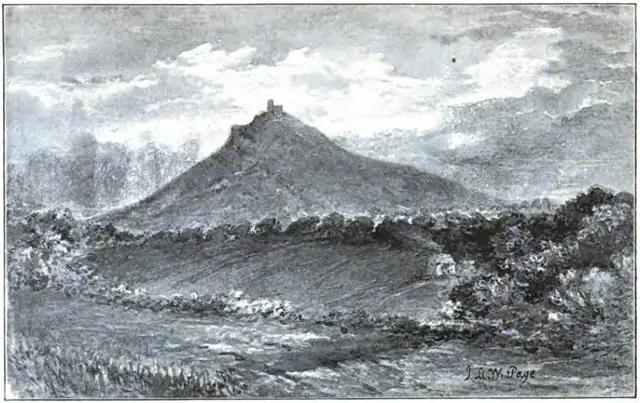
Which Dartmoor tor is this?
An unenclosed settlement of three stone hut circles, 4.5 to 7 m across inside, on the eastern edge of Wigford Down, outside its coaxial field system.
Three hut circles, 4 m, 3 m and 2.8 m across inside, two joined, on the north-west slope of Hen Tor, with a lined, partly blocked doorway.
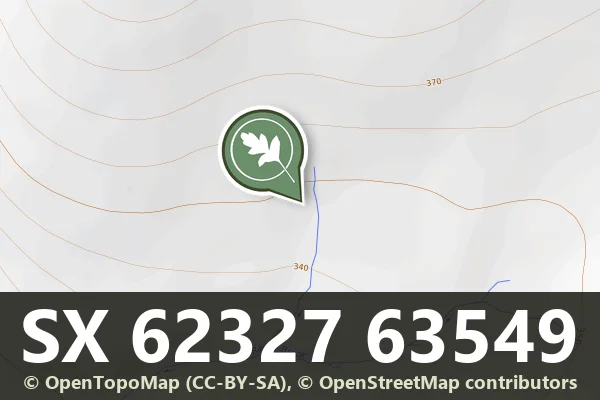
Three hut circles, 6.4 m, 8 m and 6.4 m across, and a 2 m wide upright-stone wall between the two southern ones, on a south-west slope of Hookney Tor.
Three hut circles, 8.5 to 19.6 square metres inside, with walls up to 0.7 m high and boundary walls, on an east slope above the North Teign, south-east of Manga Rock.
Most of the Throwleigh Common coaxial field system, with six settlements including at least 27 hut circles, a reave, at least 27 cairns, part of the 19 km Bradford Leat and two boundary stones.
Two hut circles about 4 m across and a cleared field 42 m by 24 m with its stone thrown into a heap, on the west slope of Lints Tor.
Plate from An Exploration of Dartmoor and Its Antiquities, page 154, 1889“Away to the northward is seen the boggy land in the neighbourhood of Erme Head, with the distant tors peeping over the dark brown ridges.”
Also on Our DartmoorThe Piskies of Sheepstor — A pixie legend attached to Sheepstor, on the high moor between Princetown and Dartmeet.