Watern Oke: hut circle and tinners' building
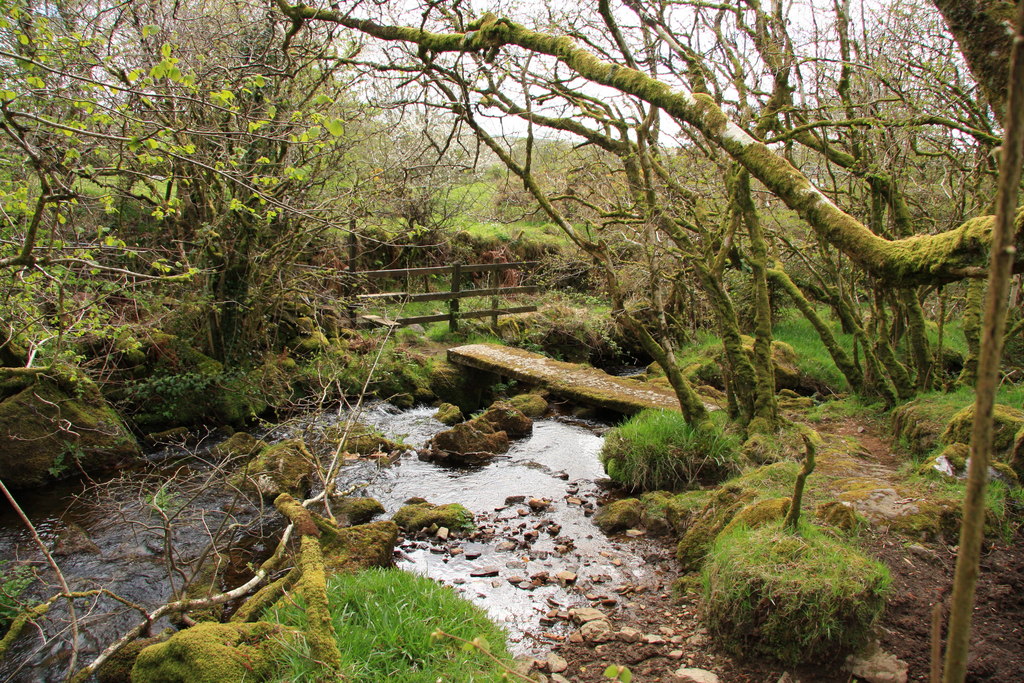
A hut circle 2.3 m across inside, which the excavators took for a cook-house, and a tinners' building 5.8 m by 3.2 m built on top of an earlier hut, at Watern Oke.
Hut circles, enclosures, pounds and reaves - where prehistoric Dartmoor lived and farmed.
A hut circle 2.3 m across inside, which the excavators took for a cook-house, and a tinners' building 5.8 m by 3.2 m built on top of an earlier hut, at Watern Oke.
An enclosure 106 m by 72 m with a double-orthostat wall 3 m wide and seven hut circles, three of them dug in 1899, on a south-west slope above the Colly Brook.
An enclosure 80 m by 52 m joining granite outcrops, with nine small hut circles and a kerbed boulder 4 m across, on the west slope of White Tor.
Six hectares of at least seven enclosures, forty hut circles and a medieval farmstead of four longhouses on a south-west slope above the Sheepstor Brook, cut by the Sheepstor leat.
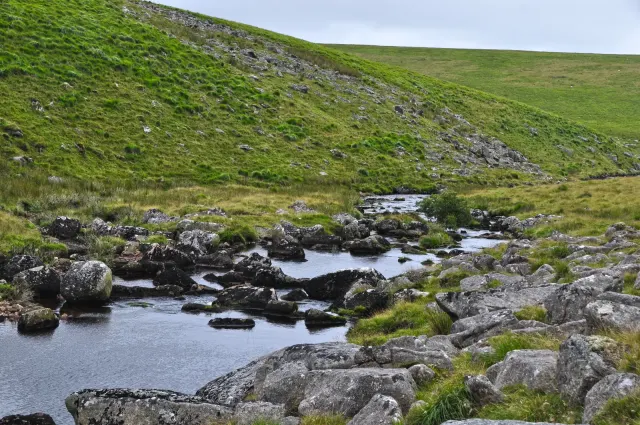
Bronze Age settlement among Dartmoor's high moorland, where ancient stone foundations still mark the hillside.
Willsworthy Pound, traditionally the manor pound: a D-shaped drystone pound 9.5 m by 7.7 m inside with boulder walls up to 1.8 m high, beside the Lich Way near Willsworthy Bridge.
Two settlements on the east slope of Winney's Down: 20 hut circles in three clusters with two enclosures, and three more huts on a terrace 170 m south, with a small cairn.
A large settlement above the Yealm: an enclosure of two parts with about 25 hut circles, a small enclosure with two huts, 16 more huts in a field system, and two later shelters and two leats.
Photograph by Glavind Strachan Photography“Nor can imagination body forth a place more congenial to the sights and sounds of dark and blood-stained rites, than this dreary, narrow, rock-strewn glen of the Dart.”
Also on Our DartmoorLong cairn near White Tor — A long cairn 36 m by 12 m and up to 0.6 m high on a south-east slope east of White Tor, stony at both ends with a kerb on the south side.