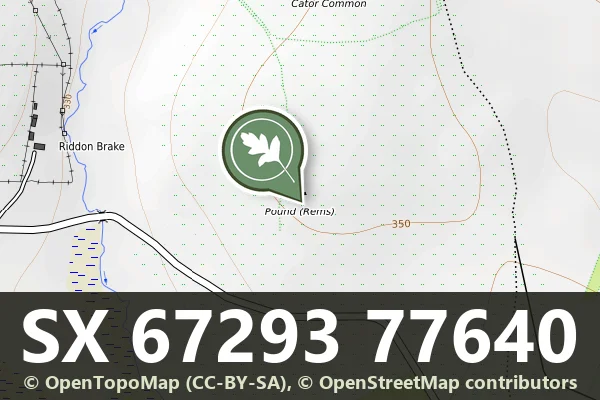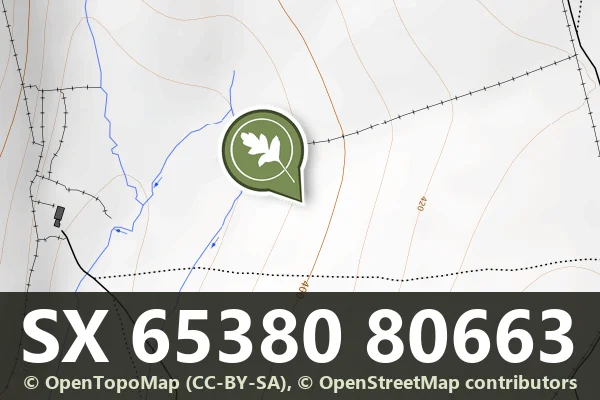
Little Stannon Newtake coaxial fields
Coaxial fields in Little Stannon Newtake with a settlement of at least five huts, a cairn dug in 1896 that held a charcoal pit with burnt bone and a flint flake, a cist cairn and four stones of a row.
Hut circles, enclosures, pounds and reaves - where prehistoric Dartmoor lived and farmed.
Coaxial fields in Little Stannon Newtake with a settlement of at least five huts, a cairn dug in 1896 that held a charcoal pit with burnt bone and a flint flake, a cist cairn and four stones of a row.
Maristow Camp, an Iron Age hilltop enclosure 96 m by 73 m with a rampart 8 to 10 m wide and an outer ditch, on a ridge west of Roborough Down, later landscaped as parkland.
A medieval longhouse 13 m by 4 m inside with a 9 m annex and a drainage ditch, and an outbuilding 66 m north-east of it, on Peek Hill above Burrator Reservoir.
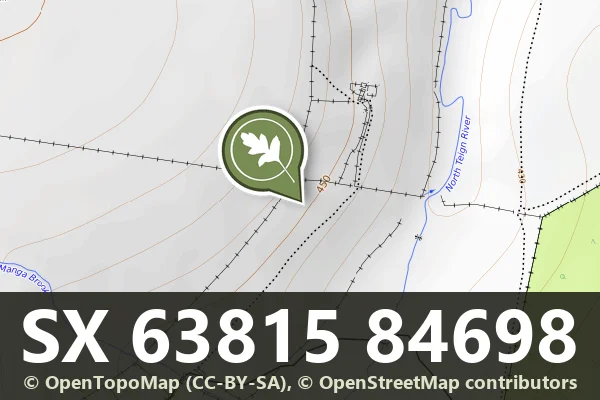
An oval hut circle 5 m by 3.7 m inside with a rubble wall 1.5 m wide and an earthfast rock on its south-west side, above the North Teign.
A hilltop enclosure 38.3 m by 33.4 m on a steep promontory above the Lyd in Parsonage Wood, with a bank 6.4 m wide, an outer ditch and no sign of an entrance.
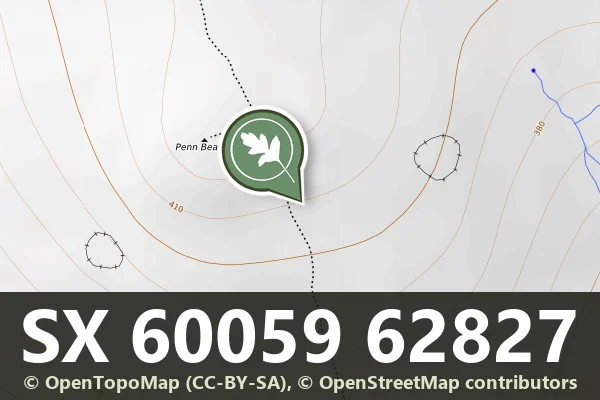
A 170 m stretch of the Penn Moor contour reave from its west end 20 m east of Penn Beacon settlement to a robbed gap, a boulder bank up to 3 m wide.
A Bronze Age field boundary that still marks the moorland landscape after four thousand years.
A pound (a stock enclosure) with hut circles on the open moor north of Down Tor, a scheduled monument.