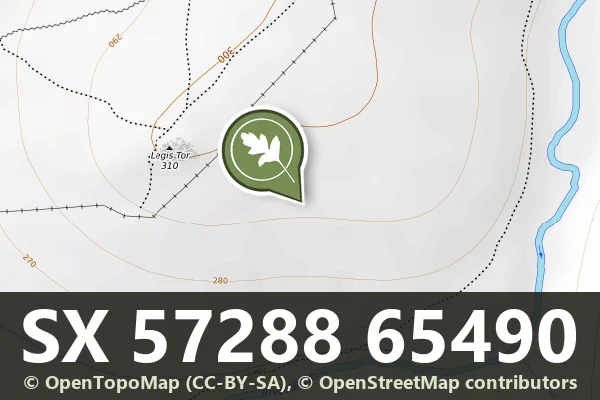
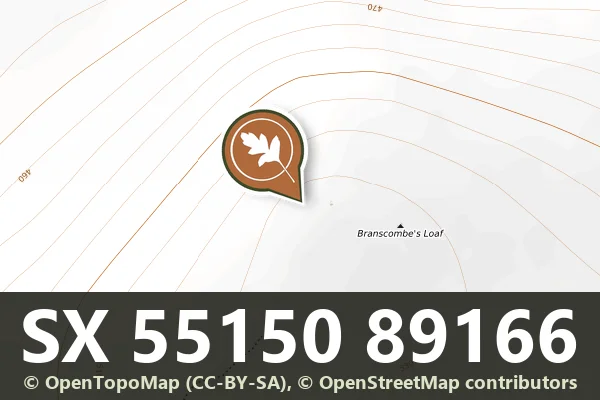
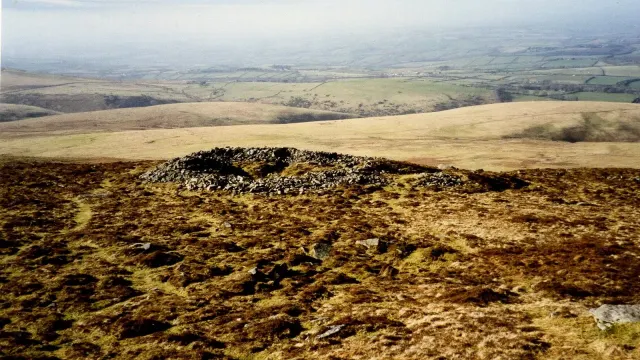
Ring cairn west-north-west of Branscombe's Loaf
A ring cairn, a bank 2 m wide around a space 12.5 m across, on the west side of Corn Ridge summit, one of six cairns in a cemetery.
Showing listings tagged “Bronze Age” Show all listings
A ring cairn, a bank 2 m wide around a space 12.5 m across, on the west side of Corn Ridge summit, one of six cairns in a cemetery.
A round cairn 15 m across and 1.8 m high between two rock outcrops on the summit of Yes Tor, with a core exposed by military, visitor and early antiquarian damage.
What quarry was also known as "Royal Oak Quarry"?
Bronze Age round cairn on the open moor south east of Higher White Tor.
Quintin's Man, a round cairn 20.5 m across and 1.9 m high on a prominent ridge of Whitehorse Hill, with a small modern shelter built in its central pit.
A round cairn 10 m across and up to 1 m high on a west-facing ridge above Burrator Reservoir, inside a post-medieval field in tin-working ground.
The Legis Tor settlement and warren: 58 hut circles in a series of enclosures, three kerbed cairns, and New Warren with about 45 pillow mounds and vermin traps, tinners' buildings and the Yeoland Consols leat.
At least five hut circles within an irregular field system of at least 11 fields on the south-east slope of Laughter Tor, with medieval banks and a later drystone wall across it.
A round cairn 4.6 m across and 0.6 m high on Standon Hill with a kerb of stones up to 0.7 m high on the north and east and a single upright stone that may be a second ring.
Bronze Age round cairn on the eastern slope of Doe Tor, a scheduled monument on central Dartmoor.
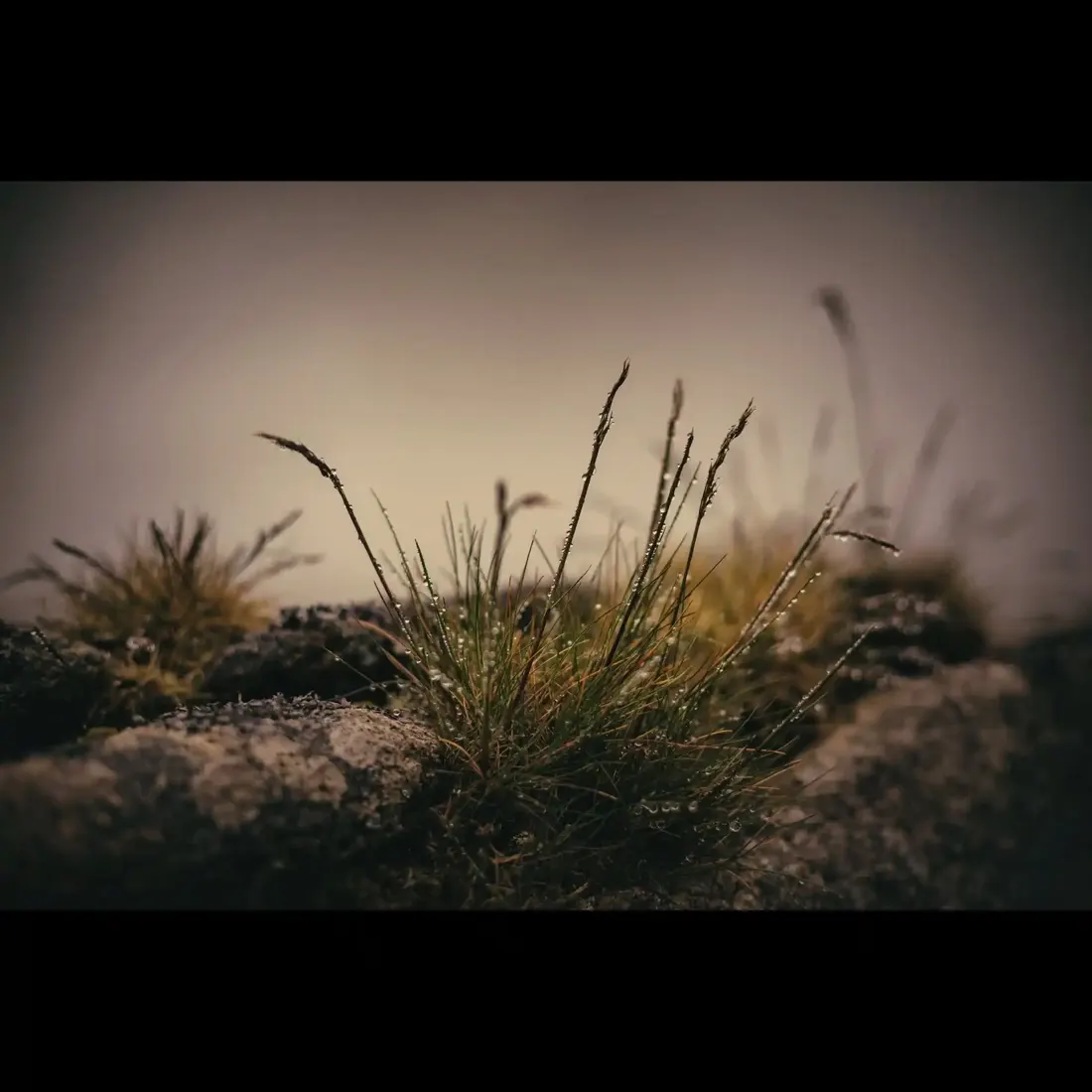
Photograph by Glavind Strachan Photography“I solemnly swear to you, sir," said he, "nothing will ever induce me to set foot on Dartmoor again. If I chance to see it from the Hoe, sir, I'll avert my eyes. How can people think to come here for pleasure — for pleasure, sir! But there, Chinamen eat birds'-nests. There are depraved appetites ...”
Also on Our DartmoorSpinsters' Rock — The one erect dolmen left in Devon, a capstone on three uprights in a field at Shilstone near Drewsteignton, fallen in 1862 and re-erected.