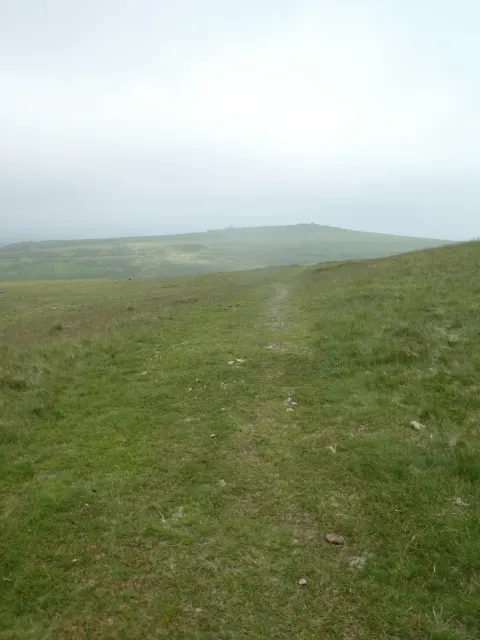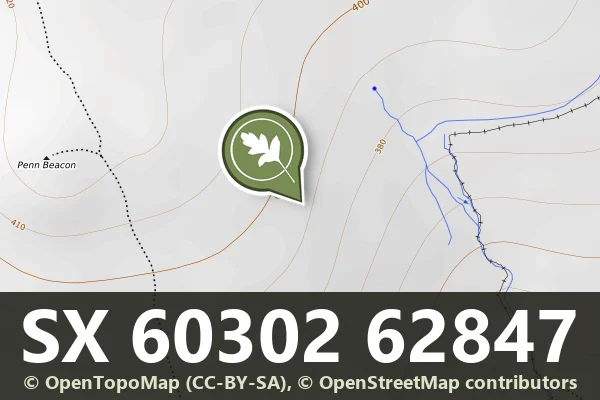
Large hut circle south of the Penn Moor settlement
A hut circle 10 m across inside with walls 2 m thick and 1 m high and a probable north entrance, south of the Penn Moor settlement above Ford Brook.
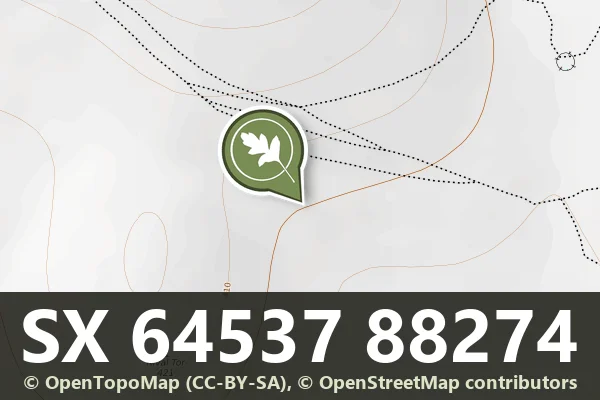
Showing listings tagged “Historic England” Show all listings
A hut circle 10 m across inside with walls 2 m thick and 1 m high and a probable north entrance, south of the Penn Moor settlement above Ford Brook.
“The only convict who really got away from Princetown and was not recaptured was last seen taking a bee-line for Fox Tor Mire.”
Who wrote this?
Two hut circle settlements, nine joined fields and three cairns on the east slope of Rival Tor above the North Teign: six huts all with doorways, and four more in the south; one cairn has a cist.
Two hut circle settlements with their fields on the east slope of Beardown Hill: five huts in the north and at least eight in the south, with two small field systems between.
Two cairns, 18 m and 5.5 m across, on the summit of Water Hill, the larger 1.5 m high with a modern stone pile on it and a three-sided shelter built into its side.
A tor cairn on the summit of High Willhays, southern England's highest point: two curved banks against the east face of a rock outcrop, enclosing 13.5 m by 5.5 m.
Prehistoric settlement remains on the high moor southeast of Two Bridges, marked by scattered stone structures and earthworks.
A flat-topped oval cairn 5.5 m by 5 m between the Thirlstone and Watern Tor, with a large granite slab on its north-east edge.
A round cairn 8 m across and 0.8 m high on a narrow shelf of a steep east slope of Black Down above the Moor Brook, with an early hollow and a military trench beside it.
A round cairn 16 m across and 0.8 m high and a small hut circle 7.5 m to its east-north-east, on a narrow natural terrace on a steep slope.