Here's a rather unusual way of starting an article which is partly journalistic, somewhat affectedly academic and totally just me diving down rabbit holes, because I can; and I will.
A short story.
The Boy on the Train
It was a particularly typical British August in 1905.
The rain continued to fall unabated as the train pulled into Queen Street Station, screeching to a halt like an angry banshee spewing steam and smoke into the heavy, humid air, as if an iron-clad dragon were arriving in the heart of Devon from its lair in the Black Country.
He was thirteen, lean and maybe a little intense looking, but with friendly, inquisitive eyes, smartly dressed in his best suit, very appropriate for the occasion. More importantly, he had an extra shilling than when he'd left home, which is to say he had done some work on the gentle heart of his kindly guardian when he'd been told they were having to stop off in Exeter to deliver some documents to the Bishop, before continuing on to Lyme Regis.
They had barely pulled their mackintoshes and capes out of the suitcases to face the downpour when the British summer, of course, chose that exact moment to break the clouds and fill the station with the magnificent, ethereal light you see when sunlight bounces off puddles and wet surfaces. The whiff of petrichor surrounded them like the comforting hug of a good friend after a particularly grueling day. They repacked their wet-weather gear in the warm glow.
He'd been excited to try the newly installed trams from the station to the Cathedral Green , but he hadn't wanted to waste valuable adventuring time in another big church, and he cajoled his guardian into letting him loose on the High Street.
Close to the Guildhall he found what he'd really been hoping for all along. There had been stalls at the station, but this was the real deal, a proper bookshop: a beautiful four-storey building painted a deep, luscious green, with shiny golden lettering proudly announcing "James G. Commin, Bookseller".
The ting of the small brass bell as he struggled with the large, heavy door, and the brief nod and smile from the gentleman wrapping books at the counter, made the trip worthwhile.
The adventure began.
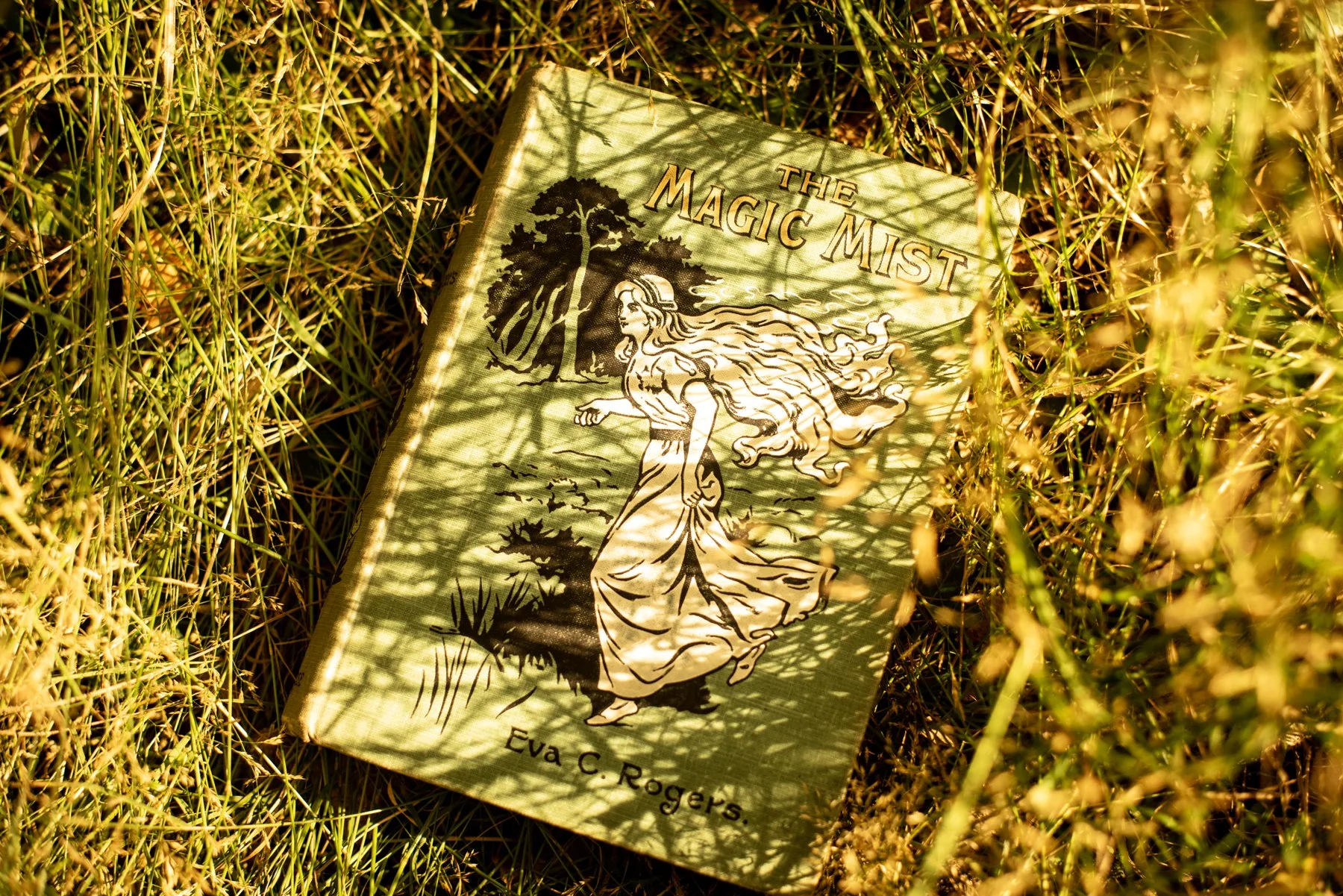
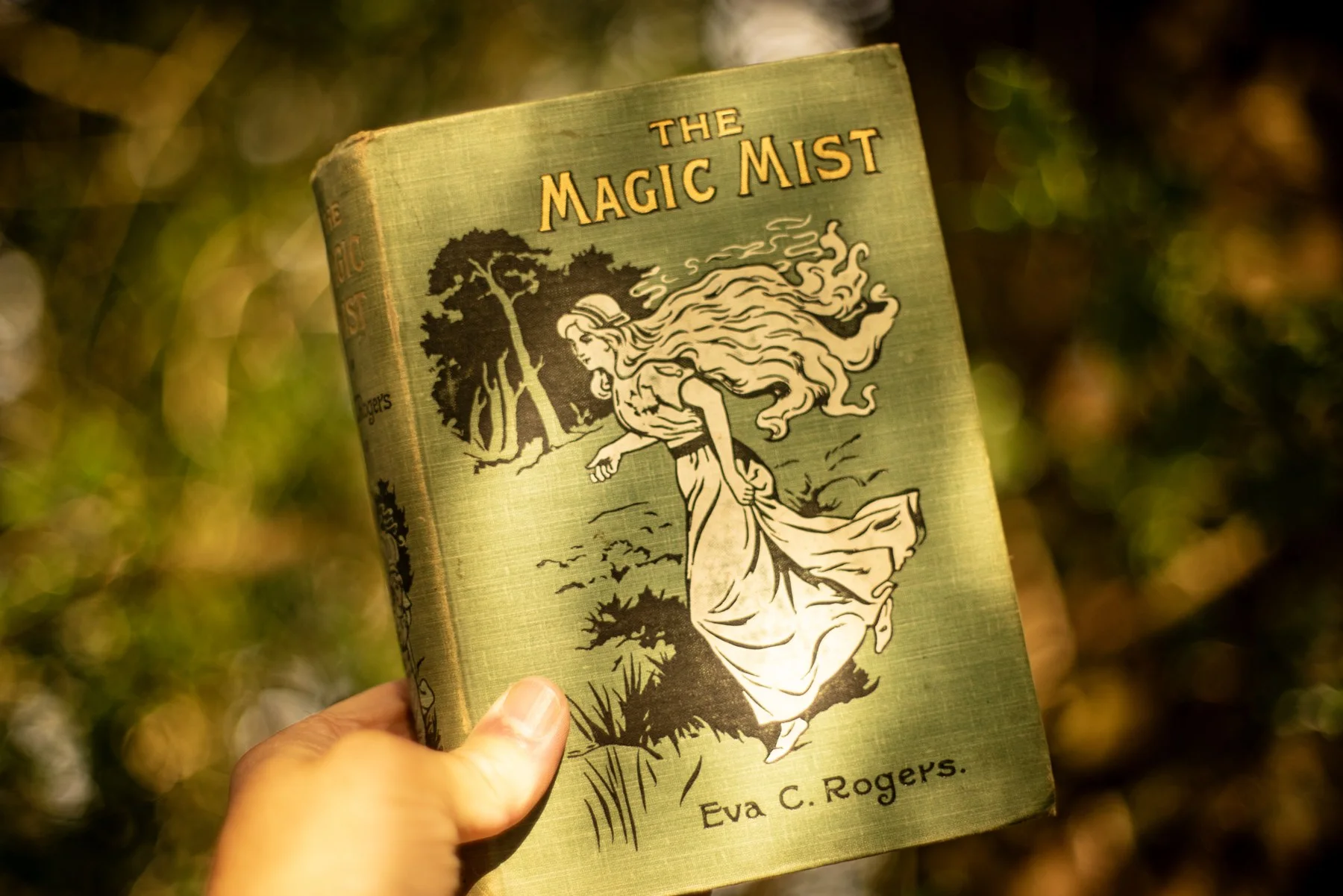
Inside, he felt that giddy excitement brought on by the smell of print on paper and vision of shelf upon shelf of hidden knowledge, both real and imagined. Between the guidebooks and the yellowbacks, a green book caught the light. It was cloth, gilt-edged, with a woman running through a wood stamped in gold on the cover, it cost a crown, which was robbery.
The shopkeeper, having seen the young man weighing his options, and perhaps recognising a kindred spirit, mentioned there was special and the book was his for three shillings. Still most of his holiday savings gone in one go. He bought it anyway.
From the moment he sat down in the carriage with his brother, he didn't look at the Devon countryside once. It slid past the window of the 13:20 and he was somewhere better.
He was in a place the book called Damnonia. There were druids in a wood of ancient dwarf oaks that felt like they were watching you. There was a sun-god and a thunder-god, and the thunder-god's name was printed with a small bar over one letter, a macron, the mark a scholar puts on a long vowel, and he mouthed it to himself all the way past Axminster: Tarānis.
There was a witch on a tor , giants and goblins, a beautiful maiden who became a river, and a mist that led you astray.
That night, in the room over Broad Street he shared with his younger brother, he read on first by the fading sunlight, then moonlight, and finally by the tiniest candle-stub, even after he'd been told twice to go to bed.
He was caught, of course.
But the man who caught him wasn't really angry at all, and he did the thing warm authority does, which is to deploy the whole name like a sentence of law.
"John Ronald Reuel Tolkien. Off to bed with you."
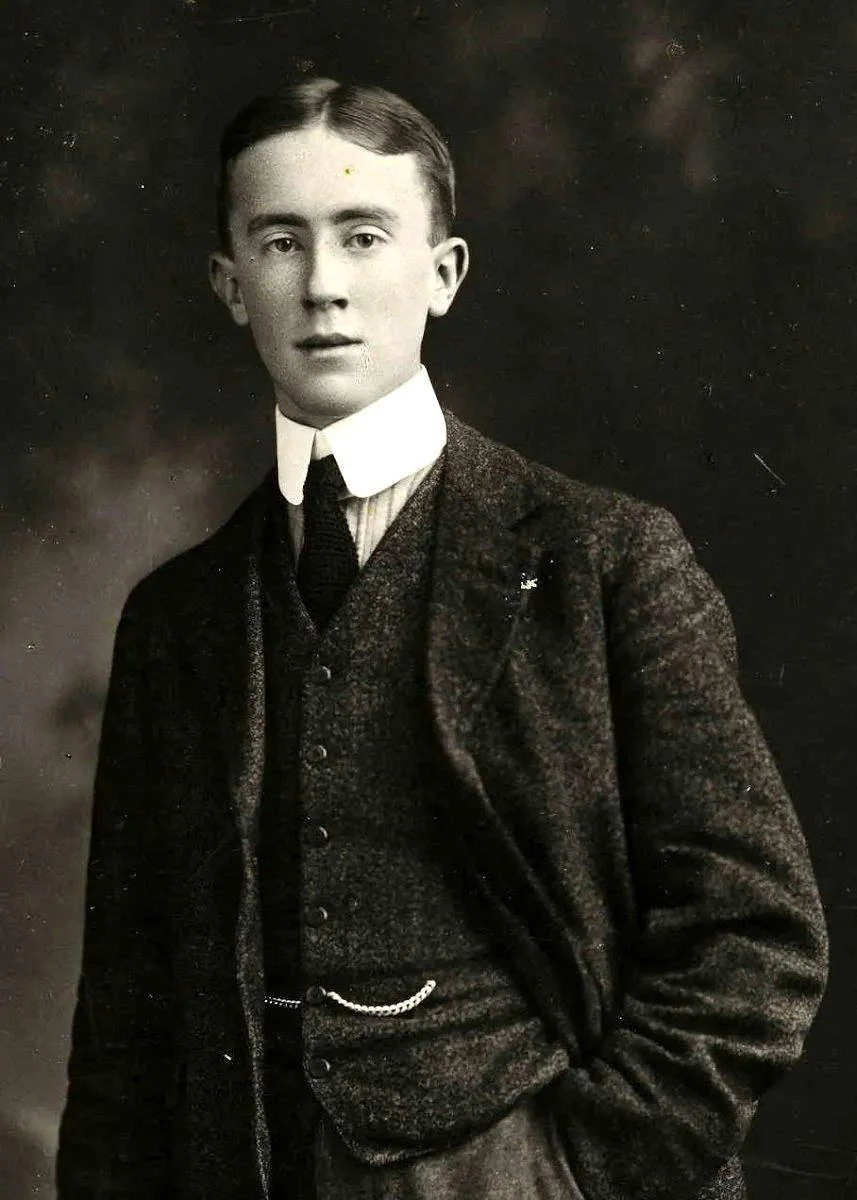
None of that happened.
There is absolutely no evidence that the young Tolkien ever held The Magic Mist (the book this article revolves around), and a good deal of common sense says the two probably never met.
What I do hope I've managed to do is build you the smallest part of a myth in a paragraph or three.
And here's the uncomfortable part: a lot of it is true.
There really was an orphan and a borrowed father, the priest Francis Morgan, who took Ronald and his younger brother Hilary to Lyme Regis every summer and put them up on Broad Street. It was at Lyme that a slightly built boy with an enormous imagination saw petrified dragons in a cliff. The book is real too: the green cloth, the gilt girl running through the wood, the crown it cost, the macron over Taranis - so is the book shop (though I took liberties with it's description as it was destroyed during the Second World War).
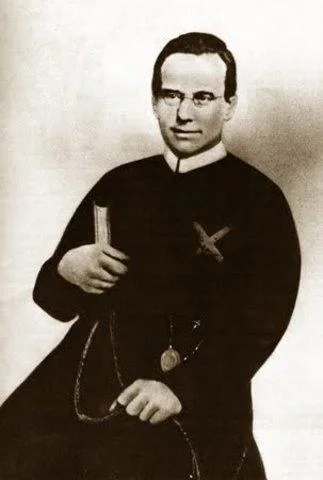
The rain, the Bishop, the detour to Exeter, the shop door and the 13:20 all made up, to get him to the book.
Could you tell which bits were which? I'd bet not.
That's rather the point.
The prose in The Magic Mist really does rhyme with the books some of us loved as youngsters (long before the films and the terrible prequels), and for a very simple reason: the author and the young Tolkien very likely drank from the same well, William Morris and Andrew Lang and their shared love of the Norse sagas.
And that is the whole trick this piece is about.
A story does not become true by being true.
It becomes true by being often repeated, by carrying weight it might not warrant, by arriving with the right names from the right direction, so that it lands as something you might already half agree with (or at least, want to agree with).
Have I intrigued you?
Did I make you want to believe something was true?
The rest of this story is about a real woman, who had her name taken off a book she wrote.
An aside : I should say, before I take her stories apart: I genuinely enjoyed them. Eva’s moorland writing is vivid and easy to read, and her stories reignited an interest in reading that I thought was long dead. Nothing in this piece is meant to spoil them.
The wrong name
I'm very sure I'm not the first (nor probably the last) to notice that when you search for works about Dartmoor legends, there's a fairly popular print-on-demand book (in the scheme of these things) that claims to be a reprint of a 1912 book by an Eva C. Roberts.
The book is called Dartmoor Legends, and it turns up on maybe forty or fifty websites, nearly all of them (it turns out) are commercial booksellers, library catalogues or (as my own research discovered) sales channels dressed up as reviews.
I first came across it when I was cross-referencing some of the supposed legends about the Grey Wethers with possible authors of those legends.
Now, here's my problem. I'm skint and I wanted to read this book without parting with the twenty-odd quid they wanted for it, so I did some digging, mostly on archive.org but also on Google Books and elsewhere.
This is where I got interested.
I couldn't find anything about an Eva C. Roberts anywhere. What I did stumble across, though, was plenty of adverts in old books for an author called Eva C. Rogers.
Not being one to ignore such an obvious rabbit hole (especially one with a big dangly carrot hanging over it), I dove in head first. Little did I know that rabbit hole would cost me quite a bit more money than I could afford and an inordinate amount of my free time.
After a great deal of umming and ahhing (As I've said, I'm not a rich person, and research, although fun and entertaining, isn't exactly a profitable way to spend your money), I bought a copy from eBay.
You get to choose from a number of sellers.
It cost me £23.12 including postage and turned up in about a week.
Up to that point I could only presume it was print-on-demand; the Royal Mail tracking and the label on the parcel confirmed that's exactly what happens when you buy one. Presumably the "seller" makes a few quid, and the order goes off to a printer who prints the book and shares the cut with the publisher.
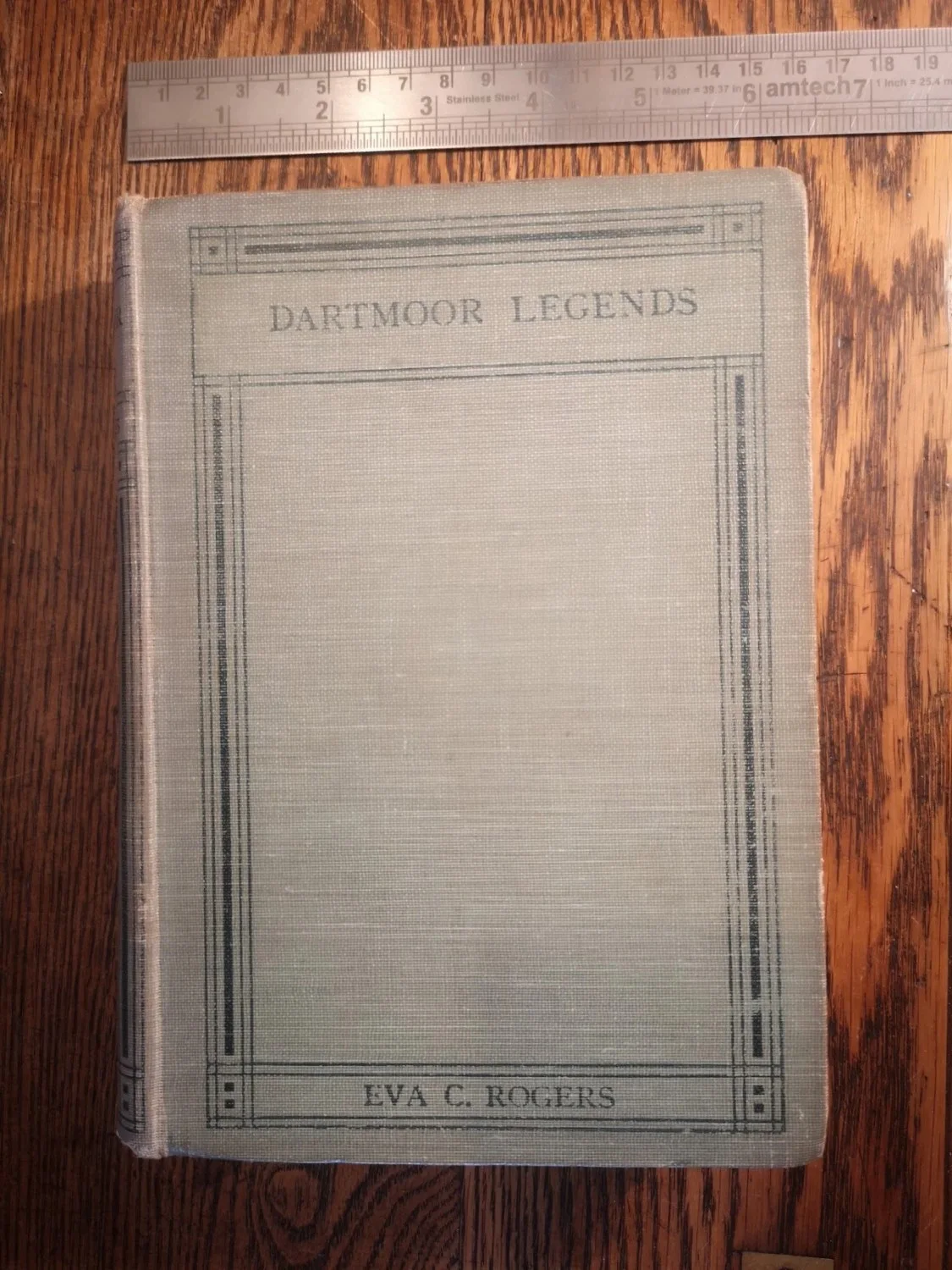
The cover isn't good, which seems a bad start. The picture on the front is actually a copy of a plate from inside the book, coloured an odd pale green, with a smattering of clip-art fairies that have nothing to do with anything inside.
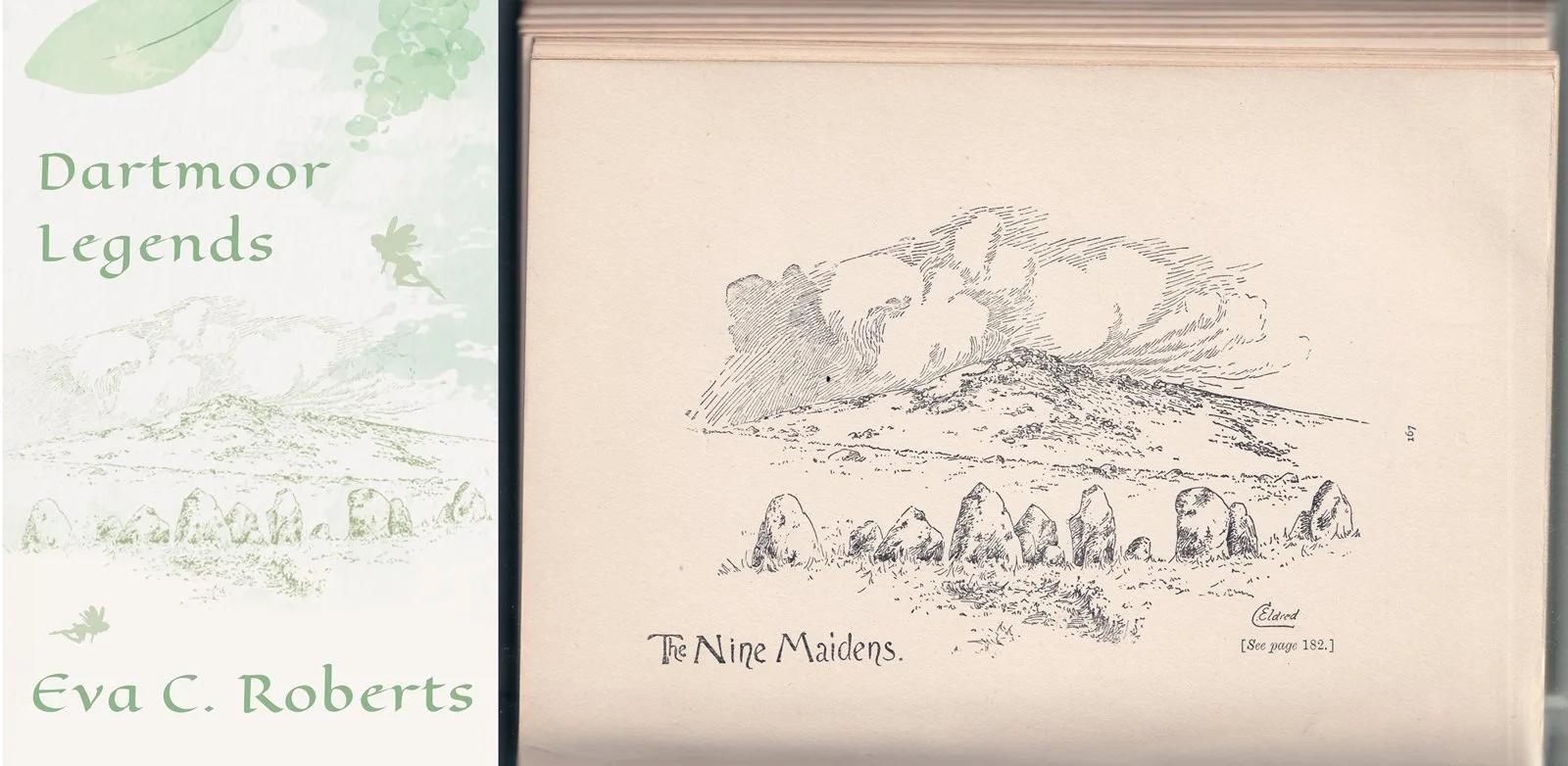
Open it and the real problem shows itself on the very first page. The reprint reproduces the title page of the edition it was copied from, and that page says the book is by Eva C. Rogers.
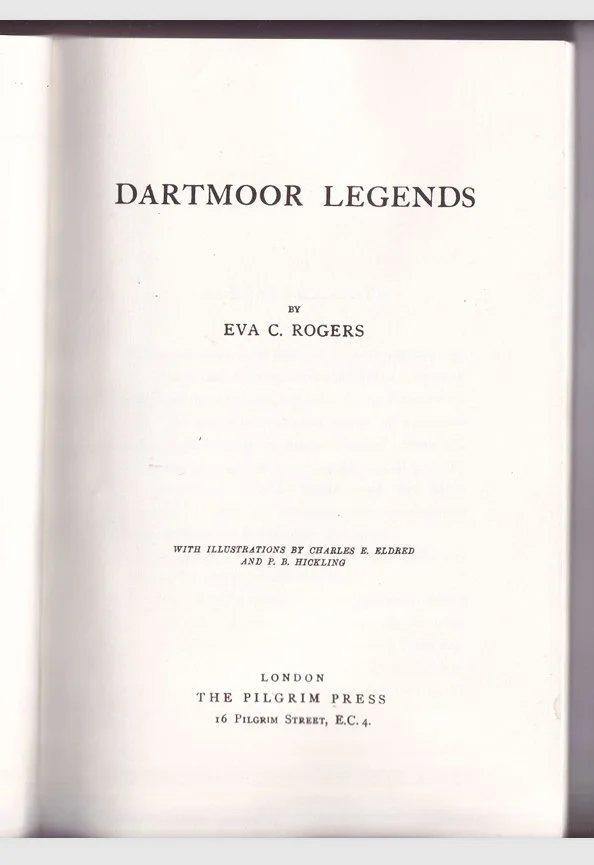
Rogers inside, Roberts outside.
The cover contradicts itself about one of the two things a book cover exists to state. And it's worse than one wrong letter. There are in fact three erasures on that one cover: the illustrator's credit gone, the author's name wrong, and a faithful drawing of a real monument, Charles Eldred's etching of the Nine Maidens (which the author actually name-checks inside the book as a story of genuine petrification lore), turned into some kind of generic fairy-tale wallpaper.
Here's the detail that turns that typo into a story: the cover is the part that usually gets catalogued. Booksellers, aggregators, listing databases, the whole machinery that decides what a book is online, all of it harvests the cover and the publisher's metadata feed. The title page sits unread.
So "Roberts" is the name that spread, while the correct name sat inside the covers of the very same object, invisible.
Eva has become a metadata orphan. As we'll discover, she died young, she had no authoritative library record of the kind famous authors get, and she left no estate with an interest in defending her name.
When the error came, there was nobody whose job it was to notice.
I'm no true researcher, but even I could see there's a proper forensic tangle behind all of this, and I'll come back to that later.
IMHO it's the least interesting thing I found.
The heart of the matter is the woman the name belongs to.
And before we take the machinery apart, you should probably meet Eva.
Who was Eva?
Eva Constance Rogers was born in the first months of 1872 at Plympton St Mary, on the Plymouth edge of the moor, one of eight children of George Porter Rogers, a Plymouth warehouse businessman, and his wife Sarah.
In 1897 the Devonshire Association elected her a member, giving her address as Langstone, Pu Tor, near Horrabridge, on the western flank of Dartmoor. Note the spelling: Pu Tor for Pew Tor. The members' roll kept the local vernacular that the Ordnance Survey would no doubt have "corrected", which is totally on point for a story about who gets to decide which names are right.
“Miss Eva C. Rogers, Horrabridge”
“Rogers, Miss Eva C., Langstone, Pu Tor, near Horrabridge.”
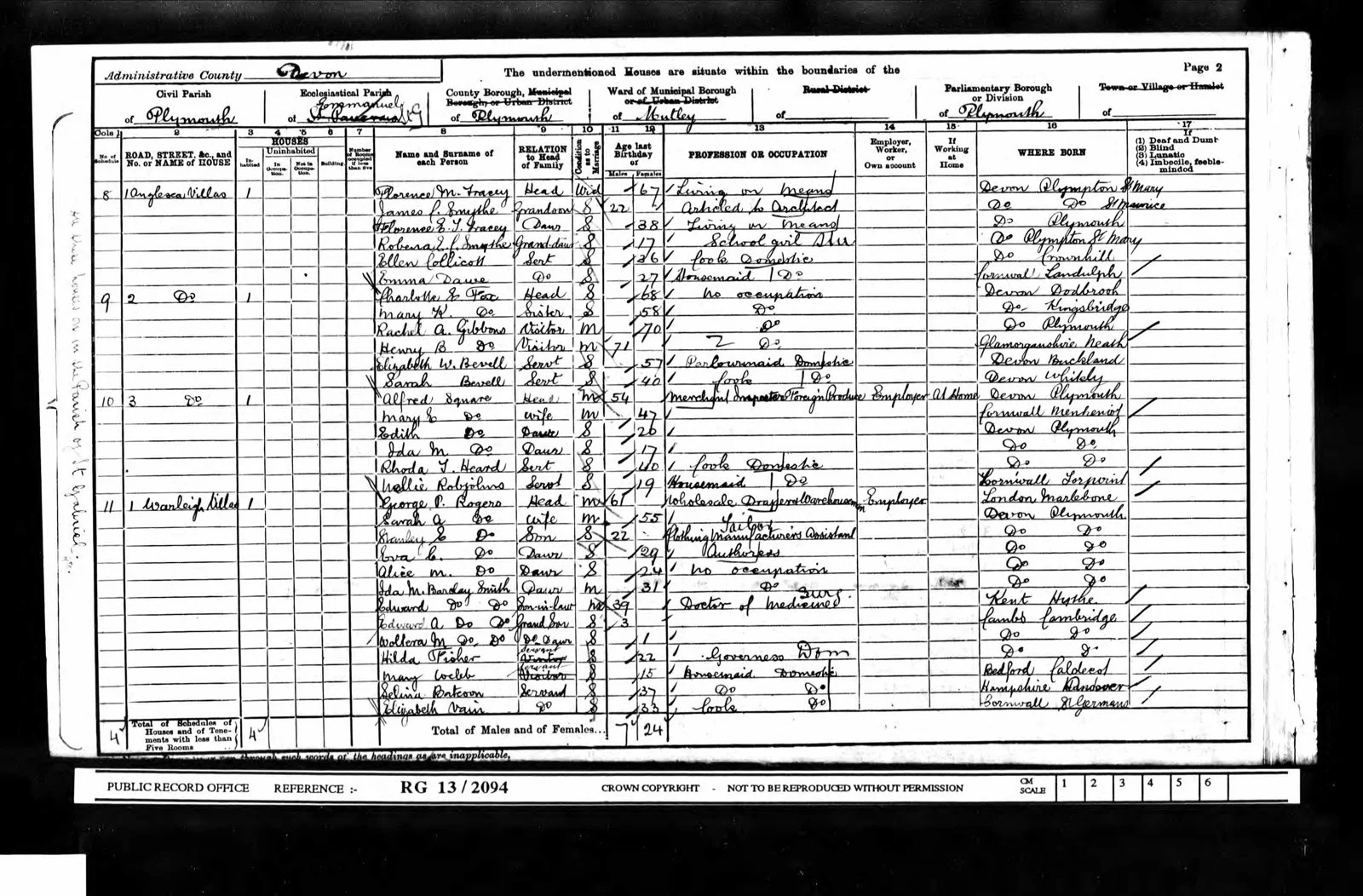
The 1901 census finds her in Plymouth, aged 29, and in the occupation column, in an era when most unmarried daughters of businessmen were recorded as nothing at all, one word: "Authoress".
She had earned it, and she hadn't started with fairy tales.
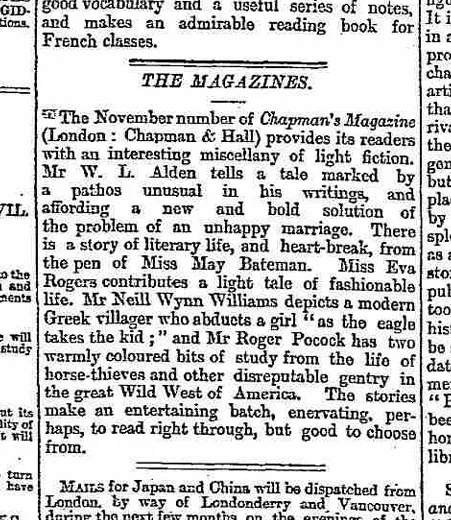
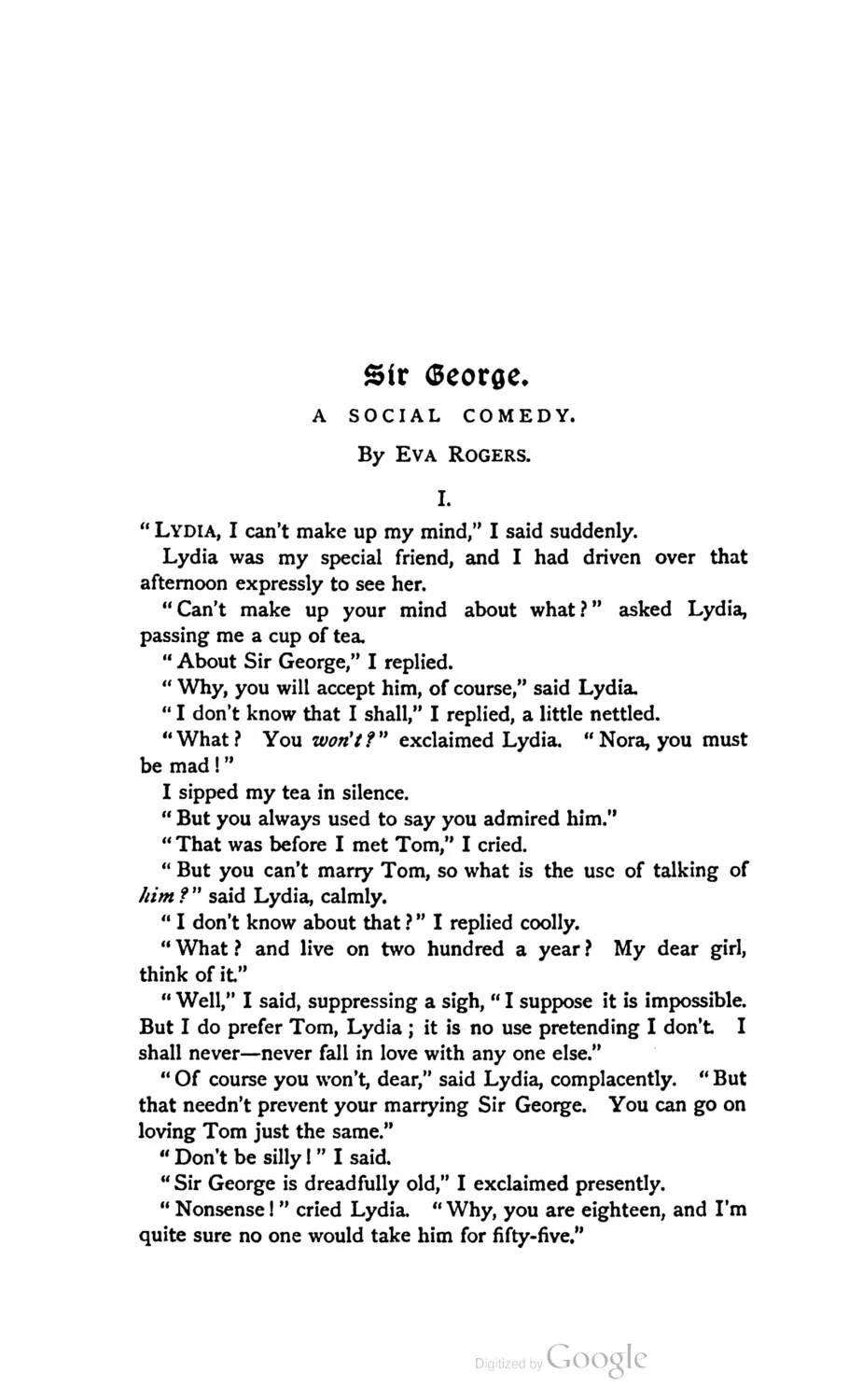
As far as I can ascertain (and I’m obviously more than happy to be pointed in the direction of undiscovered work), the paper trail begins in 1896 in Chapman’s Magazine of Fiction with “Sir George. A Social Comedy”, an adult satire of the marriage market narrated by a young woman being manoeuvred towards a rich older baronet, about what a woman without money can and can’t do:
“I can’t teach, or write, or do anything to earn my living; and it would have been very selfish of me to have married Tom. One must face facts. Mamma can’t live for ever, and when she dies, I shall be alone in the world, without enough to live on. Oh, why wasn’t I taught to do something, like other girls are! Unless I marry some one, I must starve.”
“Perhaps Eva Rogers’ ‘Sir George’ ‘takes the cake.’ It is so amusing that we give the opening page as a specimen of how our girls reason together on love and life.”
Then, seemingly, a swerve into children's writing: The Bear's Kingdom in 1897, a fairy tale that quietly became a steady pay check, surviving copies marked "24th thousand". By 1899 a magazine could credit a story to her simply as "by the author of The Bear's Kingdom"; her name needed no introduction.
In December 1900 she had two books land in the same Christmas season, A Tale of Four Foxes and The Magic Mist. She was 28.
The work runs on through the big illustrated magazines, The Queen, The Girls' Empire, Madame, Little Folks, with newspaper serialisations into 1910, and it reached America too, one of her poems reprinted there in 1906.
She was no mollycoddled recluse, either.
In December 1898 she wrote to the Plymouth Board of Guardians on behalf of the Children's Happy Evenings Association, inviting the 97 children of the workhouse to an entertainment at the Corn Exchange, and the Guardians "gratefully" accepted.
A year later the Western Morning News reported that "Miss Eva Rogers was chiefly responsible for the arrangements" of the Association's Christmas treat: over 800 Plymouth children, the workhouse children among them, given tea, carols, a Punch and Judy, a vitagraph show, and, on the way out, a bun, a bag of sweets and an orange each. Among the lady helpers listed that night is a Miss Pitts.
“Miss Eva Rogers was chiefly responsible for the arrangements, and the youngsters had a delightful time. Over 800 children were entertained.”
“On leaving each child was presented with a bun, bag of sweets, and an orange.”
On Thursday 8 August 1901, at St Andrew’s Church in Plymouth, she married Stanley Thomas Pitts, and she carried on publishing as Eva C. Rogers. The Western Morning News gave the wedding its own headline, “Pitts–Rogers”, and a rather long report of the day.
The bridegroom’s sister, Lizzie Pitts, was one of the three bridesmaids, so the family she married into was already part of her circle, and the Children’s Happy Evenings Association, of which she was honorary secretary, gave the couple their most personal present:
“At St. Andrew’s Church, Plymouth, yesterday afternoon, before a large gathering of relatives and friends of the bride and bridegroom, the marriage took place of Miss Eva Rogers, younger daughter of Mr. G. Porter Rogers, J.P., Warleigh Villa, Ford Park, and Mr. Stanley T. Pitts, of Plymouth.”
“The three bridesmaids—Miss Alice Rogers (sister of the bride), Miss Lizzie Pitts (sister of the bridegroom), and Miss Edith Coppin (cousin of the bridegroom)”
“The bride and bridegroom received over 200 presents, one being a solid silver inkstand and pen, with a framed and illuminated address, which contained the names of the donors, who are associates of the Plymouth branch of the Children’s Happy Evenings’ Association, of which the bride is hon. secretary.”
Two daughters came: Margaret Elinor in 1902 and Dorothy Mary around 1906. And then, in December 1909, at The Cottage, Yelverton, Eva died.
She was 37.
The evidence I can uncover points, though I can't claim it as proven, to complications in childbirth.
What followed is its own quiet episode of Downton Abbey. In 1911 her widower married her younger sister Alice, a marriage that would have been illegal four years earlier, before the Deceased Wife’s Sister’s Marriage Act of 1907.
The aunt became the stepmother, and Eva’s daughters were raised inside the family. Stanley never left The Cottage. He died there in 1958, forty-nine years after Eva, in the house where she died.
An author who stops publishing at 34 and dies at 37 leaves a small target for posterity.
The wrong name on the cover was just the last snub at a name that had nobody left to defend it.
Her work: a working bibliography
She wasn't a one-book author, and I feel that seeing the shape of her whole career is part of putting her back.
What follows is what I have currently managed to trace, from an adult satirist in her mid-twenties to a busy children's magazine writer whose last firmly dated story appeared three years before she died.
Several entries rest on mentions I've found in periodicals and I either can't afford to buy these or I can't find any to buy (feel free to send me copies).
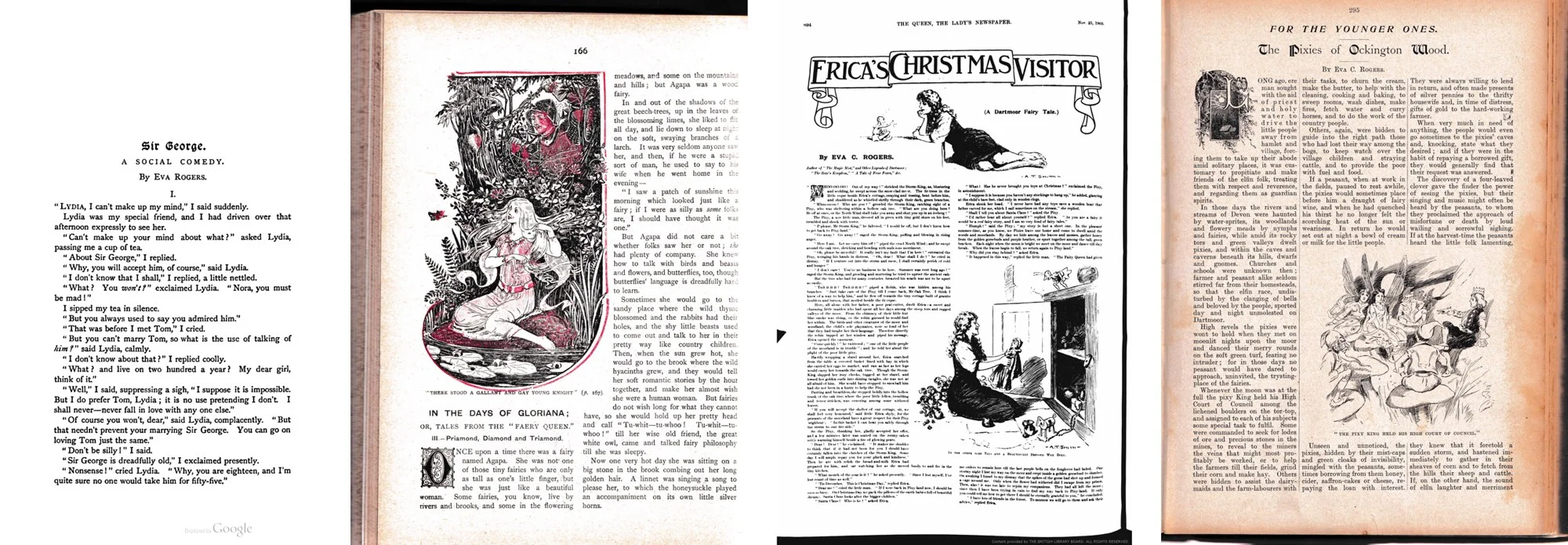
- 1896: "Sir George. A Social Comedy", Chapman's Magazine of Fiction. An adult marriage-market satire, not a fairy tale.
- 1896: "An Autumn Tragedy", poem, Boy's Own Paper. Her earliest known verse.
- 1897: The Bear's Kingdom, a fairy tale that became a steady seller (surviving copies marked "24th thousand"); reviewed nationally, the Spectator filing it in "the numerous 'Alice in Wonderland' family".
- 1899: "In the Days of Gloriana" and "The Spiteful Rooks", Little Folks (Cassell); the start of a decade-long Cassell relationship.
- 1900: A Tale of Four Foxes, a second book in the same Christmas season as the next.
- 1900: The Magic Mist, and other Dartmoor Legends, Andrew Melrose (London) and James G. Commin (Exeter), prefatory note by Robert Burnard, illustrations by Charles E. Eldred and P. B. Hickling. Published for the Christmas 1900 trade; usually catalogued "1901"; the book itself carries no date anywhere.
- 1902: "The Legend of the Rose-Queen" (The Queen, 25 Jan) and "The Faithful Fir-Tree" (The Queen, 1 Mar). Two stories in six weeks.
- 1903: "The Isle of Wonderland", poem, Father Tuck's Annual.
- 1903: "The Stars", poem, Nister's Holiday Annual (probable).
- 1904: "The Nymph Tamara", "The Wrath of Taranis", "The Pixies of Ockington Wood", The Girls' Empire (a Melrose magazine); the Dartmoor material run again as magazine serials.
- 1905: "Erica's Christmas Visitor", The Queen, 25 Nov, billed as "A Dartmoor Fairy Tale".
- 1905: "The Land of the Silver Star", a syndicated Christmas story reworking Andersen's "Little Mermaid".
- 1905: a contribution to the Madame Christmas number.
- 1906: five poems in Little Folks, vol. 63, including "Rain Fairies", whose full text survives through an American reprint (Sabbath Recorder, 1906), the first evidence of her work carried in the United States.
- 1906: "The Star Princess", a syndicated Christmas fairy tale, three papers in a month, a Dublin paper listing her among English syndicate writers. Her latest firmly dated appearance before her death.
- By 1905: "The Quest of the Fairy Queen" and "A Visit to Santa Claus", known only from bylines, not yet found in full.
- c.1912 to 1930: Dartmoor Legends (Pilgrim Press), the book retitled and reissued, still correctly under "Eva C. Rogers" (date disputed).
- c.1920s: Told by the Animals, three stories, probably a posthumous Tuck reprint.
- 2006/2008: Dartmoor Legends (Read & Co. print-on-demand), the reprint that names her "Eva C. Roberts", the object this article started from.
The point of listing all this is rather simple.
Eva was a real person with a real working career, a decade and a half of it that we know of, in the major illustrated magazines of the day, in two countries. (One of her pieces cost me a pretty penny, as it also carries what's been described as the first recorded appearance in print of one of Arthur Rackham's pictures. )
To me, that's not exactly the output of someone history was entitled to lose.
And even the people who value her books crop her.
A specialist antiquarian dealer, writing a careful and sympathetic note on her for a catalogue, states that "Her first published work was The Bear's Kingdom in 1897".
The satire and the poem of 1896 vanish, and her clock starts at the children's book. Nobody meant anything by it. That's just how it always happens.
What they said at the time
Set against the apparent modern reverence for her work (and by that I mean the way nobody seems to have noticed - or in the least, acknowledged - that Eva obviously was writing children's stories, not legends), the notices at the time were far more clear-eyed about what the book was.
They liked it, mostly, and they liked it for what it was: a Christmas gift-book of imaginative make-believe, attached (sometimes tenuously) to the real Dartmoor.
The Western Morning News gave it a long, generous review the week it appeared, on 18 December 1900, and the reviewer knew exactly what he was reading.
Miss Rogers, he wrote, "probably intends her new book to come to us with the literature of the Christmas gift season, and its outer dress of green and gilt is in keeping with the supposition." He allows the reader "enough of the child-spirit in us to be fond of indulging in a little make-believe", and then, in the sentence that matters most, states the whole method plainly: "the real places and more or less real people are, in fact, but the merest pegs to hang the network of fiction upon." He introduces the title story exactly as invention: it "tells the story of Vixana, the dreaded witch of Vixen Tor."
A reader in the week of it's publication took the witch for what she was: Miss Rogers's fancy, wrapped around a real tor, not a tradition she was recording.
“Miss Rogers takes the Dartmoor lore and legends as she has found them, and she weaves and works them up afresh by dint of a lively imagination and a fairly facile literary gift.”
The awful review is even better, and I'd be amiss if I left it out!
The Morning Leader of London, three days later, under the heading "On Old Dartmoor", managed to be both patronising and, by pure accident, exactly right:
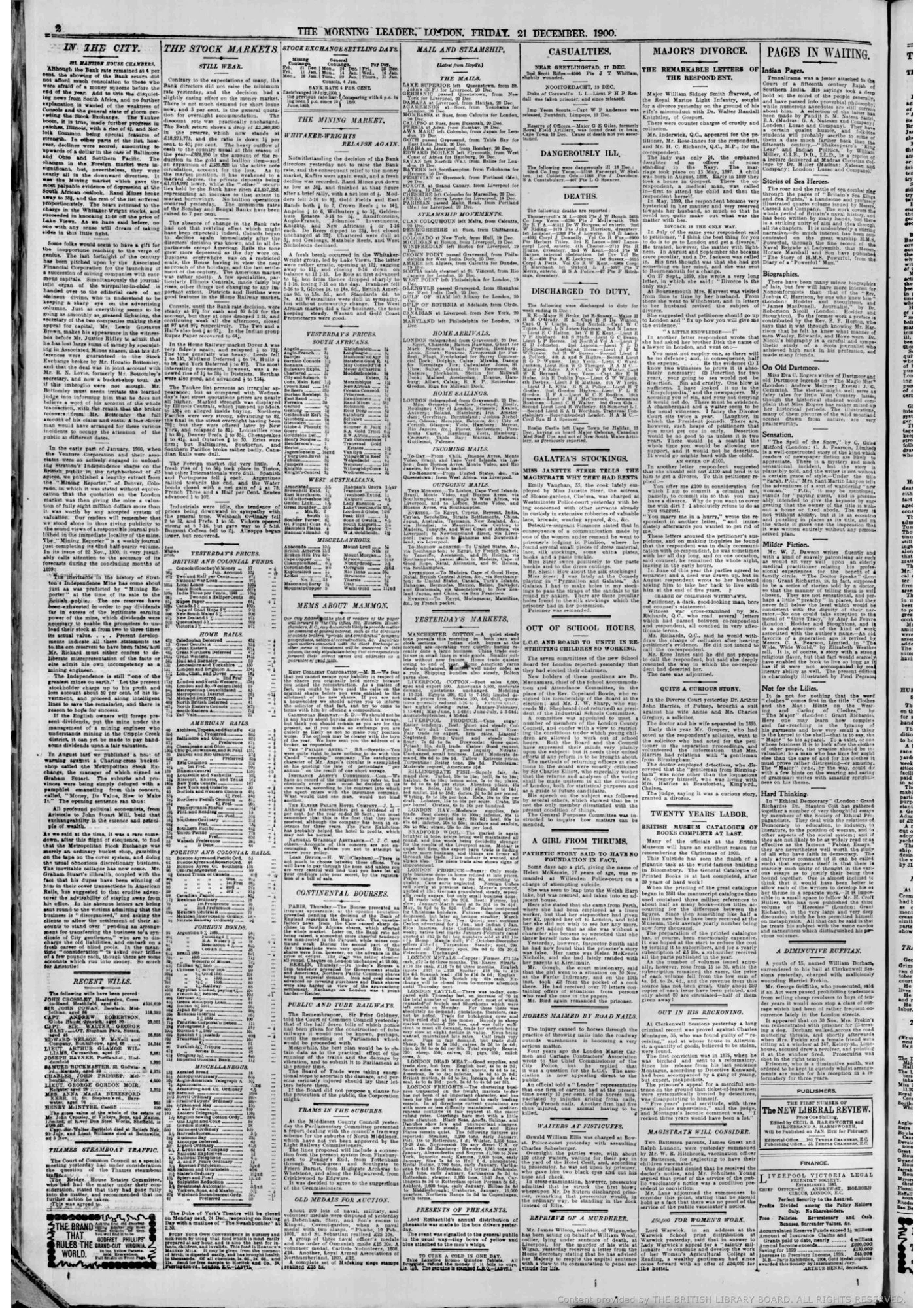
"The stories might well serve as fairy tales for little West Country lasses, though the historical student would complain that Miss Rogers has rather mixed up her historical periods. The illustrations, many of them pictures of the wild moorland scenes drawn from nature, are very praiseworthy."
Only the pictures earn praise. The stories are obviously just for little girls, and the history is (at best) muddled. That second observation turns out to be way sharper than the reviewer probably realised, I'll come back to that a little later.
Others placed her the same way. A United Devon Association speaker, surveying the county's authors in January 1901, called her "a young Plymouth lady" whose book brought "some old legends before them in a new and somewhat fanciful dress." A London paper filed its notice under "Juvenilities."
The book was understood, at the time, as exactly what it was.
Only later on did the readers start to see what they wanted to see.
The notices that followed were friendlier than the one in the Leader, and the same way of seeing it runs through them. Two more London papers, early in 1901:
“‘The Magic Mist,’ by Eva Rogers (Melrose), is a nice-looking collection of the legends of Dartmoor and its environs, treated with some imagination and poetic feeling, and well illustrated by Charles Eldred and P. B. Hickling.”
“The pages will have a special charm for those who know the wild region of Dartmoor, and have given attention to the romantic stories of Devonshire and the West of England.”
two more London notices
She had been placed in this register before.
Her first children’s book, The Bear’s Kingdom (1897), got four short notices in much the same terms, a story for a girl, clever and simply told:
“The tale is told with a sweet and pretty fancy, which will quickly please a girl.”
“… a fairy tale with pictures so full of wonders and horrors that no little child could resist them. The tale is clever, too.”
“… is a good fairy tale. It is simply but well told.”
“… not so much fairyland as that ever fresh and still explorable country, where animals talk and think and do funny things”
notices of The Bear’s Kingdom
The book that could afford to be seen
Before the Print on Demand reprint, before the databases, the book had to be noticed at all, and there's something worth knowing about how it was.
When you go through the surviving period record for The Magic Mist, the great majority of the hits are not reviews.
They're advertisements.
Andrew Melrose, the London publisher, bought the book's visibility, placing paid notices for it and for Eva's other titles through the papers and the trade press, so that a reader in 1900 discovered the book not because anyone had judged it, but because someone had paid for it to be in front of them.
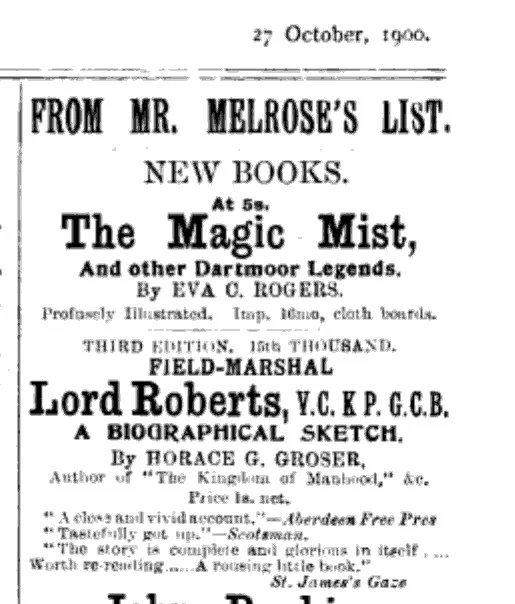
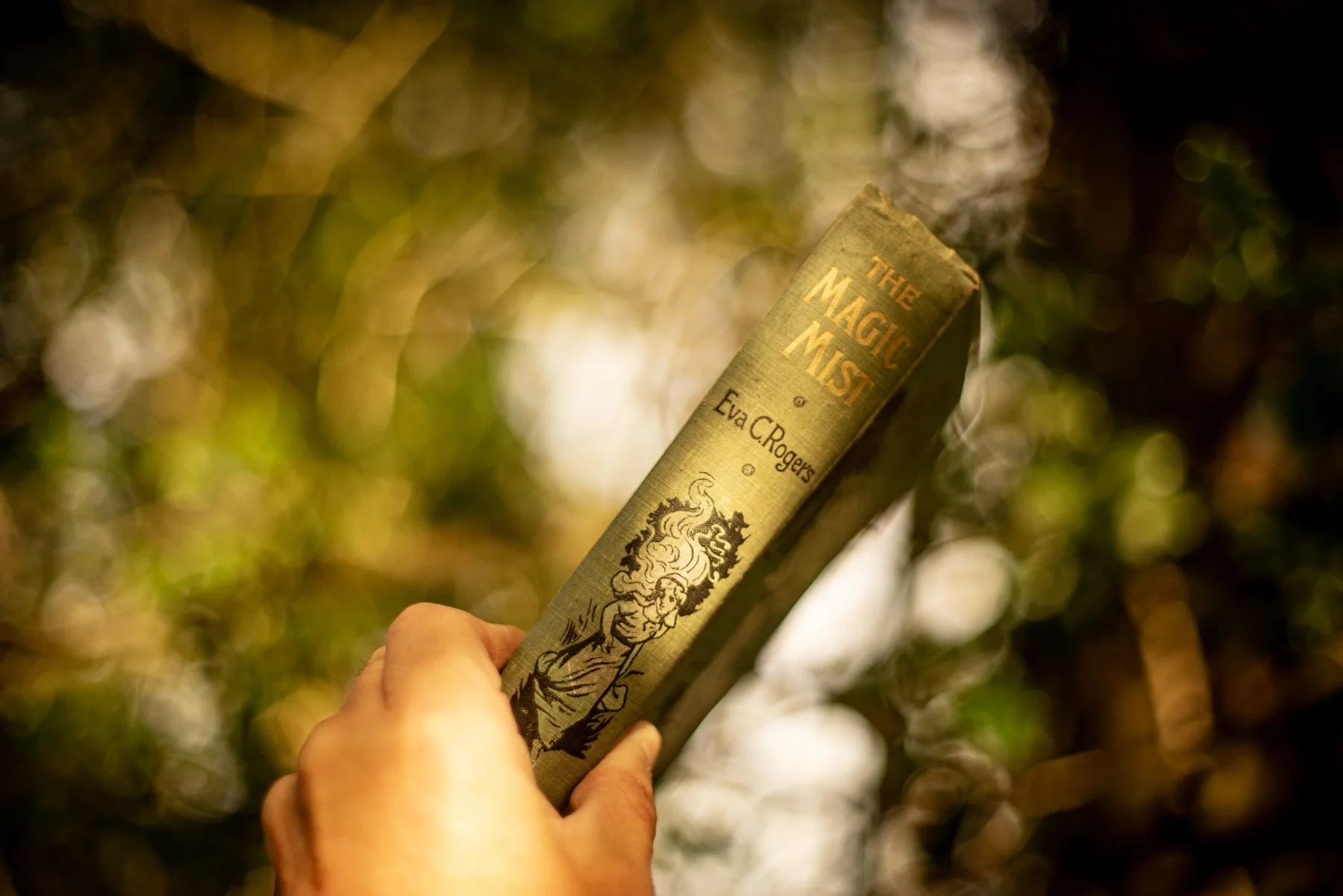
My own research began when I noticed so many adverts for a book by Eva C. Rogers (not Roberts) later I noticed that one of the "reviews" turns out to be advertising in disguise.
A Wiltshire paper, the North Wilts Guardian, ran a warm little notice in February 1901 that reads like independent praise from the far side of the country, until you lay it beside the book's own preface and find it's basically a rewrite of it.
Not exactly dissimilar to how "popularity" works today.
“Out of such slender material the writer of this book has evolved the following stories, which not only possess much romantic interest, but should do something to promote a better knowledge of the wild and wondrous region of Dartmoor and its borderland.”
“Eva Rogers’s book of Dartmoor Legends possesses much of romantic interest, and will do a great deal to promote a deeper knowledge of the wild and wondrous region of Dartmoor… Out of this scanty material has Miss Rogers evolved the fascinating volume before us.”
laid side by side
I keep coming back to what that looks like now.
If you search for anything online today you find, over and over, the same handful of operators, the ones with the budget to advertise, to buy the search terms, to be the answer you're looking for.
You don't hear from the others, the ones who do the job at least as well but can't afford to be seen.
The forgotten author, the forgotten artist are the same person in different centuries: not worse, not better, just quieter (maybe not even driven by reward), edged out of the record by people who could pay to be in it.
Visibility has always been for sale, and the thing being sold has never been quality. It's been marketability.
Let's stop here for a brief moment - does any of this diminish what Eva did or make her work any less impressive. No.
That's the crux of everything that follows. What truly carries a story is weight, and weight comes in different forms: financial at the start, cultural in the middle, algorithmic at the end.
Truth isn't really an equal participant at any stage. Money and connections bought the book's attention in 1900. A century later a page on a National Park's website would turn one of its fictions into fact.
Later still, an AI search Bot would repeat that fiction to me, fluently, while I was writing this.
Knowing the right people
How does a warehouse merchant's daughter get a gift-book published with a foreword by the most eminent Dartmoor antiquarian alive?
The answer, then as now, is networks.
Lets look at the title page as a social document.
The author: elected to the Devonshire Association in 1897, before her first book.
The foreword: Robert Burnard, Devonshire Association.
The Exeter co-publisher: James G. Commin, antiquarian bookseller, Devonshire Association member, later Mayor of Exeter.
The book is a county learned society talking to itself in gilt edges. (To be fair, the Association was a very broad church, not a secret society. But the specific working ties, the foreword and the imprint, are real.)
The connections went back further than the book. In March 1894, two years before her first published story, the Western Morning News lists the guests at the Mayor and Mayoress of Plymouth's "At Home".
There's "Miss Eva Rogers".
There are "Mr. and Mrs. R. Burnard".
And there's a Mr Pitts.
Seven years before the foreword was written, she was in the same room as the man who'd write it, and the family she'd marry into.
“… Mr. and Mrs. R. Burnard, Mr. […] P., and Miss Eva Rogers …”
“… Mr. [Thomas?] Pitts …”
(names clipped at the column edge; Pitts’s forename unconfirmed)
Then there's the London connections.
Whilst researching to find her published works I discovered her publisher Andrew Melrose also published The Girls' Empire, the magazine where her stories appeared in 1904, alongside drawings by her own illustrator Hickling, a Melrose regular, and articles by the publisher's own second wife.
Edwardian publishing was very much a family and friends operation, and Eva didn't conquer the London market so much as join a household.
This is just me being overly excited to find silly little details that mean next to nothing, but thrill me nonetheless.
Eva's eldest brother, George Frederick Rogers, a Cambridge-trained doctor known as "Long" Rogers because he stood six foot eight, moved in the popular esoteric circles of the day. He was initiated into the Hermetic Order of the Golden Dawn in 1895 (you might remember such participants as Aleister Crowley, William Butler Yeats and some say Bram Stoker).
He was a Rosicrucian, a Theosophist, a Freemason and a member of the Society for Psychical Research. (Credit for all of that goes to the independent researcher Sally Davis.)
That same mysticism is the air that Eva's Belus and Taranis breathe. The interesting thing isn't that any door was shut to her because she was a woman, since the Golden Dawn and the Theosophists notably admitted women. It's that some of the material was already in her own family's world, and she turned it, on the western edge of Dartmoor, into stories for children rather than ritual for initiates.
The stories she made up
Now the part I wasn't really expecting.
The Magic Mist contains eleven stories, and they're not quite what the title page implies. Some are genuine Dartmoor and Tamar tradition, retold: the nymph Tamara (from Robert Hunt's collection of 1865), Childe the Hunter (from Risdon), the ghost of Benjie Gear at Cranmere. But a cluster is pure invention, imagination: a bit of pseudo-Celtic mythology of sun-gods and thunder-gods, druid bards in Wistman's Wood, and origin-myths dreamt up for real places that had none.
She seems to have been fascinated throughout by the very thing this article is about: how a story gets handed on and hardens into fact.
She mentions it again and again inside her own fictions.
A rhyme is "the saying told to our grandsires by their mothers, and handed down to us."
A secret is one "which was told to my great-grandsire by his father's father, and known to but few of the moormen dwelling in these parts."
She never knew this, but she was describing her own future: an invention passed from mouth to mouth until nobody remembers it was invented.
“‘Till Vixen’s topmost peak shall fall / Vixana’s power is over all.’”
“Thus runs the saying told to our grandsires by their mothers, and handed down to us.”
(verse: check line breaks against the page before print)
When I was reading the stories for the first time I was taken by how much she builds the imaginary etymology into the plots.
In the title story a character called Misora gives Mis Tor its name; in "The Nymph Tamara" a witch called Classen gives her name to Classenwell (Crazywell) Pool. Neither of these is in her sources.
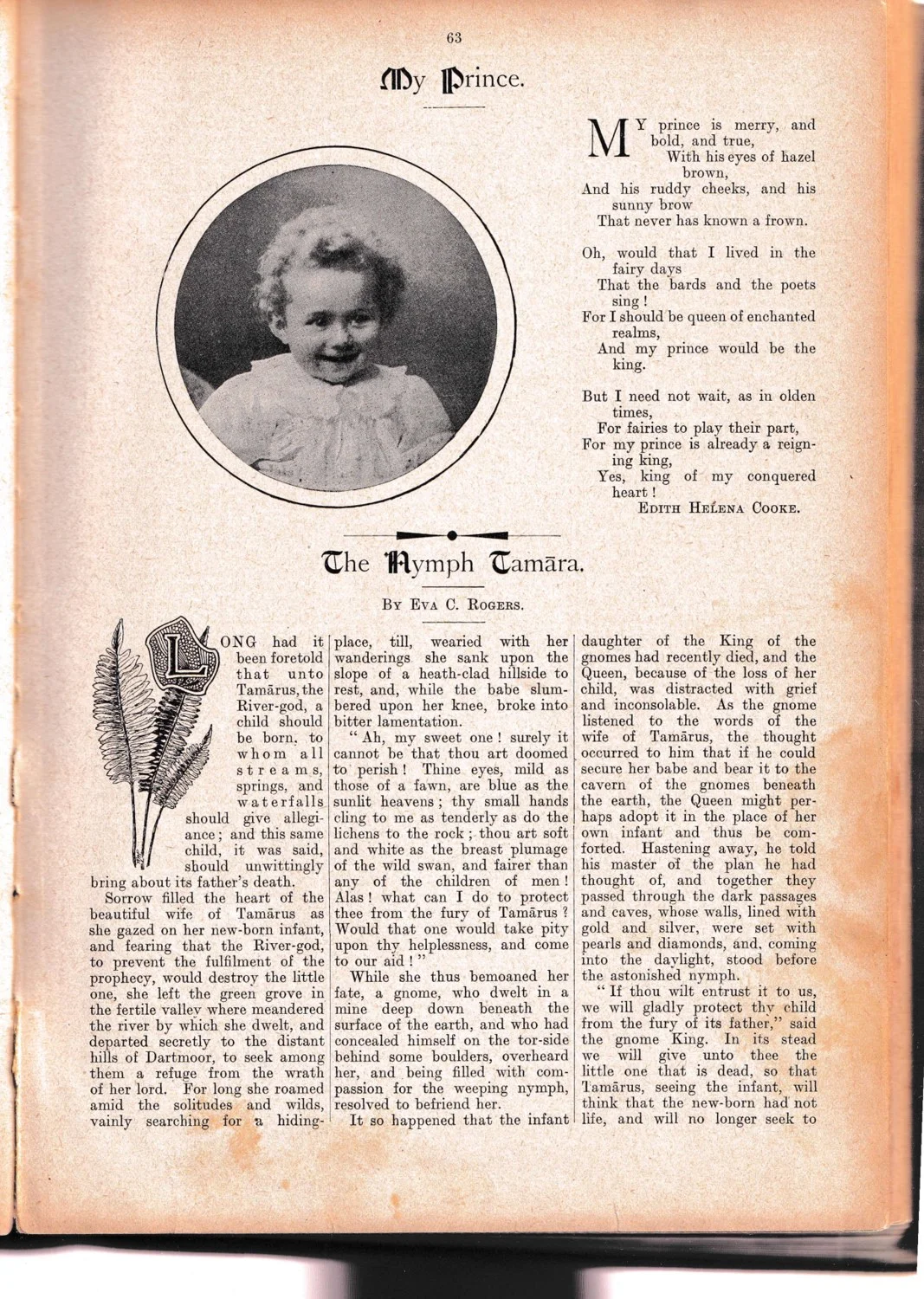
There's also a Kingtora and a Dunnago amongst other characters.
She invents a person, and then cleverly tells you the real place was named after them, which is precisely how so many "ancient" Dartmoor names get explained in the guidebooks.
It's exactly how we write for children.
When she did use a real legend, she didn't shy away from of elaborating upon it it.
The traditional Benjie Gear (her "Bingie Gear") is a ruined merchant and Mayor of Okehampton, an embezzler whose ghost took twenty-three clergymen to lay, one of them finally reaching him in Arabic, who was turned into a colt, ridden to Cranmere Pool and set to bail it out until Judgement Day.
A guilty man, justly damned. Eva takes the mayoralty off him and hands it to a thieving miller's son she made up.
Her Bingie becomes "the good-natured sprite", an innocent pixie banished by a hired magician and pitied by his fellows, and by the end he's a kindly guardian who answers a peat-cutter's charm and guides him out of the bog alive.
She keeps his name in her rhyme ("Bingie Gear! Bingie Gear! / If thou art near, / Do thou appear" ), I don't think she ever hides her invention.
She took a damned soul and made him a rescuer. It's generous and characteristic, and it's a wholesale rewrite of a "real" Dartmoor legend, done on purpose and in print. And why not?
As I said, she didn't try to hide any of this, and the man who tells us this was probably the best-placed person on the moor to do so.
The book opens with a two page introduction by Robert Burnard, founder of the Dartmoor Preservation Association and the leading moor antiquarian of the day.
Of the Bronze Age people whose hut circles the stories are hung on, he writes: "These people left no inscriptions behind them, and there are no traditions respecting them."
Of the later material, he says we "occasionally strike thin legendary veins", and that some of these are "suspiciously modern, and so tinged with Druidism as to suggest an imaginative origin."
Then the sentence that matters: "Out of such slender material the writer of this book has evolved the following stories."
Here is the whole of Burnard’s note:
“The prehistoric ruins scattered in great numbers over the surface of Dartmoor are indicative of an early and populous occupation, especially during the summer-time. We now know that great numbers of hut-circles were occupied during the Bronze Period of culture, and that many of these folk were cremated—most probably in the so-called ‘sacred’ circles—and their ashes deposited in cairns and kistvaens, which are sometimes found associated with stone rows and menhirs.
These people left no inscriptions behind them, and there are no traditions respecting them.
We are equally ignorant of the Moormen during the Late Celtic Period, and it is only when we come down to historic times that we occasionally strike thin legendary veins. Some of these are, however, suspiciously modern, and so tinged with Druidism as to suggest an imaginative origin.
Out of such slender material the writer of this book has evolved the following stories, which not only possess much romantic interest, but should do something to promote a better knowledge of the wild and wondrous region of Dartmoor and its borderland.”
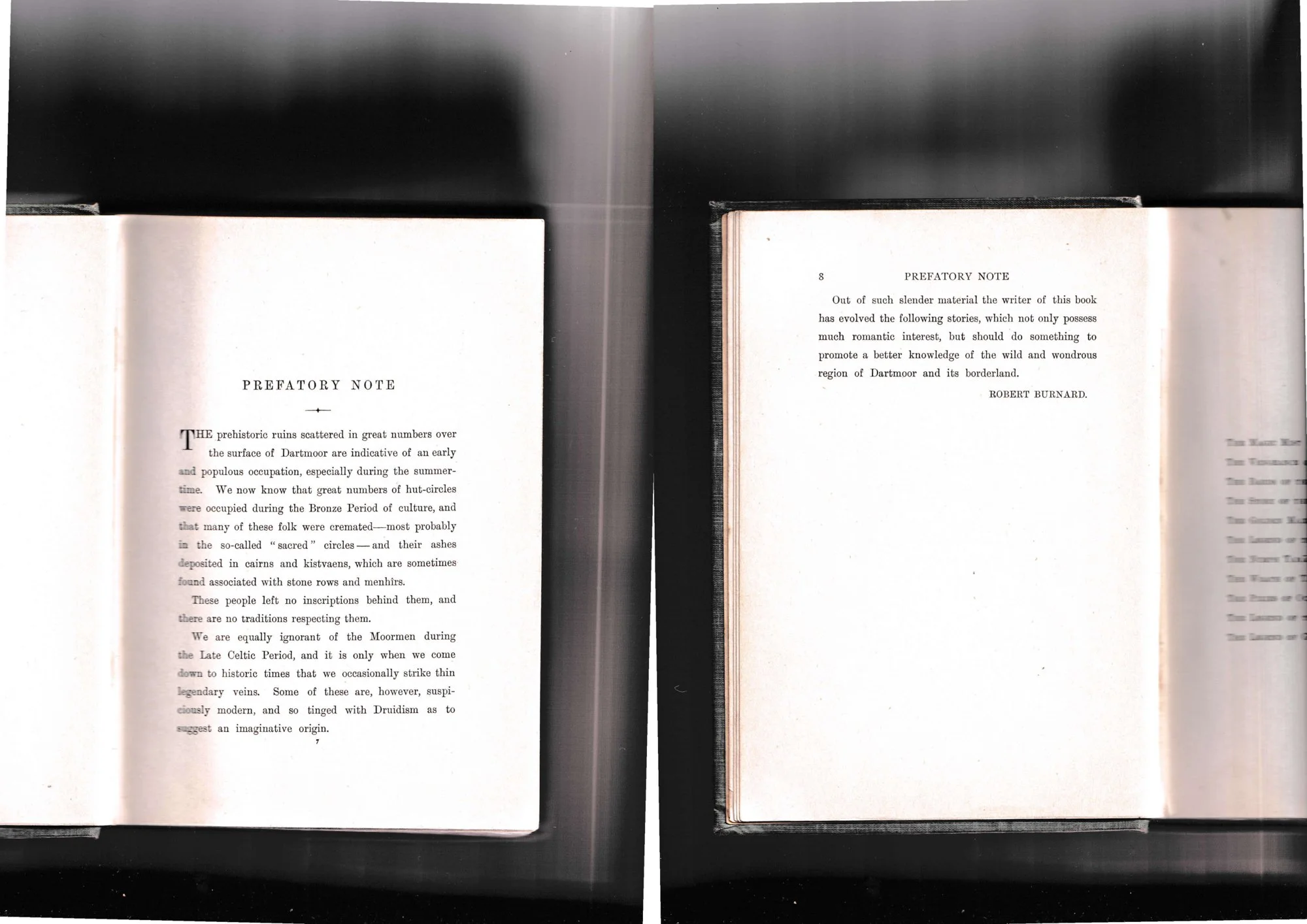
Possibly the most authoritative Dartmoor voice of the time opens the book by saying there are no traditions from the period it's set in, that the traditions that do exist are most likely made up, and that the author has evolved her stories out of what little is left.
And here's the little detail I'm most fond of (and only noticed by reading lots of reviews of the book): Burnard never writes her name, and never writes "she". It's always "the writer of this book".
It's a microcosm, an early version of the very thing this article is about.
One final turn of the screw. The "Roberts" reprint reproduces Burnard's preface word for word.
So the edition that sells these stories as Dartmoor Legends to the modern reader, tells you, on its own page seven, that they were made up. Nobody producing it, listing it or selling it read that far.
A Sunday-school parable in a druid's cloak
Let's think back to the Morning Leader's sniffy review that says that Miss Rogers had "rather mixed up her historical periods".
We can now show exactly what he'd spotted.
In "The Bards of the Wood of Wistman", a wandering hermit brings news to a druid bard of one "whom men call the White Christ", and the bard goes on to preach it at the festival of the sun-god Belus.
“He is the son and messenger of that great unknown one whom a vision hath made known to thee is greater than Belus, Hésus, or Taranis… He chose to give up His life; and from love of all men, whom He calls His brethren, He died the death of a slave, making of His own free will this sacrifice.”
“It is the flame of the fire and not the god that licketh up the blood of the victim… Belus, Misor, and Taranis are but servants of the great God of the Christian!”
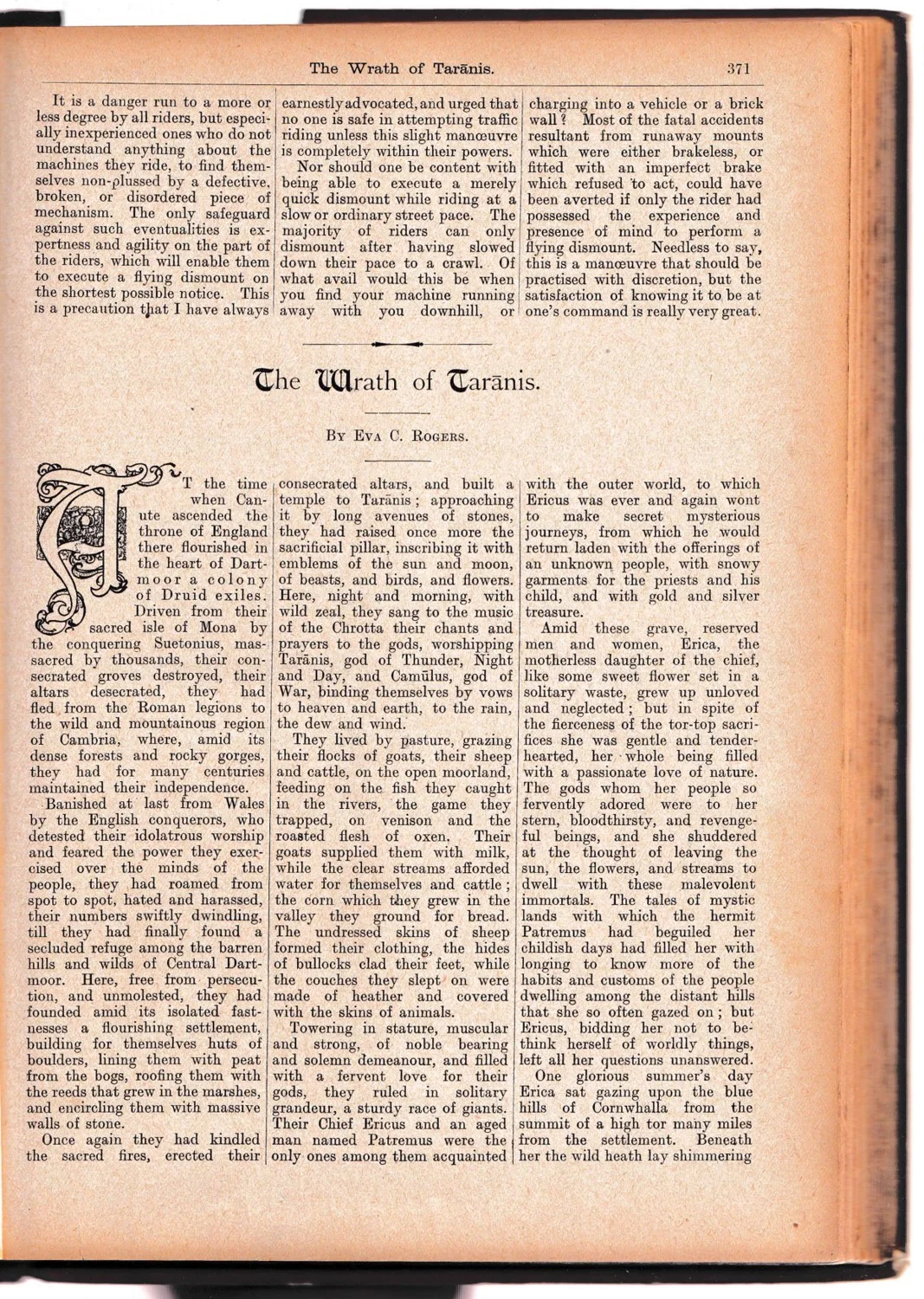
A side note: I had to check that "White Christ" wasn't some kind of bizarre white-supremacist reading of Christianity, as it wasn't an expression I'd heard before. Luckily it isn't. It's an old name for Christ from the Viking-age conversion stories, Hvítakristr in Old Norse, and the Victorian saga translators loved it.
So this isn't a garbled tradition, fact and fiction mixing in the retelling.
It's a Sunday-school parable cosplaying as ancient legend, and the reviewer sniffed it out in the week of publication. It fits where she published, too: The Bear's Kingdom came out through the Sunday School Union, and one of the warmest notices of The Magic Mist appeared in The Christian.
Here's why that kind of thing matters to me. There's a particular kind of enthusiast who will tell you, solemnly, that the moor's legends are a window onto the old pagan religion, and in the next breath that Christianity is a fairy story.
They'll probably charge you for the chance to learn more about this.
That's all well and fine (I'm not judging anybody - I'm just an observer).
However, at least one of the moor's "pagan" legends was written by a Plymouth woman as a Christian conversion tale for the children's Christmas market.
I've no religious axe to grind, none at all. I'd just like the scepticism applied evenly.
You don't get to sneer at one idea and kneel at the foot of another.
The ones that got loose, and the ones that didn't
Over the following century some of her inventions escaped and have become Dartmoor Legend gospel, and (rather more interestingly) most didn't.
Let's take a look ...
Vixana, the witch of Vixen Tor
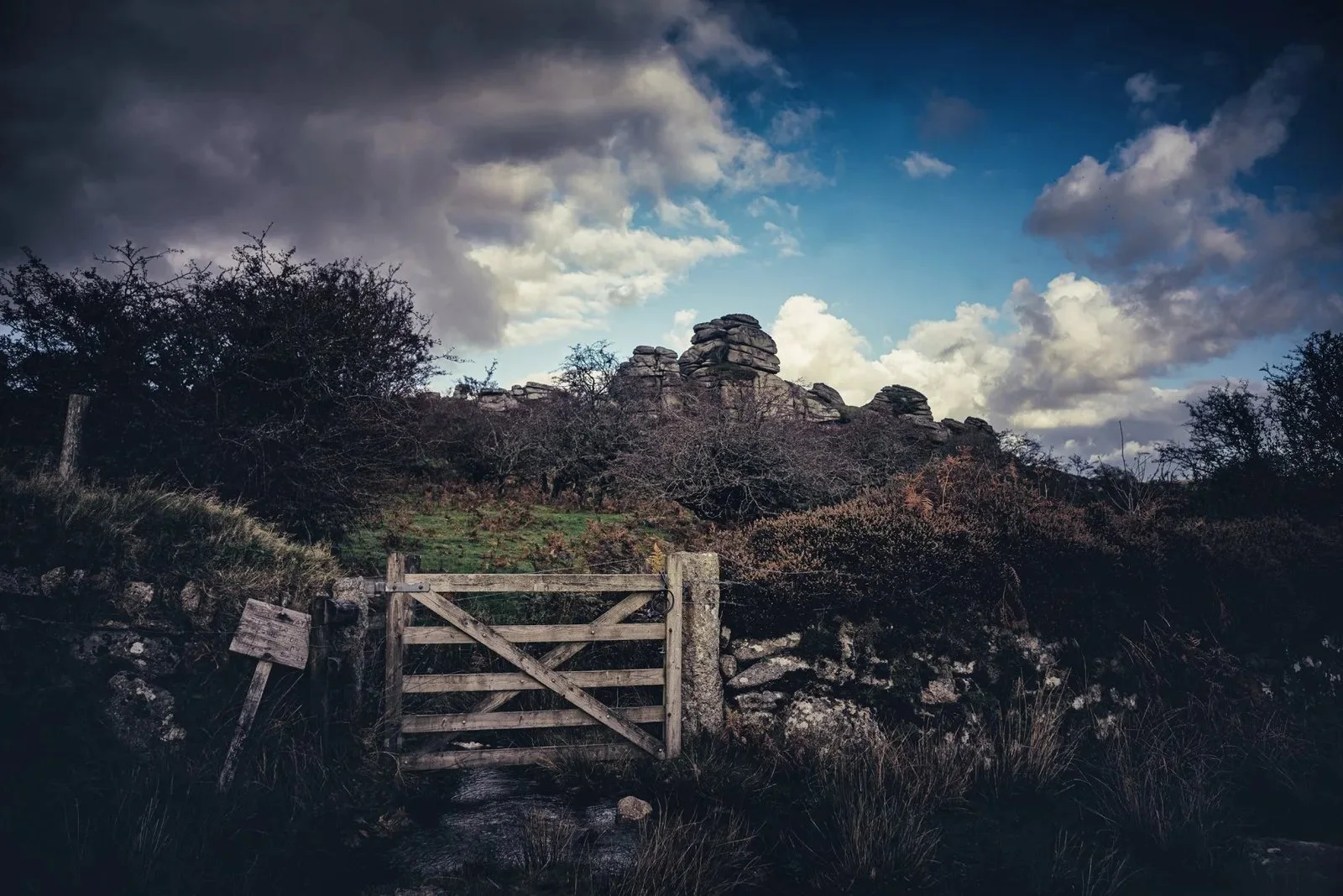
The title story invents a witch for Vixen Tor.
There's no witch there before Eva, anywhere (I looked) : not in Rowe, who describes the tor at length and gives it no legend; not in Mrs Bray, who devotes a whole letter to it from four miles away and prints her husband's journals about it; not in Crossing, who spends seven pages on exactly this ground in 1905, hunting down a coin left in a rock basin a century earlier, and records no witch at all.
“Visit to Vixen Tor — The Tor formed of three contiguous lofty rocks — Different appearances of the rock in different situations — These and the Tor described — Difficult of ascent — Rock basins on its summit…”
(no witch, in a whole letter on the tor)
“The tales related in the following pages, I have gathered from the peasantry of Dartmoor…”
(no Vixana in it, or in his seven pages on Vixen Tor in 1905)
the two searches that found no witch before Eva
Everything Eva needed to invent her clever retelling was lying in print: a tor already likened to a sphinx's face, a mist that could genuinely have killed travellers on that stretch of moor. The one thing nobody had supplied was somebody to raise the mist. Eva imagined her into existence, and gave her a name built from the tor's own: Vixana.
"Centuries have passed, but the tor of Vixen still rears its head proudly amid the storms that rage around it, and the peasants, pointing to where it overlooks the three granite crests of Staple Tor and King Tor with its rocky summit, say that Vixana, turned to stone, her eyes fixed for ever on the distant highway, still watches from it for her victims."
Then it travelled, and the route is documented (or as well as I can tell).
In 1949 a Plymouth film unit wanted to make school cartoons of "the folk-lore of Dartmoor", including the Witch of Vixen Tor and Benjie Gear "changed into a pixie". Both of those are Eva's: the witch is her invention, and the pixie is her rewrite of Benjie Gear. Fifty years on, two of her fictions were travelling together, aimed at children, under the label "folk-lore".
It's not beyond belief that having read her book (possibly as children) snippets of those stories slowly found their way into oral tradition and eventually into the collective conscience.
“… another based on the folk-lore of Dartmoor, including the Witch of Vixen Tor and Benjie Gear, the legendary Mayor of Okehampton who was changed into a pixie and condemned to bale out Cranmere Pool with a sieve.”
Then in July 1954 the BBC’s Children’s Hour took listeners on “A Day Out” on Dartmoor with the guide Eric Hemery, and the local paper’s preview of the programme named the witch of Vixen Tor as part of the day. What I found is the billing and the preview, not a recording, so what he actually said at the tor is not known:
at 5.25, “‘A Day Out’ with Eric Hemery on Dartmoor”
“Eric Hemmery, one of the Dartmoor Guides, will conduct the journey”; the visits will probably include Vixen Tor, “a rock pile 90 feet in height and connected with the legend of Vixana the Witch, who used to lure travellers into the Bog of Vixen”.
the 1954 broadcast: the listing and the preview
Then, in 1959 the Devon folklorist J. R. W. Coxhead prints it out as county tradition, sourcing the tor's height to a geology book and the story itself to nobody, on the page facing a tale he does credit, correctly, to Robert Hunt.
“Once upon a time, a hideous and very wicked witch, named Vixana, lived in a secret underground cavern in the heart of the hill beneath Vixen Tor.”
On the story just before it, “The Enchantment of Tamara”, he does give a source: “An early version of the above fairy-tale appears in the book, ‘Popular Romances of the West of England,’ by Robert Hunt, F.R.S.”
In 1970 Katharine Briggs summarises Coxhead in the standard Dictionary of British Folk-Tales, filed the story under Witches, and hung five motif numbers on it from the international index folklorists use.
A Plymouth authors' 1900 Christmas gift-book for children had been given catalogue numbers in the scholarly apparatus of folklore, her name appears nowhere. You'd think they'd at least get that bit right.
Today the National Park has taught it (the page no longer live) and a modern researcher who went looking for the old version couldn't find one, and concluded the witch must be a suppressed pre-Christian goddess.
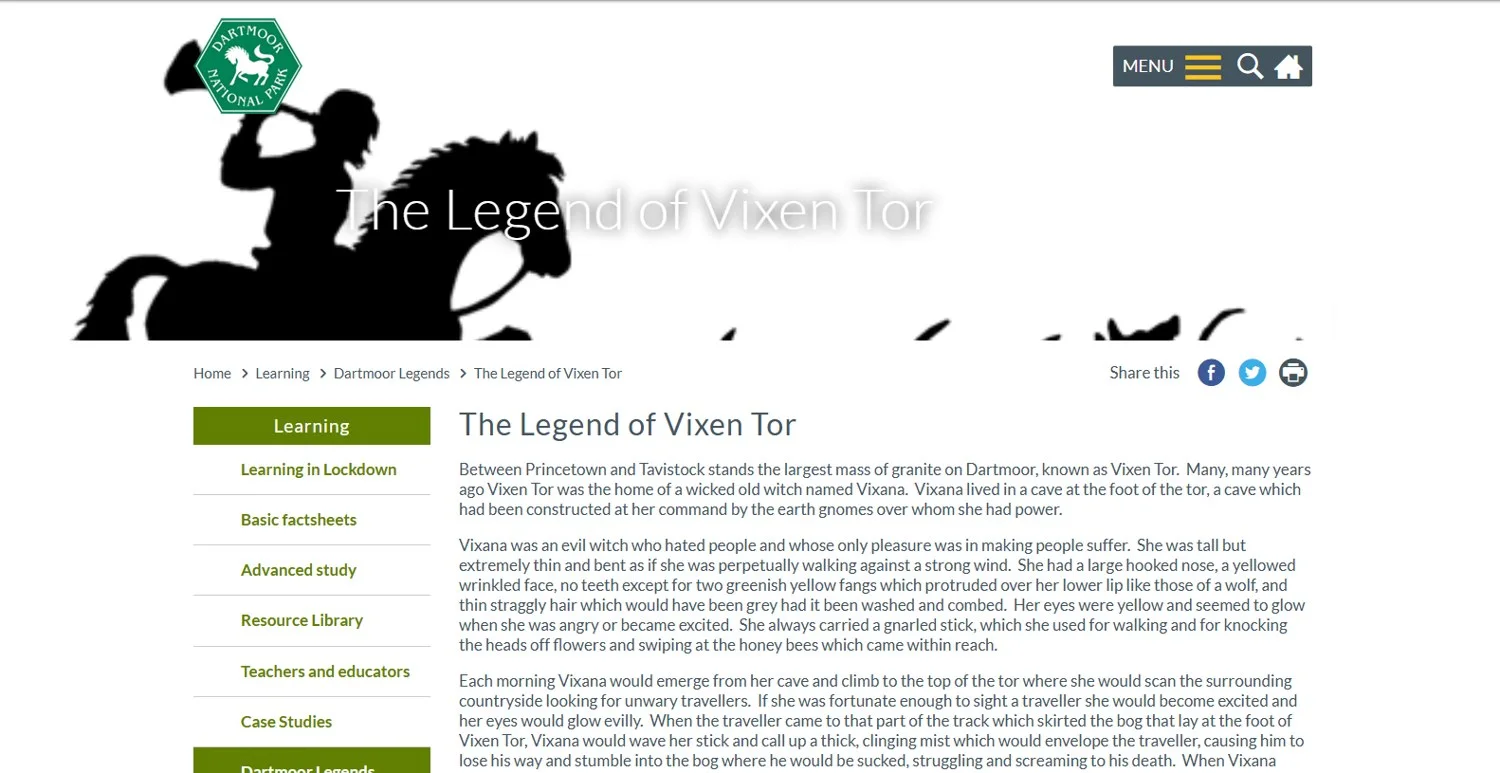
All the time, the answer was on the first page of a children's book, filed in the library under the wrong name.
The Beardown Man
In "The Bards of the Wood of Wistman", Eva invents an origin for the real standing stone near Devil's Tor, the Beardown Man:
"This he christened 'the pillar of the sweet singer of the Hill of Bards,' and for long it was known as the stone of Essára. So it chanced that the song and story of Essára remained unforgotten, and the pillar of rock, known now to the peasants as 'the Bair-down Man,' is to this day standing upright."
We can watch the name drift across generations inside one sentence, from a christening to "the stone of Essára" to "the Bair-down Man", "to this day". This is precisely the move I wrote a whole essay about at Bowerman's Nose, a made up etymology dressed up as ancient legend.
Eva didn't invent her bards. She had obviously read some Mrs Bray.
Eva's story opens on “the steep rock-crested hill of Bair-Down, known as the Hill of Bards” and “Wistman or Wissman’s Wood, the Wood of the Wise-men”, and both of those are the Rev. E. A. Bray’s guesses, printed by his wife in her letters to Robert Southey (Letter V, written at Tavistock on 2 March 1832 and published in 1836).
The Brays were convinced that the whole district was druidical: Mr Bray's father built the house at Bair-down, and the young Rev Bray painted his own verses to the bards on many of the rocks at the location and paid a labourer with a pick-axe to cut them in.
Murray’s Handbook and the 1889 Exploration of Dartmoor repeated the idea that the area was known as the Hill of the Bards, so it would have been in the guidebooks of Eva's day.
What Mrs Bray does not have is a story. The singer, Essára, and the stone’s christening are Eva’s:
“We have also a spot which you as a poet must visit, Baird-down (pronounced Bair-down), which Mr. Bray conjectures to mean the hill of bards; and, opposite to it, Wistman’s, or (as he also conjectures) Wiseman’s Wood…”
“We may naturally imagine, therefore, that it was originally called Baird, or Bard-dun, Bardorum-mons, the hill of bards.”
On the stone itself: “… the erect stone or obelisk, called Bair-down Man, (probably corrupted from men, a stone), is eleven feet high, and eight feet round.”
As for the true (probably meaning of the) name itself, there are three layers. “Man” is the easy one: nearly everyone from Bray and Rowe to Baring-Gould reads it as maen, a stone. “Bair-down” is the argument.
Bray took it from the Welsh beirdd, bards, and dun, a hill, which gave him a “Hill of Bards” opposite a “Wood of the Wisemen”, a guess built on a guess.
The plainer, more modern reading is Worth’s, in 1953: Bair Down comes from the Old English bearu, a grove, and means the down opposite the wood. So the Beardown Man is probably just the stone on the grove hill, and the bards were Bray’s hope, which Eva promoted to history:
“… it is probably used in the same sense in ‘Bair Down’ opposite Wistman’s Wood, and derives from the proximity of that wood.” (of the Old English bearu, “a grove, a wood”)
In the case of this story - it reached nobody.
No folklore source seems to carry her bard.
The Golden Maze
In ‘The Golden Maze’ a spiteful girl named Syntha is pixie-led into a tangle of gorse at the foot of Cocks Tor (the real Cox Tor, by Tavistock) and lost for ever, her wailing spirit left to haunt it for eternity. The tor is real; the Golden Maze is not. The name appears nowhere else, and neither does the Syntha legend.
Like a maze - it seems to have gone nowhere.
So why did two escape?
To be fair, she was rather consistent. Four times she found a place on the moor with no story attached (Vixen Tor, the Grey Wethers, the Beardown Man, and a gorse brake she christened the Golden Maze) and gave it one.
Where a place already had a written story, she left it (mostly) alone.
The Spinsters' Rock story had three competing origin legends in the guidebooks before she sat down, and her story there is a Civil War romance that uses the cromlech only as a portent.
She'd read the antiquarian literature and contemporary tourist guides closely enough to see where the moor's stories were already, and that's where she put her inventions. She even knew (what most modern readers do not) that the alternative name for the stones was Spinners Rock.
Two of the four made it into the modern mindset; two did nothing at all.
The same author, same book, same publisher, same Christmas, so it wasn't quality, or charm, or publicity, or date.
The difference is the ground they landed on.
Vixen Tor and the Grey Wethers are somewhat famous, much-visited places, and people standing at them wanted a story. Things like Vixen Tor becoming known locally as the "Forbidden Tor" after the mass trespass in 2004, a BBC storyteller, a folklorist and a National Park all conspire to add weight to half forgotten stories.
The Beardown Man stands on a lonely bit of the north moor (a rather out of the way spot), and even if the Golden Maze was based on a true flourish of moorland colour it would never a place anyone could find as easily as two massive stone circles!
Invented things don't spread because they're good. They spread when they fill a hole that people are already standing in. Just look at what's happening today with misinformation.
Absolutely none of this is a charge against Eva.
Inventing legends is what myth-makers have always done, and hers are great, which is exactly why the ones that found that gap survived.
I'm definitely not out to spoil anybody's magical story. Made-up stories are fine. The pleasure I'm after is simply knowing which are old and which are hers, because that knowledge is its own kind of magic, and (in my very odd opinion) a better one than pretending you can't tell them apart.
A children's storyteller good enough to end up appearing in the top results on Google is someone to celebrate, not scold.
The only loss is that the celebration has attached itself to an invented god, and not to the brilliant young Plymouth writer who dreamt him up.
Why "Roberts"?
I promised I'd come back to the machinery, so here it is, briefly.
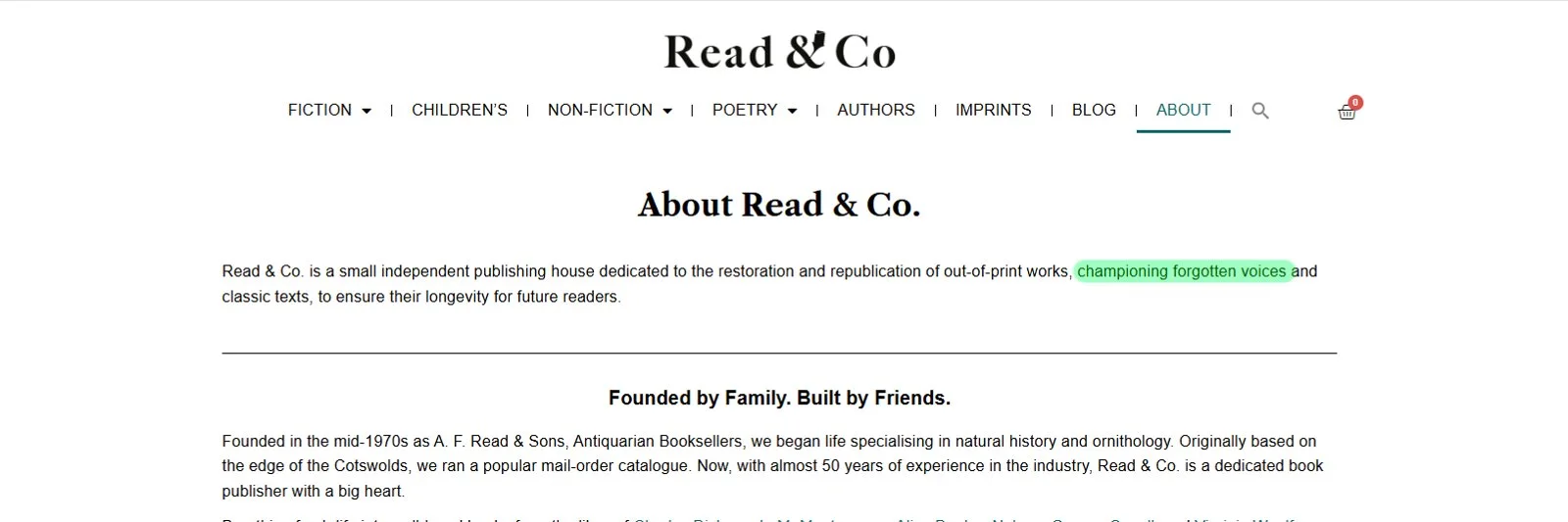
The reprinter is Read & Co. Books, a real firm with a registered office in Redditch and sibling imprints called Obscure Press and Wyrd Books. A firm you could post a letter to. They've issued the book under three ISBNs, and the same book carries different authors depending on where you stand.
Google Books actually holds one of those reprints correctly, as Eva C. Rogers. Look up that very number on the publisher's own website, or on Bookshop.org, and it's by Eva C. Roberts.
The ebook is being sold to universities through the textbook platform VitalSource as by "Eva Roberts", so a student can now cite the wrong name.
In the big library union catalogue she's plain "Eva Roberts", the middle initial quietly dropped.
Meanwhile the correct record has sat in the national deposit libraries since 1900, under Rogers, checkable by anyone the whole time.
Search for Eva C. Rogers on the British Library website.
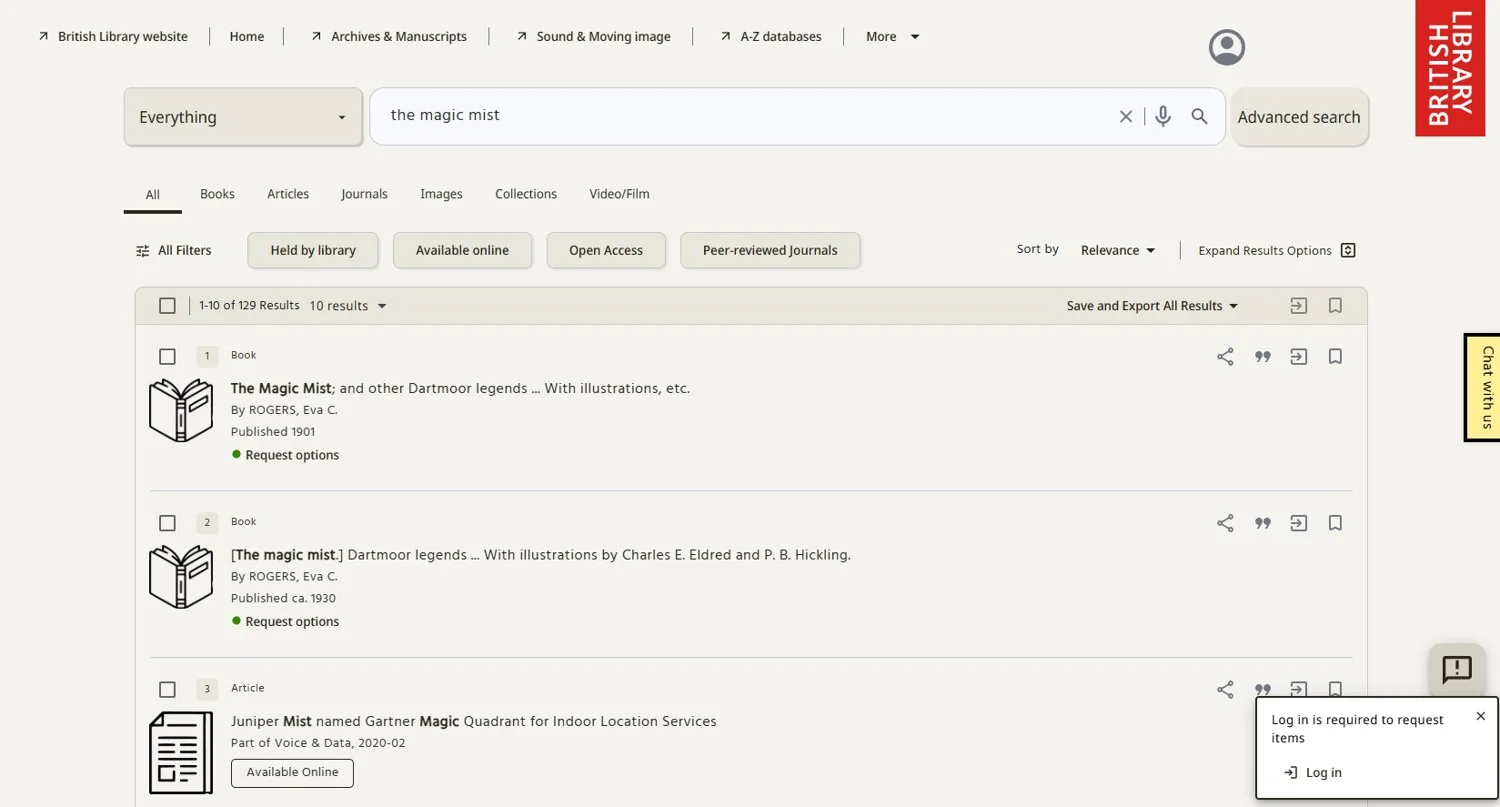
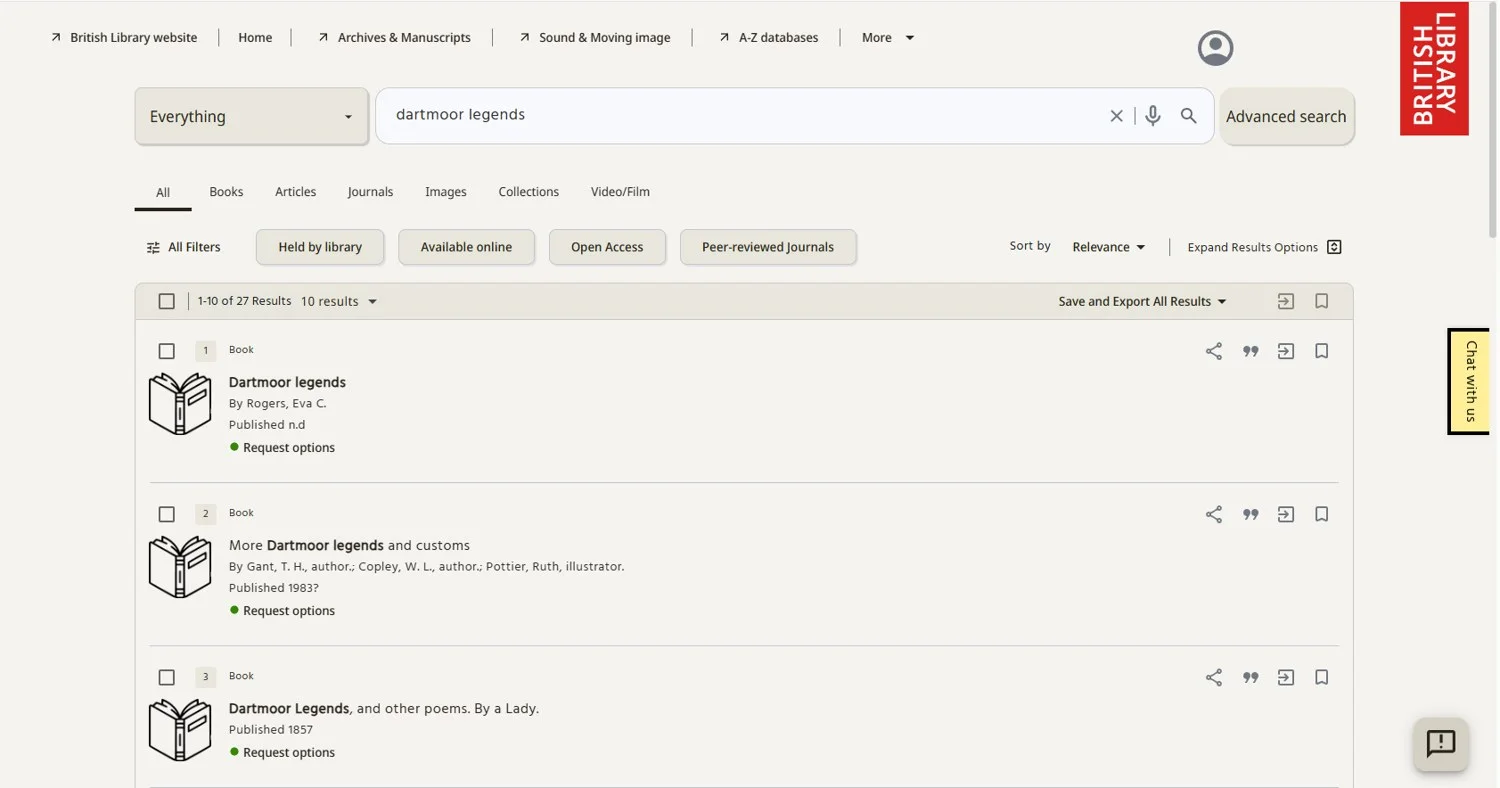
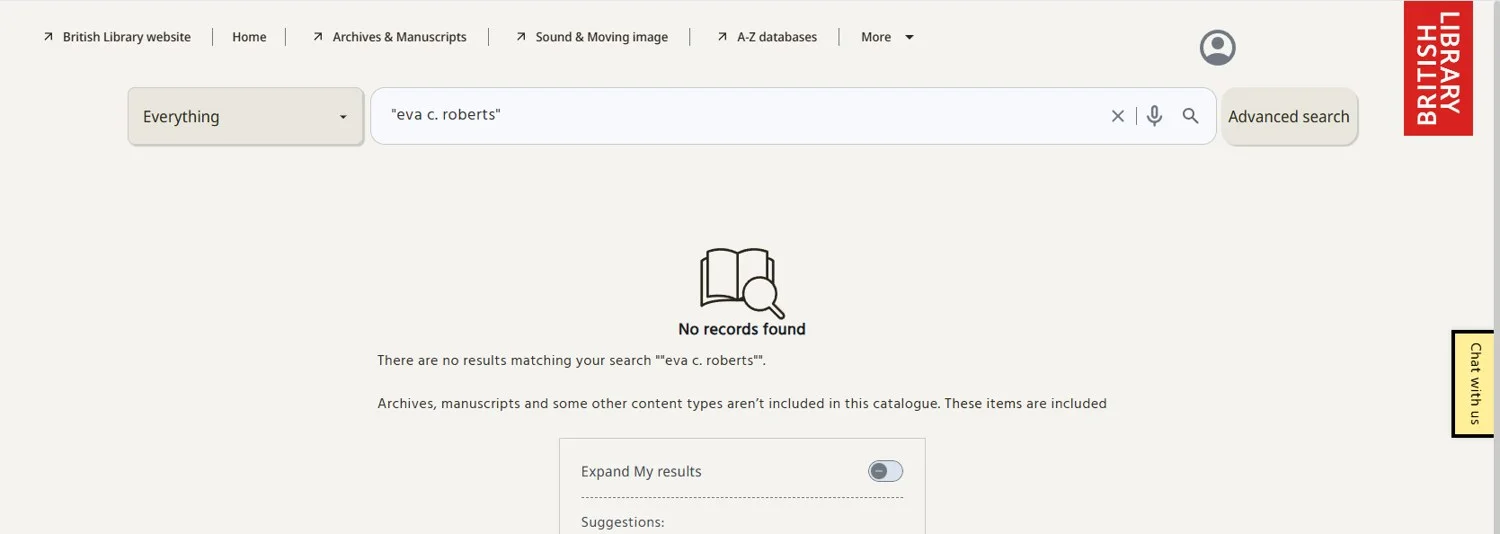
Google the reprint's ISBNs and you get hundreds of results, all "Roberts". Search the institutions whose job is the permanent record and the reprint isn't there at all. The error has near-total coverage in the layer that sells, and no footprint in the layer that remembers.
I wrote and asked Read & Co. about the discrepancy. Back came an automated "we got your email". No human has replied since.
That was almost four months ago.
"Eva C. Roberts" is still live on every channel, and a real first edition now goes for around $250.
So why? There are two readings (in my opinion), and I'll give you both.
The innocent one. Rather than photograph the 1900 cover (or whatever appears on the claimed 1912 version), the reprinter generated a new one on Photoshop or CorelDraw - using the Nine Maidens etching, and when you're building your new cover, you can mistype. Rogers to Roberts is the kind of slip a tired keyboard or an automatic text-reader makes, and in a print-on-demand pipeline where there may be no human paid enough to look, the mistake easily gets overlooked.
On this reading there was nothing to hide: the text was long out of copyright, and a faithful reprint of an already published book was very likely exempt from legal deposit at the British Library anyway.
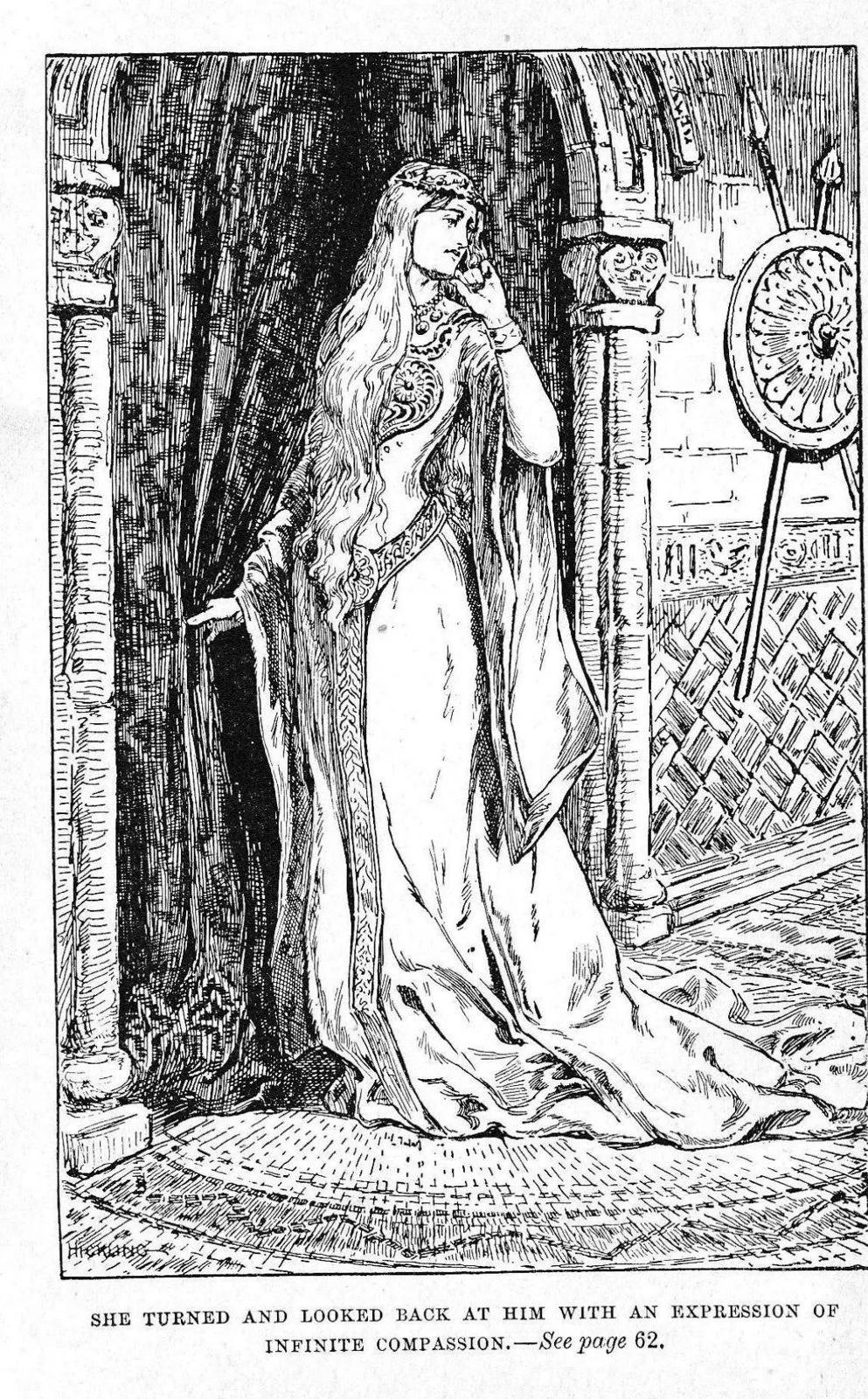
Mine. The original 1900 cover was a drawing by Percy Hickling, and Hickling died in 1951, so when the reprint shipped, that cover was the one part of the book still in copyright. Swap it for Eldred's Nine Maidens etching, wash it green, scatter clip-art fairies over it, pitch it at the occult end of the market where a sibling imprint lives, and a changed author name makes the whole thing that bit harder to trace back. I've watched enough commercial outfits cut corners to find that easy to believe.
What each reading can't explain: the innocent one doesn't explain why it's still wrong after someone has pointed it out.
I'm also very much aware that somebody else must have also noticed this discrepancy before me.
My explanation doesn't really explain why they left the title page, Burnard's preface and Eldred's interior plates, every one of which leads straight back to Eva; or why anyone would go to that trouble when clearing a Hickling drawing would have cost very little (my brief research into how all this works suggests tens of pounds rather than hundreds).
I can't prove which is true, no matter how badly I want to.
A silent company, a missing explanation, a locked box with a secret inside: it has everything a good legend needs, and I could probably write you a cracking good Sherlock Holmes story about the shadowy print-mill that changed a dead woman's name to cover its tracks.
That, however, would be doing to Read & Co. exactly what was done to Eva, building a story on an absence and letting it travel because it satisfies, not because it's true. So I shan't.
I'll simply let it do it's own thing - which is altogether more gratifying.
Whatever happened in 2006, an error left standing after it's been pointed out, does needs addressing.
On Read & Co.'s website they carry the mission statement, about championing "forgotten voices".
They get a shrug from me, and a name to give back.
I did it too
I have to be a little careful here, because this is an article partly about people who repeat things they haven't checked, and the honest thing to admit is that I've done it too, more than once, while attempting to write this.
I presumed the reprinter's claimed date of 1912 was correct for weeks before the evidence proved it unlikely wrong.
I asserted, in my own notes, tidily and with a supporting explanation, that the original's title page was dated 1901, until my own first edition arrived and turned out to carry no date whatsoever.
I also once started to build a whole argument in about an hour on a single apostrophe, that she'd renamed the Spinsters' Rock "the Spinner's Rock", until two old guidebooks I already owned knocked it flat the same evening.
Each time it was the same failure: a fact that looked settled, passed on without going back to the object, because going back is expensive and the fact looked fine.
I saw what I wanted to see.
That's the whole engine behind "Eva C. Roberts", shown from the inside rather than accused from the outside. An error doesn't need a villain, or even carelessness. It only needs checking to be nobody's job.
Weirdly, my research uncovered a similar thing happened to its illustrator.
The "P. B. Hickling" who drew the plates was dismissed in a modern note as a man who left no biographical trail, until a researcher named Steve Holland did the work and recovered him: Percy Bell Hickling, 1876 to 1951, a working magazine illustrator who ended his career drawing Ladybird animal books.
One obscure book, two erased names.
Found by amateurs who simply bothered to look properly.
The stones that complete the circle
So, the Grey Wethers.
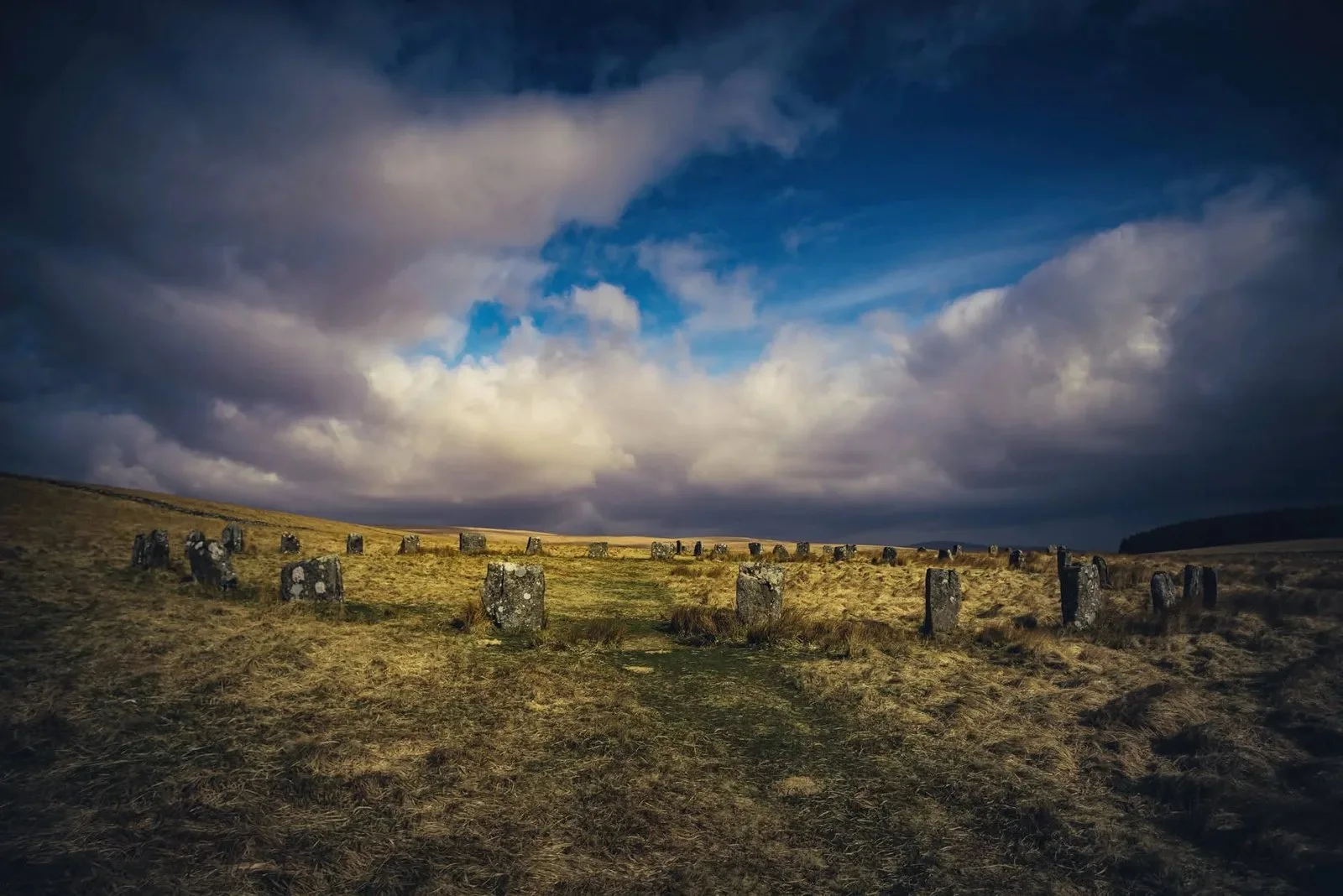
Here's what Eva actually wrote at the opening of that story. She describes two broken stone circles "formed of thirty rough blocks of granite, from three to five feet in height, and placed from seven to nine feet apart according to their size", on "the south-eastern slope of Siddaford Tor."
“They are situated directly under Sittaford Tor, and consist of thirty stones, each varying from three to five feet in height, and from seven to nine feet apart, according to their size.”
“On the south-eastern slope of Siddaford Tor… are two broken stone circles formed of thirty rough blocks of granite, from three to five feet in height, and placed from seven to nine feet apart according to their size.”
“On the south eastern slopes of Sittaford Tor, are two broken stone circles formed of thirty rough blocks of granite.”
three descriptions of the same stones, 62 years apart, then another 120 (bold: the bearing; the 1838 source gives none)
Two things are hidden in that sentence.
The first is that the description isn't hers: she lifted it, almost word for word, from a magazine of 1838 that gives the identical figures in the identical order.
More bizarrely, it's a magazine I actually own, and not because of this article: I bought it more than a year before I started this investigation.
The second is that the compass bearing is hers, and it's wrong. I noticed it once I'd read the line twice. The circles actually lie to the north-east of the tor, not the south-east. Her source gave no bearing at all; she added one - either the words "South East" sit better in prose or Eva had never been to Sittaford Tor. .
Onto that borrowed and slightly broken description she hangs a wholly invented origin-myth: a sun-god, a golden fleece. What she braids in first, before a word of invention is a genuine, pre-existing bit of moor humour, the con-trick joke that gives the stones their name.
"'I be gwine to zell thikky grey wethers up yonder,' it is said that a local farmer once remarked... he offered them at a ridiculously low price to a stranger anxious to purchase a stock. The green new-comer, closing at once with the offer, hastened away to inspect his sheep, only to find, when he had climbed the grassy slope of Siddaford Tor, that he was the victim of a practical joke."
One real thing, then the invented god.
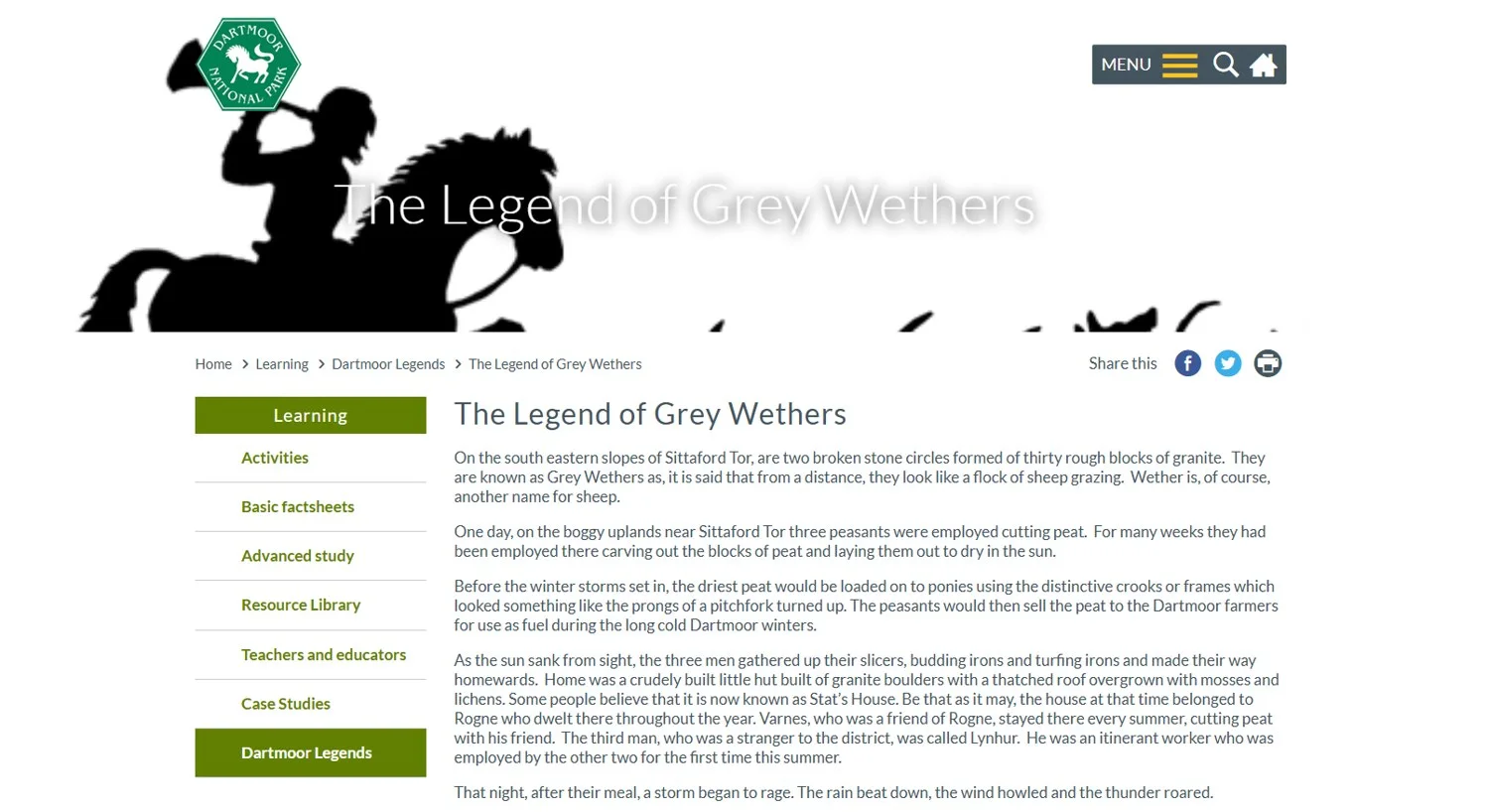
Now read the Dartmoor National Park Authority's own education page on the legend of the Grey Wethers (it appears to be no longer live, but is preserved on the Wayback Machine).
It gives "two broken stone circles formed of thirty rough blocks of granite" on "the south eastern slopes."
That's Eva's wording. That's Eva's incorrect bearing. The Park isn't just repeating some general tradition; it's reprinting her sentences, carrying her geographical error, and presenting her invented legend as the legend of the moor.
Which is fine, up to the point you realise they must be reading her book and not using her name.
Worse, it has silently corrected exactly one thing: her Westcountry spelling of "Siddaford" to the map's "Sittaford".
The Visit Dartmoor website still carries the same wording: "On the south eastern slopes of Sittaford Tor" - https://visitdartmoor.co.uk/myths-and-legends/
“In the boggy uplands at the back of Siddaford Tor, in the heart of the moor, three peasants were at work among the solitary turf-tyes. For many weeks past they had been employed there…”
“One day, on the boggy uplands near Sittaford Tor three peasants were employed cutting peat. For many weeks they had been employed there…”
the next paragraph of each: the Park’s story opens as Eva’s does, three peasants and all
That spelling fix is the giveaway, and it's why this isn't quite the same erasure as the cover.
Somebody was reading, selecting and editing on purpose. Faced with the genuine Grey Wethers folklore (a dull little con-trick joke told in a hundred villages, a greenhorn sold weathered rocks as a flock of sheep) and Eva's gripping invention (sun-god and golden fleece and doomed treasure-hunter), somebody chose the better story, kept the enchantment, tidied the spelling, and put the Park's name on it.
I don't think that person was a weighing fake against real. Far more likely it was a member of staff handed a job: write up some Dartmoor legends for the website - get it done by Wednesday.
There is no byline, because it's institutional copy, the way a leaflet has no byline.
You can't actually fact-check a legend anyway, and nobody asked them to.
They found some legends, wrote them up to fit the brief, fixed the obvious spelling, and went to lunch.
My opinion (and it holds zero weight) is that this should trouble us more than a real culprit would, because this is the body with statutory authority over the moor, with a budget, paid to tell us what the moor means, and neither the truth of the thing nor its origin was ever a condition of the work.
The name had to go, not out of malice, but because "an ancient legend of Dartmoor" sells the moor and "a children's story written in Plymouth in 1900" doesn't.
Attribution punctures the very mystique the page exists to sell. So the byline came off, and it came off for the same reason it came off the reprint's cover.
On the reprint, her name comes off the cover and "Roberts" goes on, and it spreads by financial weight, the small, steady gravity of a live sales listing copied time and time again.
On the Park's pages, her name comes off her story and "ancient legend" goes on, and it spreads by cultural weight, the authority of the guardian's own letterhead.
Neither kind of weight has the slightest connection to being right. Both spread anyway. And in each case a mistake rides along uncorrected, the wrong surname, the wrong compass bearing, while the machinery tidies something cosmetic and never checks the thing that matters.
That's why I didn't want to leave it for someone to write up in ten years, because the machines we've just built to answer our questions do exactly this, not as a failing but by design.
Ask your favourite AI about the legend of the Grey Wethers and it will tell you (among other stories) Eva's story, fluently, as fact, and if it names a source it'll name the National Park, because the National Park is the heaviest thing in the room.
The AI search has no way to know, and no reason to care, that the heaviest thing in the room is a staff writer's précis of a Plymouth woman's 1900 fairy tale, set on the wrong side of the hill, under no name.
I asked one while I was writing this. It told me about the god as though he were as old as the stones.
It's worth reiterating that the Park's pages on this, on Vixen Tor and on Bowerman's Nose seem to have vanished behind a website rebuild (as of November 2026).
Search and you get the ghost of the page from Google, but you can't reach it.
Only the Wayback Machine still shows the original text.
Putting her back
It's obviously wonderful to know that a story from the turn of the last century has (in turn) created it's own stories (I'm all for more stories).
Everyone in this story who handled Eva's name either got it wrong, or got it right invisibly.
The reprinter got it wrong on the cover.
The databases inherited the error.
The British Library had it right, and nobody asked.
The National Park has her fiction filed under folklore.
It can't just have been me that noticed?
Against all that, the corrections are small, deliberate, and mostly made by people with no institutional standing whatsoever.
Steve Holland recovered the illustrator on a blog.
Sally Davis, an independent researcher of Golden Dawn members, documented the brother.
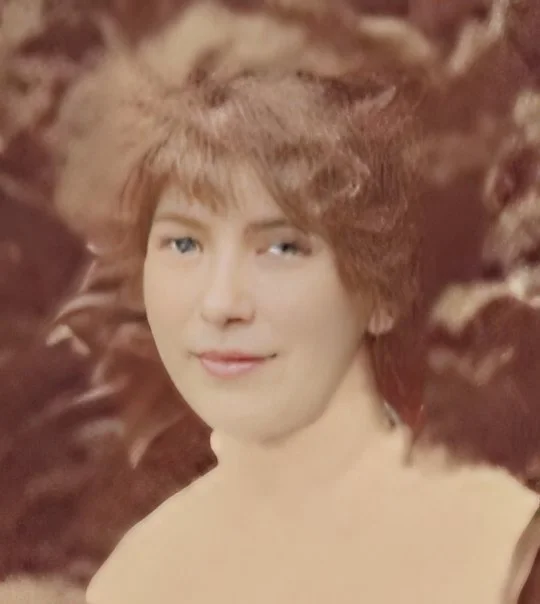
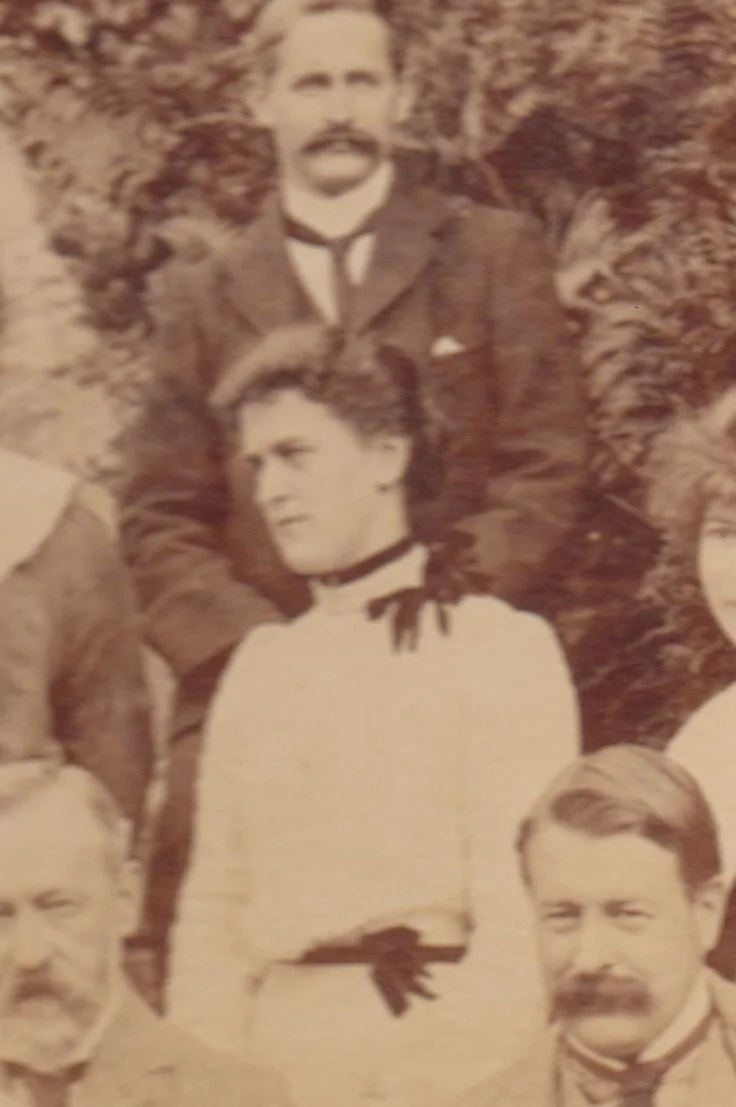
And, hopefully, this piece puts Eva back: her name, her dates, her town, her family, her books, and, I believe though can't prove, her face: a photograph labelled with her name that has circulated among family researchers on Ancestry, showing a woman of about 34, around the time of her last books.
Now, I'm the first to admit I like to stir things up a bit, and my intentions when I research are to try and find a truth (maybe not the one I was looking for) - regular readers (of which there are none) will see that I'm always attempting to point things out and hope people join the dots themselves.
The stakes are quietly rising, which is the whole reason to do this now rather than later.
The way most of us meet a fact now is through a search that returns the consensus, and increasingly through an AI that does the same with more fluency and less doubt.
Those systems (by their actual design) surface the strongest signal and compound whatever is already winning.
A careful correction in one researcher's files, or a single archive record, stands little chance against that weight unless it's pushed back into the places the machines read. Recovering her is no longer only a matter of finding the truth.
It's a matter of getting the truth somewhere loud enough to be copied.
So the final step in the story of Eva C. Rogers was planned, paid for and executed.
I found a 1900 first edition of The Magic Mist, and Other Dartmoor Legends, bought it from a very nice gentleman bookseller from the US, paid more in postage than I've ever paid for a book alone to have it shipped here, scanned it, and uploaded it to the Internet Archive under the name of Eva C. Rogers.
My long term plan is to scan everything else I've found and put her work out there for everybody to see.
It's all in the public domain now.
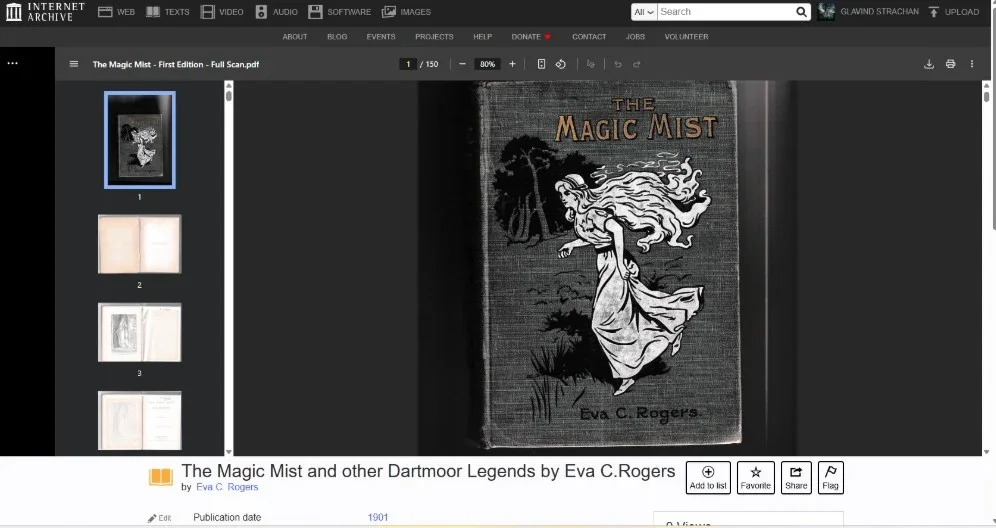
Nothing stops anyone doing this. Nothing stopped anyone for decades.
That's rather the point: the difference between a name surviving and a name vanishing isn't law or fame or money. It's whether one person, anywhere in the chain, decides to check.
Her name was Eva C. Rogers. It says so on the cover of her book.
For the record
- The ISBNs. The original edition (1900, usually catalogued 1901) predates ISBNs. The Read & Co. reprint has three: 9781443738668 (Google Books record names her correctly, Eva C. Rogers, Read Books 2008), 9781846641091 and the ebook 9781447487326 (both "Roberts"). The publisher's own page lists all three as "Roberts".
- The company. Read Books Limited, trading as Read & Co., Companies House 06702310, registered office in Redditch; sibling imprints Obscure Press and Wyrd Books.
- Legal deposit. The Legal Deposit Libraries Act 2003 requires deposit (s.1) but "does not apply to a work which is substantially the same as one already published in the same medium in the United Kingdom" (s.2(1)). A faithful reprint was therefore very likely exempt. No record of the reprint was findable in the British Library catalogue, Library Hub Discover or the British National Bibliography (the BNB is a rebuilt beta after the 2023 cyber-attack, so its silence is softer evidence).
- Copyright dates. Eva died 1909; Charles Eldred 1932; Percy Hickling 1951 (his work entered the public domain at the end of 2021). The 1900 cover derives from Hickling's plate "She sped with the swiftness of a fawn towards the tor of Camūlus" in "The Wrath of Taranis". The reprint's cover is Eldred's "The Nine Maidens" plate, recoloured.