Tors & Landmarks
Buttern Hill
A modest granite peak on the North East of Dartmoor - great views to the West and East.


The granite tors of Dartmoor, including the ones whose names end in Rocks, Rock or Stone.
A tor is a large free-standing outcrop of rock that rises abruptly from gentler slopes on a hill or ridge. The word comes from Old Welsh and means a cluster or heap. On Dartmoor the tors are granite, emplaced about 280 million years ago. They survive where widely spaced joints in the granite let blocks of rock outlast the weathering that turned the rest into sandy gravel (growan).
Dating of 28 Dartmoor tors found that most have been exposed for less than 100,000 years, and none for more than 200,000. They probably emerged at the start of the last major ice age.
The highest point on Dartmoor is High Willhays, at 621 metres, near Okehampton. Yes Tor stands about a kilometre to the north along the same ridge and is slightly lower.
Which outcrops count as tors is a decision for people far better qualified than this directory. We follow the Tors of Dartmoor database, the Treks and Tors list and Tor Bagger: if one of them lists it as a tor, it is listed here as one. Hills and mounds that none of them list are on the Hills and Mounds page.
This page lists the tors and other named landmarks in the directory. Use the map to see where they are, and open a listing for its grid reference and further sources.
Sources: Wikipedia, Tor (rock) and High Willhays.
A modest granite peak on the North East of Dartmoor - great views to the West and East.

A small tor near the head of the Plym, with a kistvaen on a mound close by, set in remote country on the south moor.

A hill between Birch Tor and Blacka Tor, east of Postbridge, with a wall across its summit and a triple stone row on its northern face.
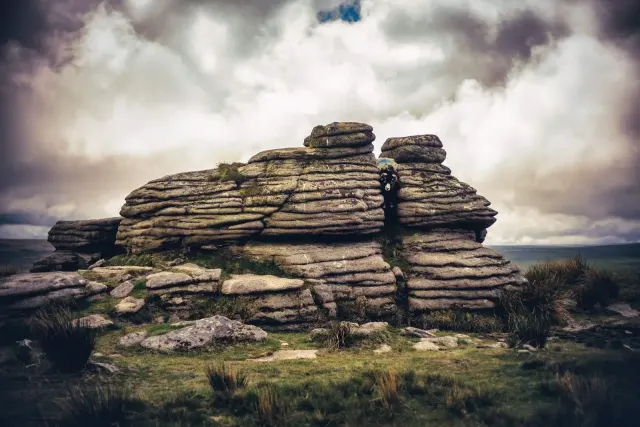
A single mass of rock on Rattlebrook Hill above the Rattle Brook, between the Willsworthy and Okehampton ranges, with long views into the centre of the moor.

The highest tor on the line running from Wittaburrow to Honeybag Tor, above the Widecombe valley, with two outcrops and views east to Haytor.
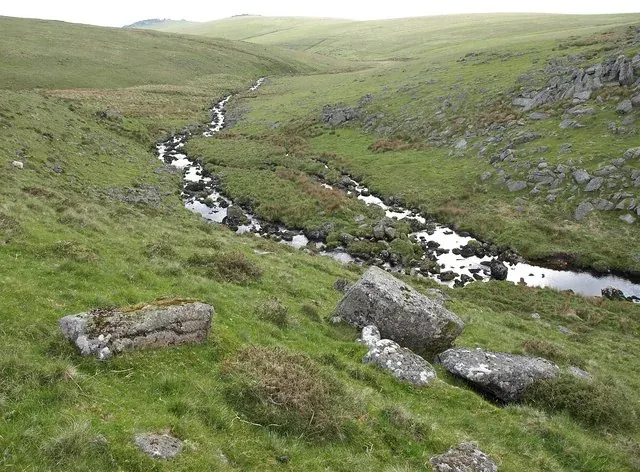
Peter Tavy, Tavistock
A disputed tor on the steep side of the Walkham valley: writers place the name on two different sites nearly a kilometre apart, and Crossing said there is no tor there.

A flat, boggy hill above the upper Walkham, near White Barrow and the Lych Way, with the Forest boundary running over it.

An exceedingly fine pile at the head of the Deancombe valley, on the Narrator Brook above Ditsworthy, with Down Tor, a stone row, hut circles and Cuckoo Rock close by.
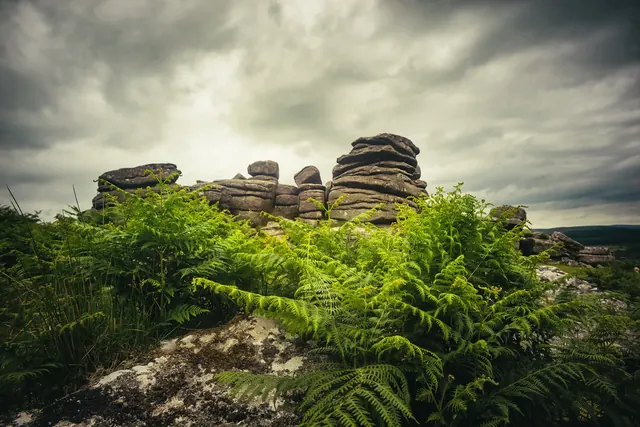
A tor between Dartmeet and Holne, also called Cumston Tor, with a car park 30 metres from the summit rocks and the Wheal Emma Leat running round its base.
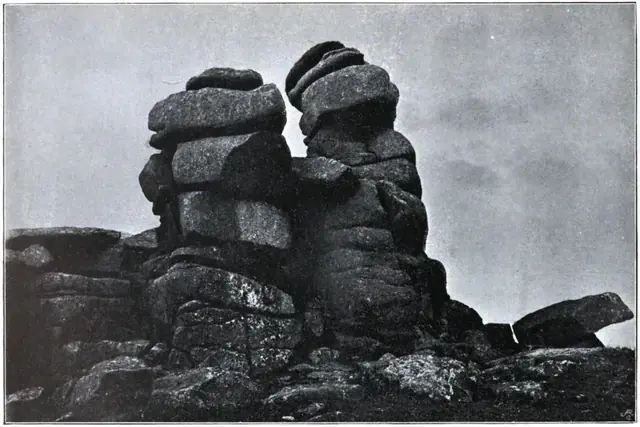 Plate from Dartmoor Illustrated, page 192, 1900
“A vast, sweet, diamond-twinkling freshness filled the Moor; blue shadows lay in the dewy coombs, and sun-fires gleamed along the heather ridges.”
Also on Our DartmoorBuddles — Atmospheric remains of a tin mine on open moorland, where industrial heritage merges with wild Dartmoor landscape.
