Bowerman's Nose
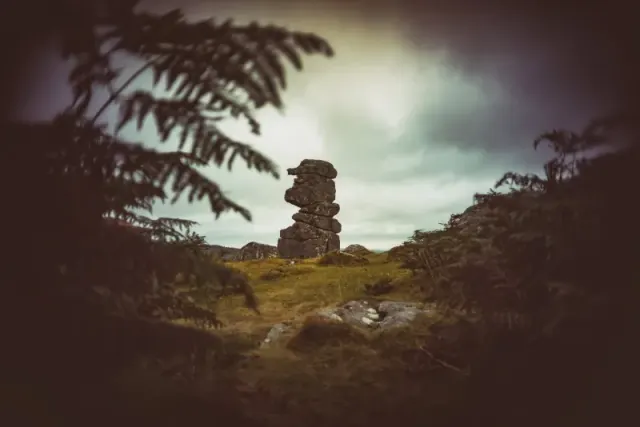
Natural granite outcrop about 30 feet high on Hayne Down, near Manaton, that looks like a human profile from some angles. The witch legend attached to it is first found in a 1939 book.
Dartmoor's archaeology and heritage - antiquities, historic buildings and museums.
Natural granite outcrop about 30 feet high on Hayne Down, near Manaton, that looks like a human profile from some angles. The witch legend attached to it is first found in a 1939 book.
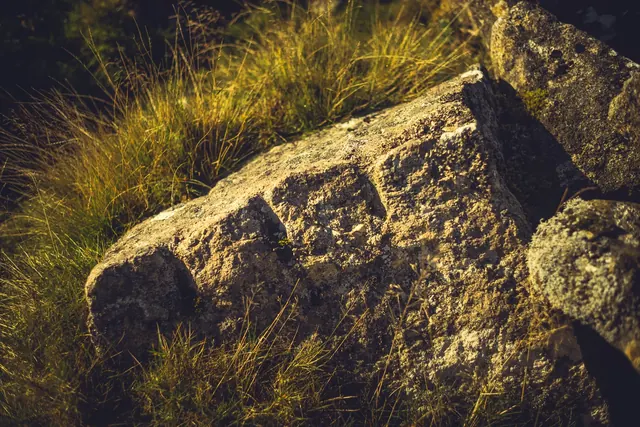
A bowl barrow 12 m across and 1.5 m high at Emmets Post with a 19th-century boundary stone in its side lettered SM and LM for the Shaugh Moor and Lee Moor china clay setts.
Lydford, Okehampton
Small stone workings on the south-west slope of Brat Tor, below Widgery Cross: heaps of broken granite and blocks with the notches left by splitting stone with tare and feather. It is not marked as a quarry on the old maps and we have found no written record of one.
“The peat glowed as though it were red-hot, and night brooded on the eastern face of every hill.”
Who wrote this?
North Brentor, Tavistock
Brentor Church, St Michael de Rupe, is the parish church of Brentor and one of the iconic landmarks of West Devon, founded in 1130 on the summit of Brent Tor. The church believes it is the highest working church in southern England.
Bronze Age settlements and tin mining remains on the high moor, with evidence of ancient field systems.
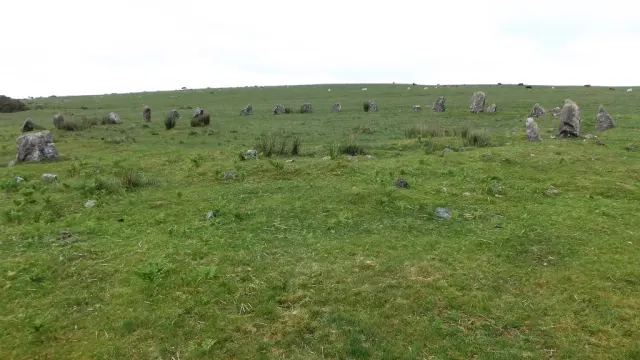
A Bronze Age stone circle on open moorland, with weathered granite stones arranged in an ancient ritual arrangement.
Grade II* listed hall built for the British Legion, a community landmark on the edge of Dartmoor.
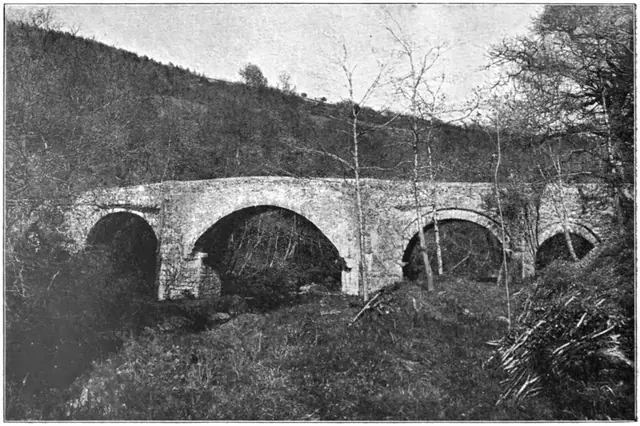
Plate from Dartmoor Illustrated, page 150, 1900“The longer one stays here the more does the spirit of the moor sink into one's soul, its vastness, and also its grim charm.”
Also on Our DartmoorEarthwork — Mysterious earthwork remnants scattered across open moorland, revealing Bronze Age settlement patterns on Dartmoor's high plateau.