

← Browse Books & Publications · Browse the directory
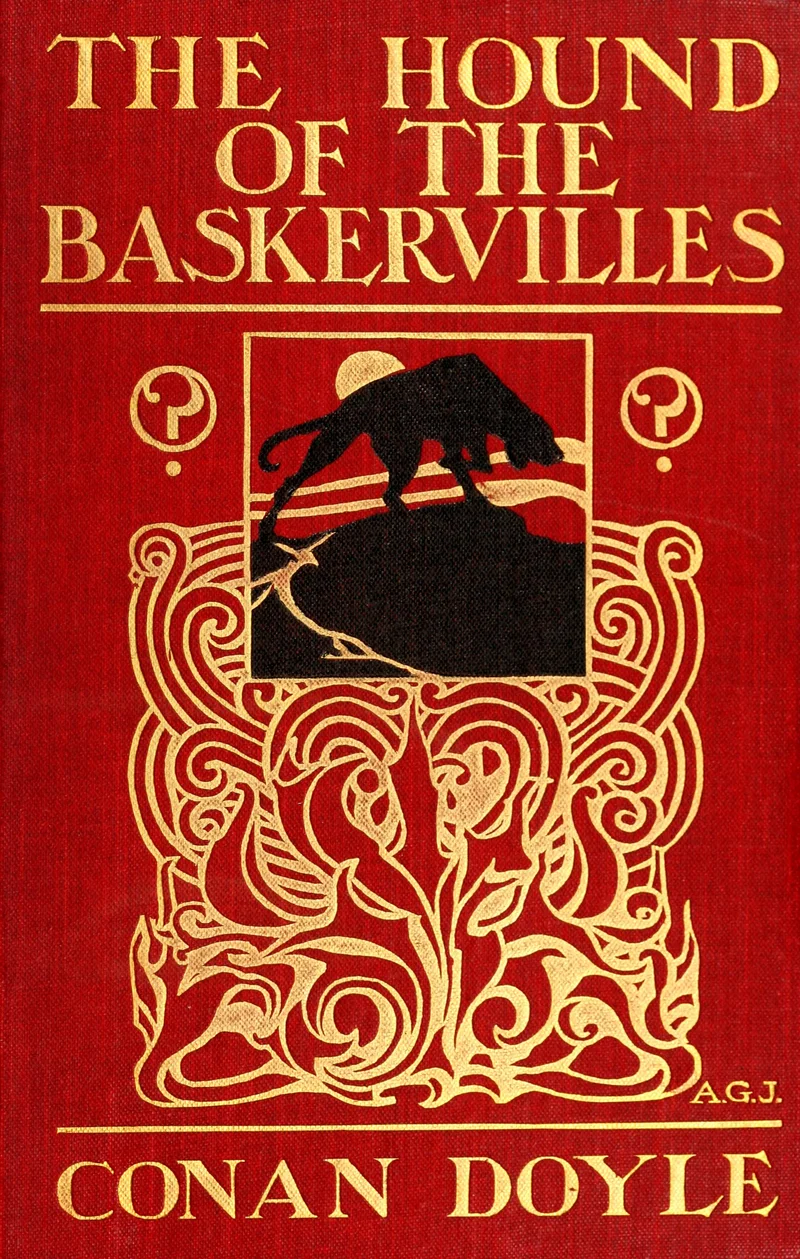
The Hound of the Baskervilles
1902
The novel grew out of Dartmoor stories told to Arthur Conan Doyle by Bertram Fletcher Robinson, a journalist who had grown up on the edge of the moor. Doyle's own later account of the legend's origin is vague: a letter he wrote after 1907 says only that the story "was really based on nothing save a remark of my friend Fletcher Robinson's that there was a legend about a dog on the Moor connected with some old family," naming no specific person or place.
The legend most often connected to the book today belongs to Squire Richard Cabell of Buckfastleigh, whose tomb still stands in the churchyard of Holy Trinity Church there, but that link is traditional rather than confirmed by Doyle or Robinson in writing, and should be read as the leading candidate, not settled fact. Real Dartmoor locations are widely believed to lie behind fictional ones in the book: Fox Tor Mire, near Whiteworks, for the Great Grimpen Mire, and, more contested, one of three real houses (Fowelscombe, Hayford Hall, or Brook Hall, Buckfastleigh) for Baskerville Hall itself. The escaped convict Selden in the novel draws on the real Dartmoor Prison at Princetown, whose staff reportedly called on Doyle at his hotel to meet "Mr Sherlock Holmes" during the writing trip. It remains the only Sherlock Holmes novel set on a real, named moor.
Thoughts
Be the first to share a thought about The Hound of the Baskervilles.
Share a thoughtKnow a Dartmoor book or author we have missed? Suggest a listing, it is free.
Suggest a listing