Barn near Higher Shilstone Farmhouse
Grade II* listed farm buildings from the medieval or early modern period, standing south of Higher Shilstone Farmhouse on Dartmoor.
Dartmoor's archaeology and heritage - antiquities, historic buildings and museums.
Grade II* listed farm buildings from the medieval or early modern period, standing south of Higher Shilstone Farmhouse on Dartmoor.
A grade II* listed barn, originally a longhouse, standing west of Inglettes Farmhouse on Dartmoor.
A round cairn 6 m across and 0.7 m high on Hurston Ridge, part excavated in 1897 by the Devonshire Association's Barrow Committee, who found a ring of slabs round a cist holding a complete Bronze Age beaker.
A rabbit warren of at least 50 pillow mounds south of the abandoned Devonport Leat on Beardown Hill, first recorded in a Duchy of Cornwall lease of 1808, perhaps supplying Dartmoor Prison.
Single Bronze Age standing stone (menhir) about 3.5 metres high, on high moor near Devil's Tor at 542 metres. It stands higher above sea level than any other menhir on Dartmoor.
Shaugh Prior, Plympton
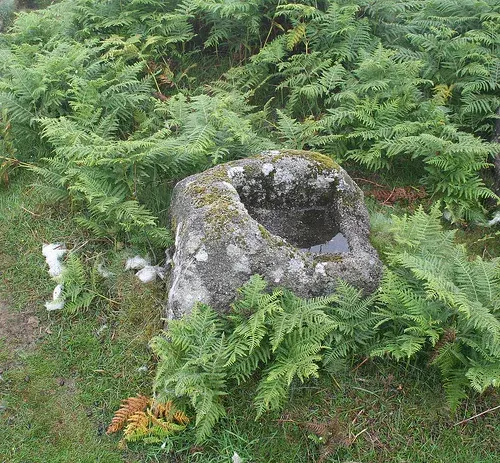
A granite socket stone, 0.73 m by 0.63 m, with a neat rectangular socket, 22 m north of Beatland crossroads on the medieval route north from Plympton.
Leighon, Bovey Tracey
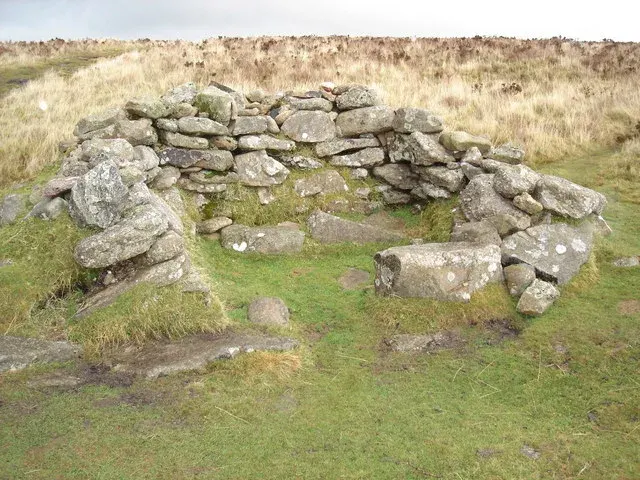
A Bronze Age shelter huddled on the open moor, its stone walls still standing after thousands of years of Dartmoor weather.
Postbridge, Chagford
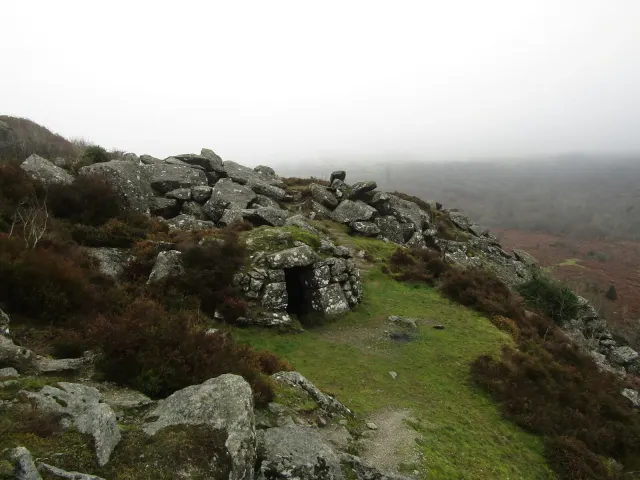
A mysterious stone beehive dwelling, its circular walls still standing on open moorland after over a thousand years.
Challacombe, Chagford
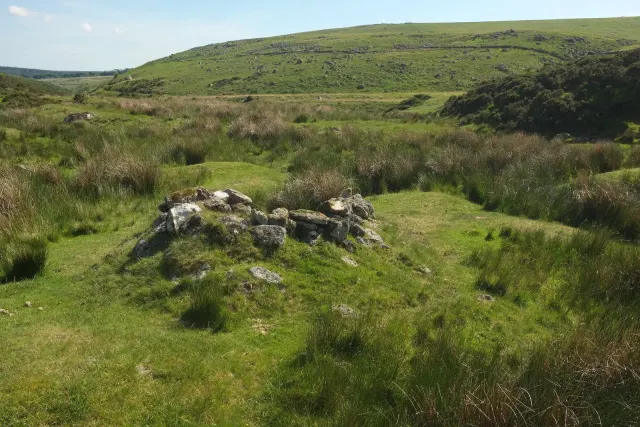
Stone foundations of an Iron Age or Bronze Age dwelling, weathered into the Dartmoor granite landscape.
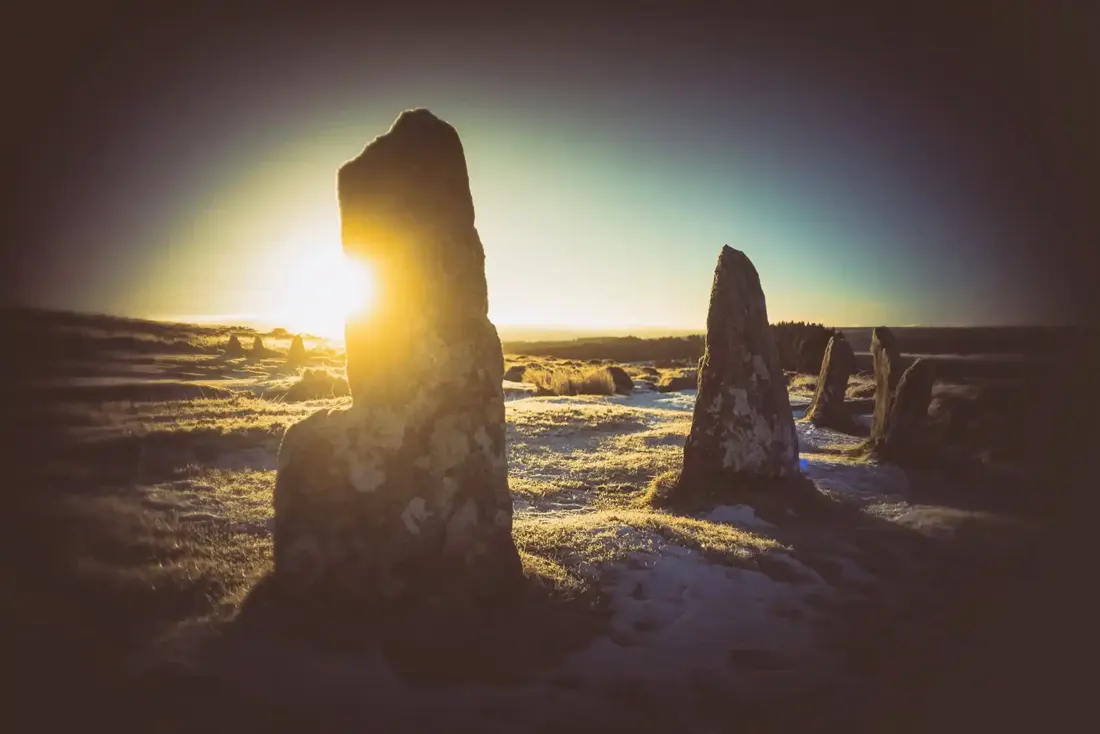
Scorhill stone circle in the snow. Photograph by Glavind Strachan Photography“One day two parsons started forth To walk to Cranmere Pool, The weather was not really hot, Nor was it very cool. They walked and talked for hours and hours As only parsons can, Until it seemed as though they'd trudged From Beersheba to Dan. At last they reached the pool and Lo! With ...”
Also on Our DartmoorThe Lych Way (Lich Path) — The Way of the Dead: the old route across central Dartmoor from Bellever to Lydford, said to have been used to carry the dead to be buried at Lydford church. The exact line is disputed.