Skip to content

← Browse the directory

Dartmoor Heritage

Dartmoor's archaeology and heritage - antiquities, historic buildings and museums.

Share
View on map
Burley Wood motte and hillfort
Hillforts & Earthworks

Burley Wood motte and hillfort

A 44 m motte 4 m high with two baileys beside an oval Iron Age hillfort with a double rampart, 144 m by 94 m, and five more banks and ditches on its south side, in Burley Wood.
Cadover Bridge
Bridges & Crossings

Cadover Bridge

Cadover, Shaugh Prior

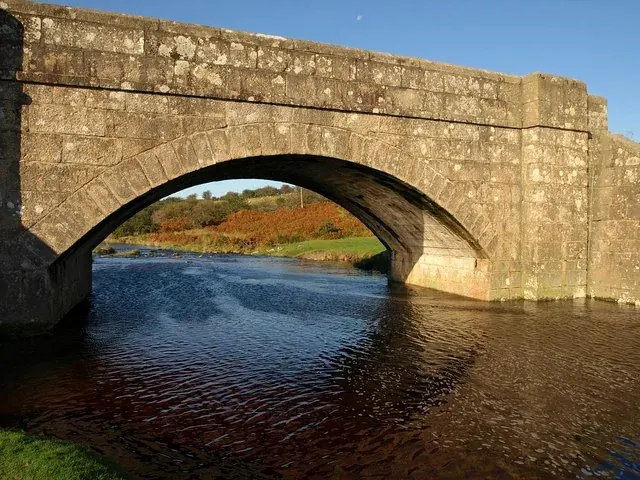
Stone road bridge over the River Plym on Dartmoor's south-west edge, with a free National Trust car park and the usual start for walks to Trowlesworthy Tor.

Cairns & Barrows

Cairn

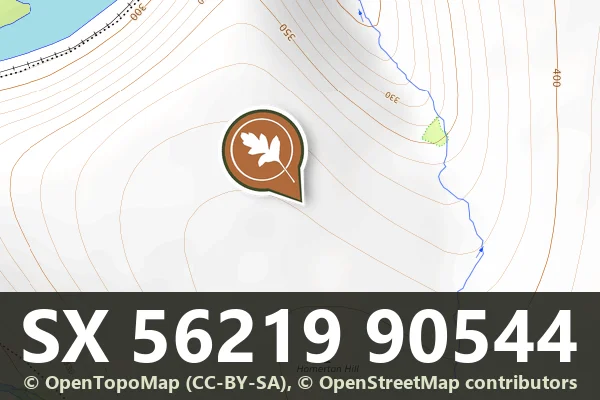
An oval cairn 5.9 m by 3.9 m on the north-west slope of Homerton Hill above the West Okement valley, part of a cairnfield.

Cairn
Cairns & Barrows

Cairn

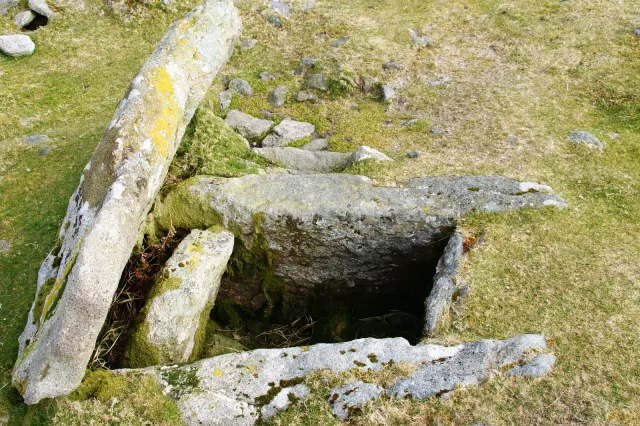
A Bronze Age cairn standing on the open moor, its stones weathered by millennia of Dartmoor wind and rain.

Cairn
Cairns & Barrows

Cairn

Bronze Age monument on Dartmoor.

Cairn
Cairns & Barrows

Cairn

Bronze Age monument on Dartmoor.

Cairns & Barrows

Cairn

Bronze Age monument on Dartmoor.

Cairn
Cairns & Barrows

Cairn

A Bronze Age cairn standing among Dartmoor's open moorland, marking ancient presence on the high plateau.

Cairns & Barrows

Cairn

Bronze Age monument on Dartmoor.

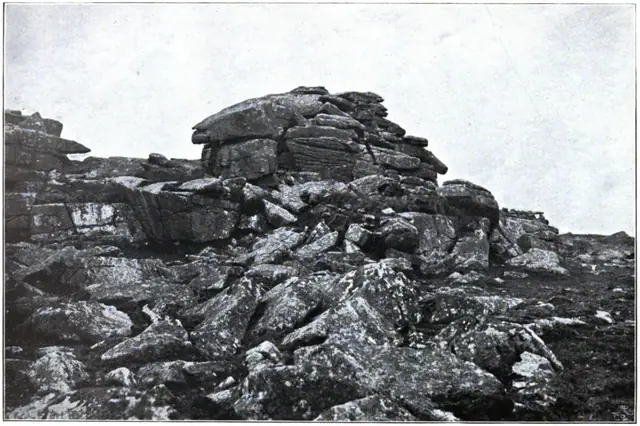
Dartmoor Illustrated, page 190Plate from Dartmoor Illustrated, page 190, 1900

“the inside of the prisons presents a melancholy and disagreeable aspect and one would imagine they were calculated for cattle rather then the human species,”

Anonymous American prisoner of war (copied into the journal of Joseph Valpey Jr.), Journal of Joseph Valpey, jr., of Salem, November, 1813-April, 1815, with other papers relating to his experience in Dartmoor prison, 1922

Also on Our DartmoorThe Cemetery: Cosdon triple stone row and cairn — The Cosdon triple stone row, known as The Cemetery: 138 m long, three rows with at least 118 stones, ending in a cairn with two joined cists, dug in 1896.