Skip to content

← Browse Explore

Industrial Archaeology

Tin mines, blowing houses, tramways and quarries - the moor's industrial past.

Share
View on map
Alluvial tin streamwork, Lydford Woods
Other Heritage Sites

Alluvial tin streamwork, Lydford Woods

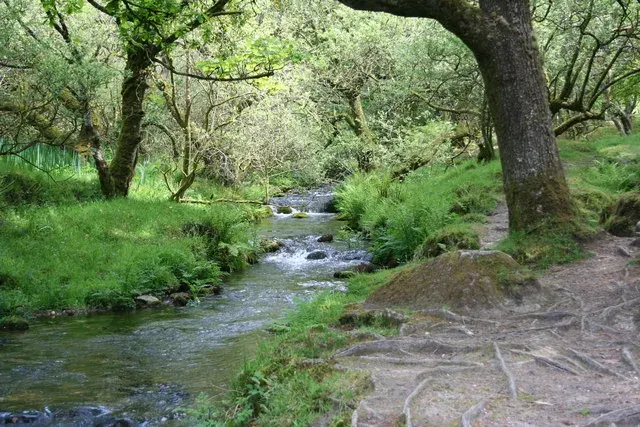
An alluvial tin streamwork at the foot of the River Lyd valley in Lydford Woods, with parallel spoil dumps that show several phases of working, bounded on the north by the Bridestowe and Brentor parish boundary bank.
Bal Mine
Industrial Archaeology

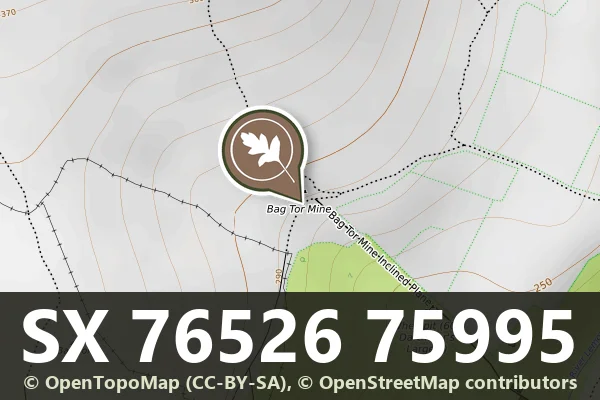
Bal Mine

Remnants of tin mining activity on the open moor, where shallow workings scar the granite landscape.

Bidlake Mill and leat
Industrial Archaeology

Bidlake Mill and leat

A Grade II listed watermill on the River Lew, first mentioned in 1268, rebuilt in 1565 and mostly 17th century, with an overshot wheel that still drives a circular saw.

Dartmoor quiz

Old books sometimes spell "Leather Tor" differently. Which of these is one of those spellings?

Lether Tor. It appears in 12 of the old books and papers in our research library, so the name has not always been written the way we write it now.

Worth a visit
Blackaton Ball tin mill
Industrial Archaeology

Blackaton Ball tin mill

A largely buried tin mill with a rectangular building, wheel pit, leat and dressing floor near the source of the West Webburn, recorded before 1556.

Industrial Archaeology

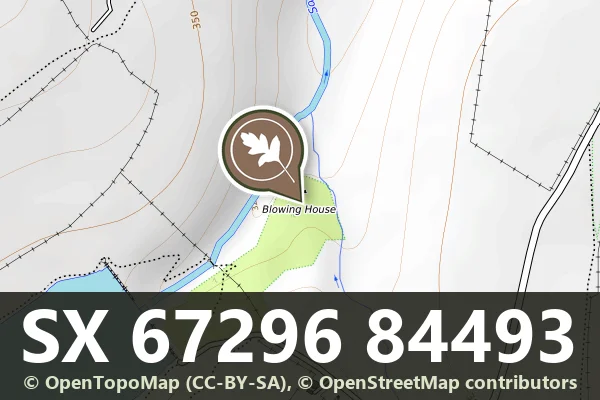
Blowing House

Ruined tin smelting works tucked into Dartmoor's moorland, where 18th-century industry shaped the landscape.

Blowing house at Dry Lake
Industrial Archaeology

Blowing house at Dry Lake

A small drystone tin mill, 5.5 m by 3.8 m inside, terraced into the north bank of Dry Lake near the Erme.

Blowing house at Hook Lake
Industrial Archaeology

Blowing house at Hook Lake

A small drystone tin mill, 6.3 m by 3.8 m inside, just north of where Hook Lake joins the Erme, probably a blowing mill.