Ring cairn near Little Links Tor
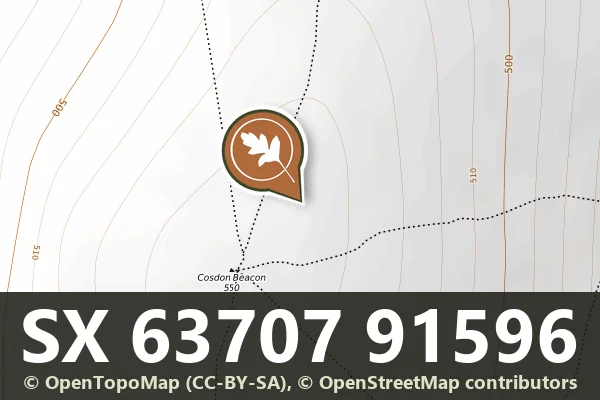
A ring cairn on a west-facing slope above the Lyd: a bank 2 m wide and 0.4 m high around a space 13 m across, with a gap on the west.
Showing listings tagged “Bronze Age” Show all listings
A ring cairn on a west-facing slope above the Lyd: a bank 2 m wide and 0.4 m high around a space 13 m across, with a gap on the west.
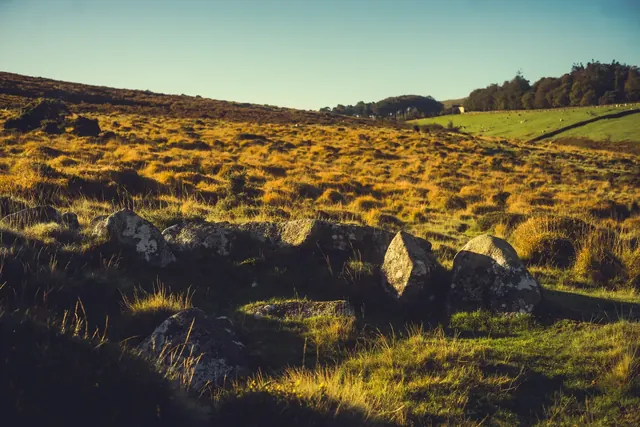
A stony round cairn 9 m across and 0.9 m high on the ridge between Cocks Hill and Lynch Tor above the Tavy.
A Bronze Age ring cairn 9.5 m by 8.5 m, about 240 m south-east of the Cullever Steps stepping stones, below Belstone Tor.
A flat-topped round cairn 28 m across and 1.4 m high on the ridge between Higher White Tor and Longaford Tor, with extensive views over Dartmoor.

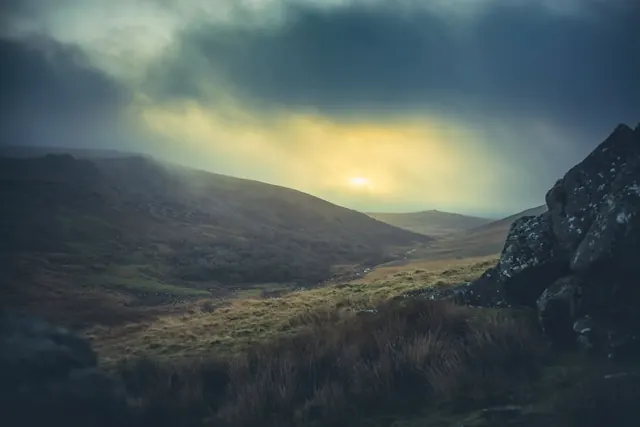
Which Dartmoor tor is on the left hand side of this photo?
A ring cairn on the summit ridge of Cawsand Hill: a rubble bank 2 m wide round a space 18 m by 17 m, with a central mound holding a stone cist that Rowe described in the early 19th century.
A Bronze Age cairn on the open moor north of Hare Tor, a scheduled monument and marker of Dartmoor's ancient past.
A large settlement above the Yealm: an enclosure of two parts with about 25 hut circles, a small enclosure with two huts, 16 more huts in a field system, and two later shelters and two leats.
A round cairn 19 m across and 1.5 m high, with an irregular hollow in its centre, on a south-west slope above the Doe Tor Brook.
At least 101 hut circles in a line 1.4 km long on the west slopes of Longaford and Littaford Tors, with fields and enclosures, and a rabbit warren of at least 32 pillow mounds with a warreners' house.
Tolmen stone. Photograph by Glavind Strachan Photography“Away to the northward is seen the boggy land in the neighbourhood of Erme Head, with the distant tors peeping over the dark brown ridges.”
Also on Our DartmoorHaytor Rocks — The best-known tor on the eastern edge of Dartmoor, easy to reach from the road, with a granite quarry and tramway history and a name spelled Haytor, Hay Tor or Hey Tor.