Aish Tor
A small, flat tor of altered rock rather than granite, above the northern side of the Dart gorge near Poundsgate, with a cairn on top and the Two Moors Way alongside.
The granite tors of Dartmoor, including the ones whose names end in Rocks, Rock or Stone.
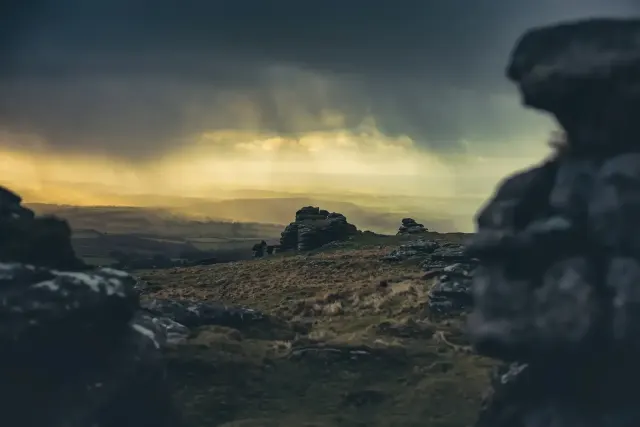
A tor is a large free-standing outcrop of rock that rises abruptly from gentler slopes on a hill or ridge. The word comes from Old Welsh and means a cluster or heap. On Dartmoor the tors are granite, emplaced about 280 million years ago. They survive where widely spaced joints in the granite let blocks of rock outlast the weathering that turned the rest into sandy gravel (growan).
Dating of 28 Dartmoor tors found that most have been exposed for less than 100,000 years, and none for more than 200,000. They probably emerged at the start of the last major ice age.
The highest point on Dartmoor is High Willhays, at 621 metres, near Okehampton. Yes Tor stands about a kilometre to the north along the same ridge and is slightly lower.
Which outcrops count as tors is a decision for people far better qualified than this directory. We follow the Tors of Dartmoor database, the Treks and Tors list and Tor Bagger: if one of them lists it as a tor, it is listed here as one. Hills and mounds that none of them list are on the Hills and Mounds page.
This page lists the tors and other named landmarks in the directory. Use the map to see where they are, and open a listing for its grid reference and further sources.
Sources: Wikipedia, Tor (rock) and High Willhays.
A small, flat tor of altered rock rather than granite, above the northern side of the Dart gorge near Poundsgate, with a cairn on top and the Two Moors Way alongside.
A large upland tract on North Dartmoor between the West Okement and the Rattle Brook, also known as the Devil's Dome, and the sixth highest peak on Dartmoor.
A very small tor on the slope above Archerton near Post Bridge, standing on the Lych Way with Archerton Bog behind it.
A hill on the north-east of Dartmoor beside Fernworthy Forest, with the double Assycombe stone row just to the north.
A modest tor between White Tor and Standon Hill, on the edge of the Merrivale range, with the Lych Way passing close by.
Bovey Tracey
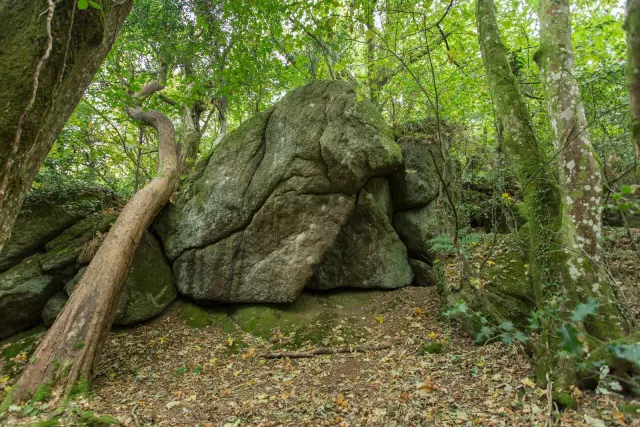
Bearacleave North Tor, known locally as the Walrus, is a prominent granite formation deep within Bearacleave Wood, just north of Bovey Tracey.
A group of tors on Bear Down west of Two Bridges, where the Geological Survey records a sheet of fine pink granite with tourmaline.
A small tor beside the Poundsgate to Dartmeet road, on private farmland, with rock basins and a logan stone described by Crossing.