Dartmoor quiz
Old books sometimes spell "Black Tor" differently. Which of these is one of those spellings?


← Browse Manaton · Browse Other Heritage Sites · Browse the directory
Manaton, Newton Abbot
Grid ref: SX 7463 7877 Find this on the Map Reference Finder
Main image: Greator Rocks - 10 metres from location - image by Derek Harper (CC BY-SA 2.0), via Wikimedia Commons
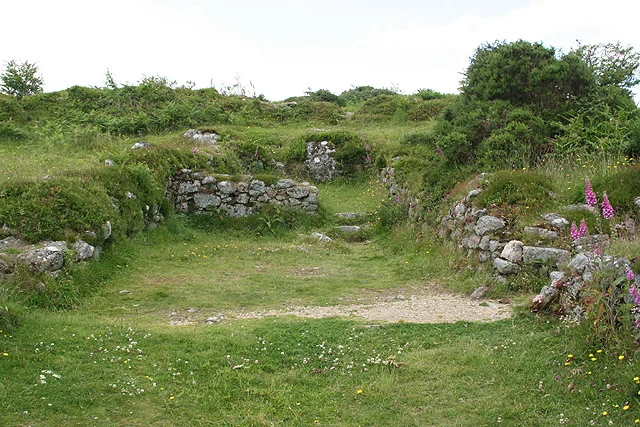
The deserted village below Hound Tor, near Manaton, is a group of medieval farm buildings on land that was first farmed in the Bronze Age. The buildings date from the 13th century: four Dartmoor longhouses, several smaller houses and barns, and three grain barns that were fitted with corn dryers, which suggests the climate was worsening. The place is named Hundatorra in Domesday, where it belonged to Tavistock Abbey.
Pollen evidence says farming had stopped by about 1350, although pottery suggests some occupation into the late 14th or early 15th century. The site was excavated between 1961 and 1975. Finds were slight: one coin of Henry III and broken pottery from Crockerton in Wiltshire. The acid soil may have destroyed much of the rest.
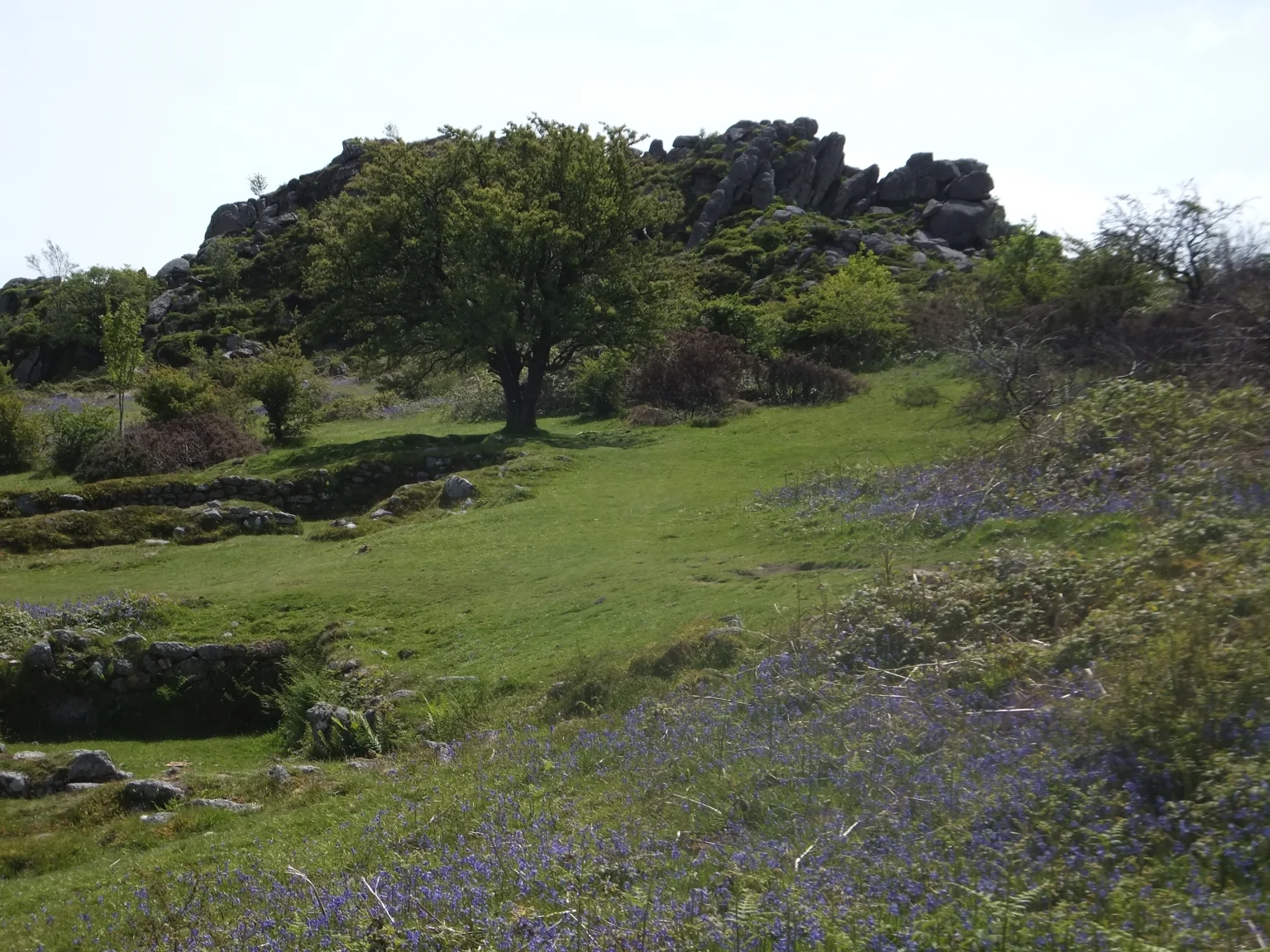
Hound Tor itself is a heavily weathered granite outcrop of 414 m. Sabine Baring-Gould thought the name came from the summit blocks, which look like hounds' heads over the rocks. The tor is often linked to Conan Doyle's The Hound of the Baskervilles. This is the Hound Tor most visitors mean. The other one is a different tor on the high moor above Throwleigh: see Hound Tor, Throwleigh.
The excavation behind what you see here was unfinished business for years. E. Marie Minter dug the site between 1961 and 1975 but died before writing up the results. Guy Beresford completed her work and published the definitive report, in Medieval Archaeology, Vol. 23 (1979), pp.98-158, eighteen years after Minter's dig began.
Contact us if you have information about this listing
Dartefacts is a database of Dartmoor sites with far more close-up detail than we can show here, and it is the best place to go deeper. Dartefacts is free to use, and nobody has to pay to look things up. If you want more, a yearly subscription adds 10-figure grid references, map zoom down to 1:25,000 and lists to tick off the places you have visited, and it helps keep the site going. We would encourage you to subscribe.
Be the first to share a thought about Hound Tor Deserted Medieval Village.
Share a thought Photograph by Glavind Strachan Photography
“The rain stopped suddenly, and the wind was hushed, except in the tops of invisible trees; and a streak of black boggy fog settled heavily.”
Also on Our DartmoorTaw River tin blowing mill near Tawcroft — The Taw River tin blowing mill: a drystone building 9.5 m by 4.7 m inside with furnace stones, wheelpit, leat, reservoir, tailrace and dressing floor, where tin slag has been found.
Old books sometimes spell "Black Tor" differently. Which of these is one of those spellings?
Know another Dartmoor place, tor or landmark we should include? Suggest a listing, it is free.
Suggest a listing