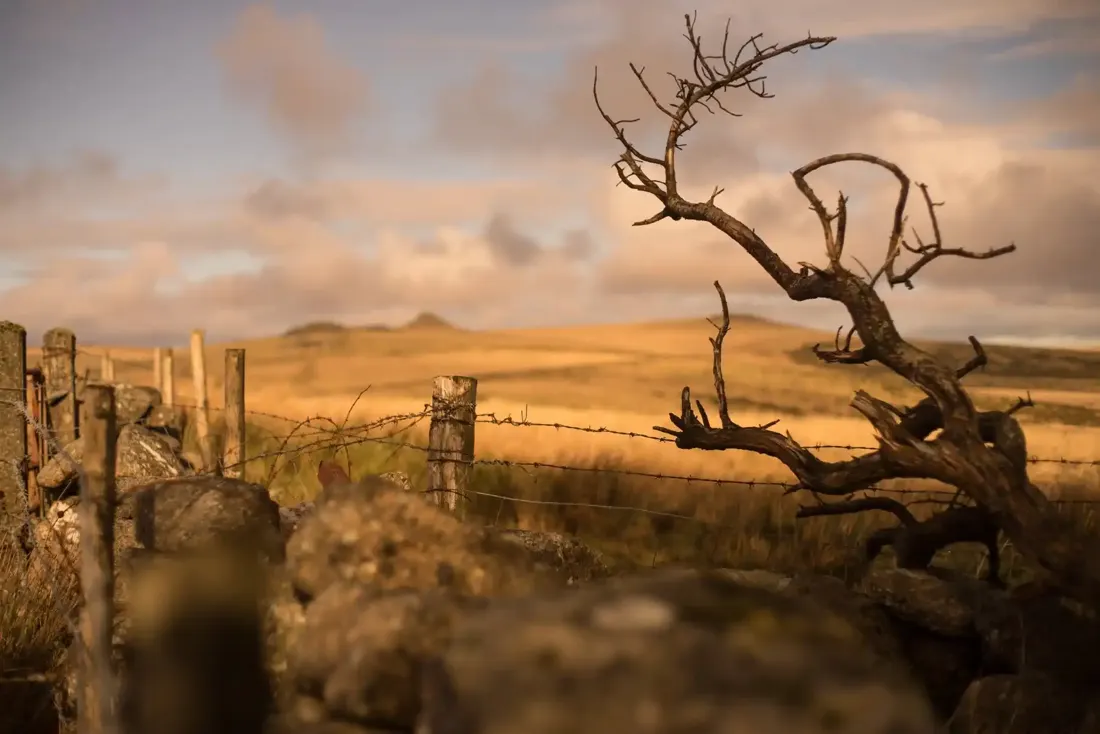
Stone alignment, Langstone Moor
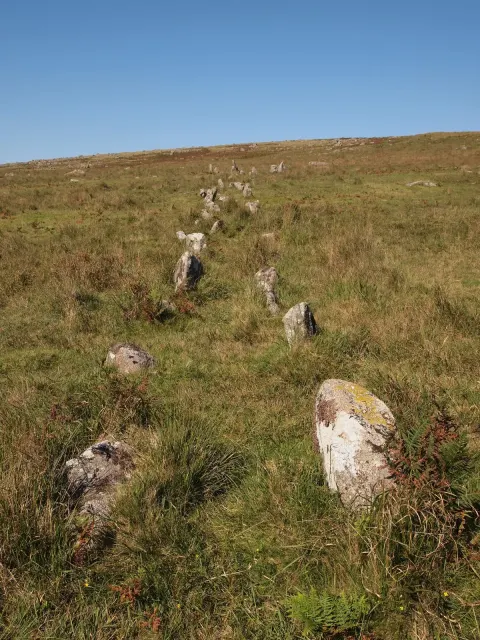
A single stone row 128 m long with 27 stones, 13 still in place, ending in a cairn, and crossed by the Lichway, on the ridge between Cocks Hill and White Tor.
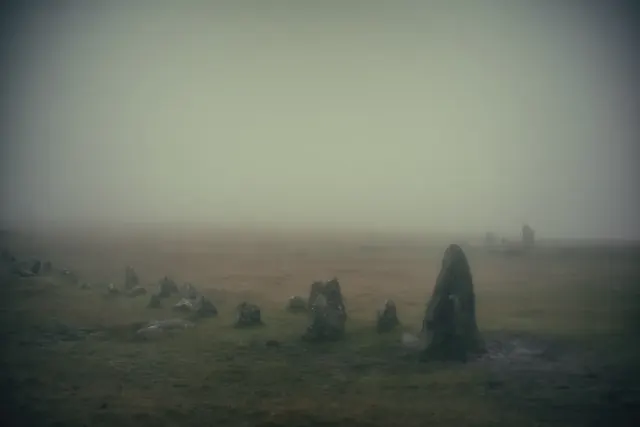
Dartmoor's archaeology and heritage - antiquities, historic buildings and museums.
A single stone row 128 m long with 27 stones, 13 still in place, ending in a cairn, and crossed by the Lichway, on the ridge between Cocks Hill and White Tor.

Which Dartmoor place is this?
The Ringmoor Down double stone row, 337 m long with 27 stones, ending in a cairn 7 m across with a kerb 12.9 m across that Baring-Gould restored in 1909.
Walkhampton, Yelverton
Two scheduled stone alignments near Sharpitor: a double row and a single row with a round cairn north-west of the tor, and a short double row between Sharpitor and Leeden Tor.
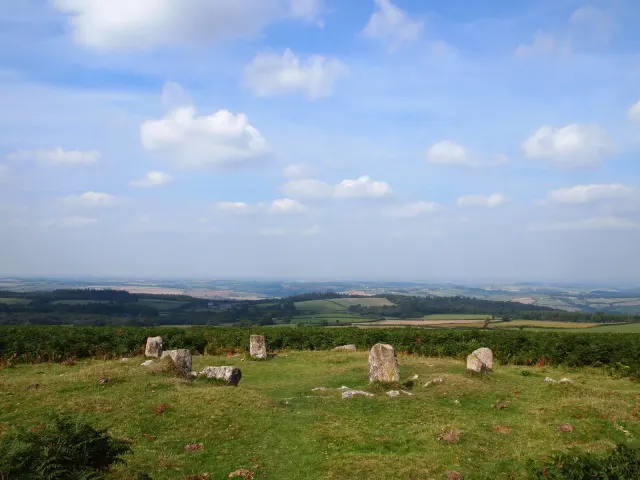
Bronze Age stones arranged in a circle on open moorland, a window into Dartmoor's ancient past.
A Bronze Age stone circle standing on open moorland, its weathered stones still marking an ancient gathering place.
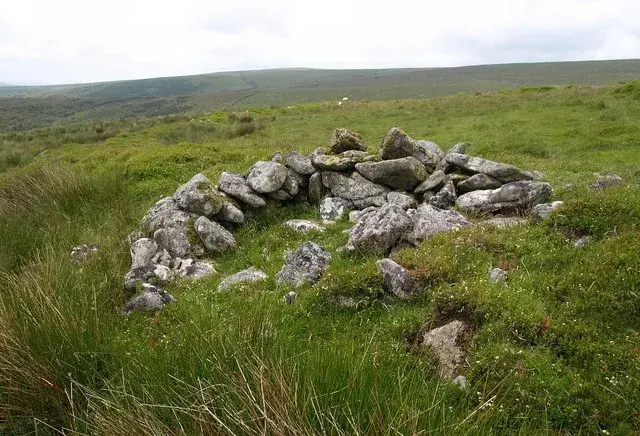
A small stone cist, 0.68 m by 0.22 m, with upright slabs up to 0.6 m high, on the eastern edge of a large hut circle settlement above the Yealm.
A socket stone on Ter Hill holding a replica cross; the original, repaired in 1885, is now in the High Moorland Visitor Centre at Princetown.
A Grade II* listed farmhouse of medieval or early post-medieval origin, standing on the open moor.
Photograph by Glavind Strachan Photography“This shaggy monster, heather-clad, with unctuous black fen rolling ten feet thick over its granite ribs, was his God.”
Also on Our DartmoorGranite — The third volume of Trevena's Dartmoor trilogy, following Furze the Cruel and Heather - published in 1909 and, in his own words, standing for the moor's enduring strength.