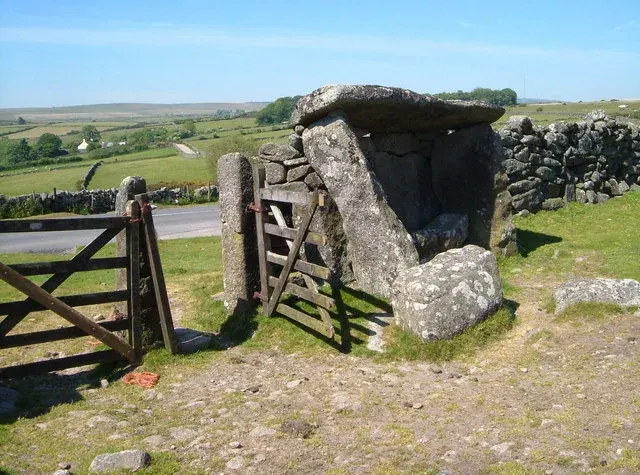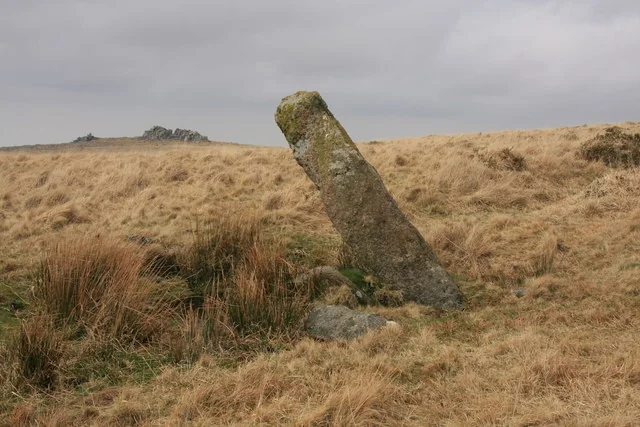
The Hanging Stone (Lee Moor)
Lee Moor, Plympton
A leaning prehistoric standing stone on Lee Moor, cut with the letters C B as a boundary mark, listed among Dartmoor's sheep-stealer hanging stones.
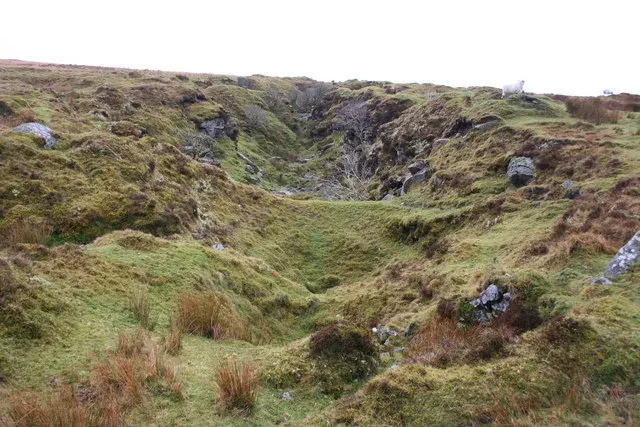
Dartmoor's archaeology and heritage - antiquities, historic buildings and museums.
Lee Moor, Plympton
A leaning prehistoric standing stone on Lee Moor, cut with the letters C B as a boundary mark, listed among Dartmoor's sheep-stealer hanging stones.
A Grade II* listed building that served the local community as an infirmary.
Hexworthy, Ashburton
A Bronze Age rock outcrop on Dartmoor's open moorland, shaped by ancient hands into a ceremonial or gathering place.
Harford, Ivybridge
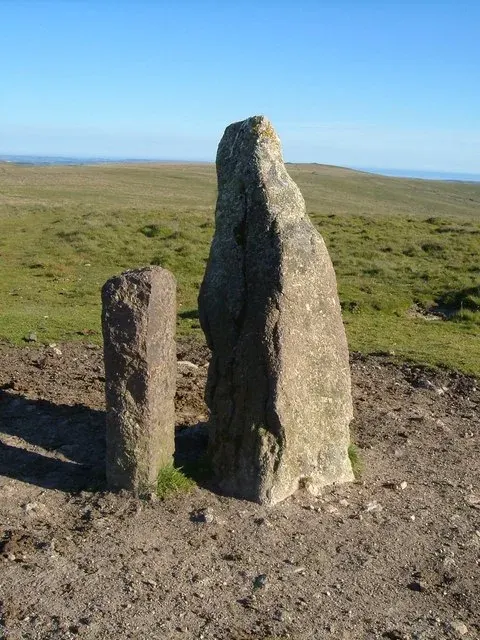
A coarse pink granite stone at the northern end of the Butterdon Hill stone row on Piles Hill, near South Brent, with an 1803 boundary stone beside it.
Teigncombe, Chagford
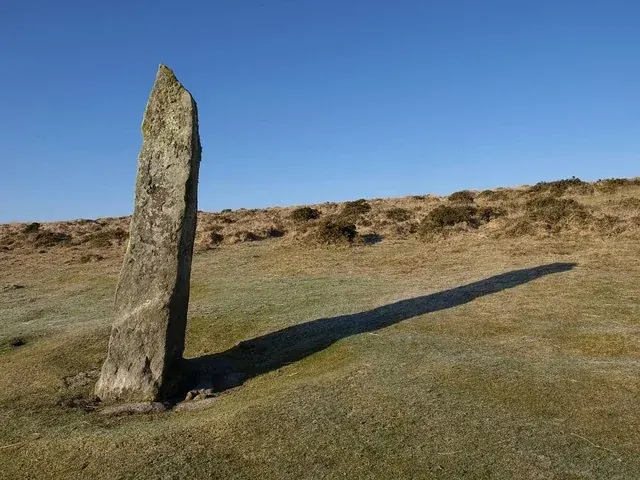
A 3 m granite menhir on Shovel Down at the end of two stone rows and the meeting point of the Chagford, Gidleigh and Lydford parish bounds.
Lydford, Okehampton
The Way of the Dead: the old route across central Dartmoor from Bellever to Lydford, said to have been used to carry the dead to be buried at Lydford church. The exact line is disputed.
A Grade II* listed building that once served as a courthouse.
Postbridge, Chagford
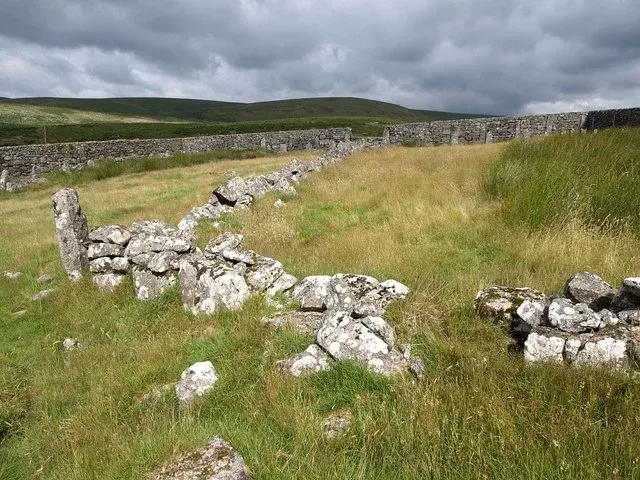
Stone foundations of a moorland sheepfold, where Dartmoor's shepherds once gathered their flocks among the granite and heather.