Four hut circles near Scorhill
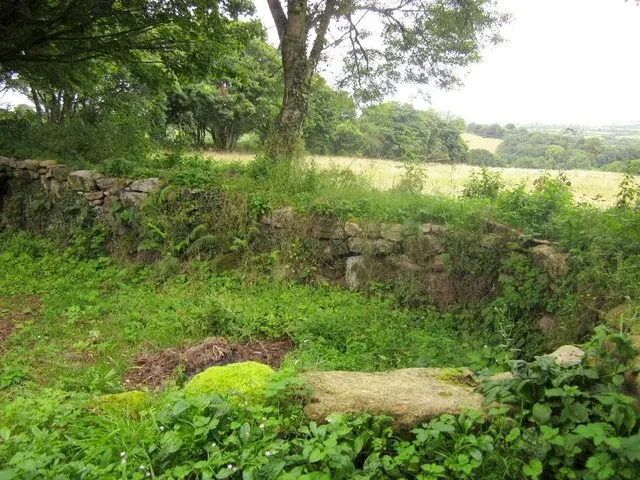
At least four free-standing hut circles on a small knoll above the North Teign, two of them rings of edge-set stones, 5 to 6.5 m across.
Dartmoor's archaeology and heritage - antiquities, historic buildings and museums.
At least four free-standing hut circles on a small knoll above the North Teign, two of them rings of edge-set stones, 5 to 6.5 m across.
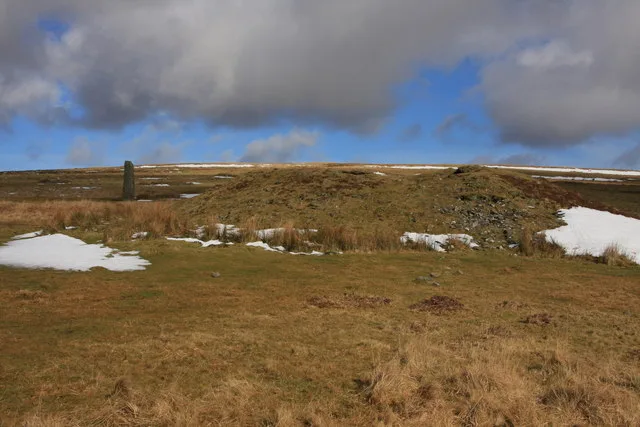
Four round barrows on Soussons Down, 10 to 20 m across and up to 2.2 m high; two dug in 1902 gave a flint arrowhead, bronze, charcoal, burnt bone, a cist with burnt human bones and a pottery sherd.
Foxhole Mine (Wheal Frederick) in the upper Doetor Brook: stamping mill, count house with walls 2.9 m high, dressing floor, tramway and clapper bridge, in a long alluvial tin streamwork with openworks, adits and reservoirs.
A dressed granite wayside cross shaft, 1.6 m high, on the slopes of Crane Hill above Foxtor Mires, probably moved from the Abbots' Way.
A bowl barrow 35 m across and 2.1 m high at the north end of Lydford, said to be the site of the Lydford gallows.
“...it's now rare to hear the Dartmoor dialect, songs, and stories being told in homes and pubs in the hamlets and villages.”
Who wrote this?
Medieval listed building on Dartmoor. Historic England list entry 1097177.
Bronze Age cairns scattered across open moorland, their stones weathered by millennia of Dartmoor wind and rain.
Nattor, Ivybridge
An enigmatic Bronze Age basin carved into the moorland granite, its purpose still debated among archaeologists.
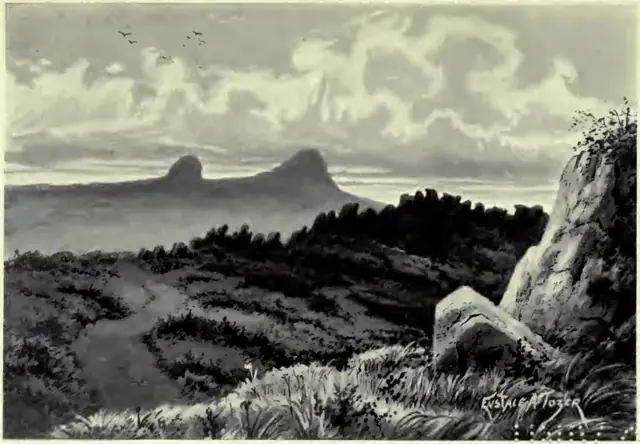
Plate from A Book of Dartmoor, page 231, 1900“He sits very quiet now for hours at a time, perched on a moor-stone so still as a heron.”
Also on Our DartmoorGreat Mis Tor — A massive granite tor with a striking rock basin known as the Devil's Frying Pan, overlooking the River Walkham.