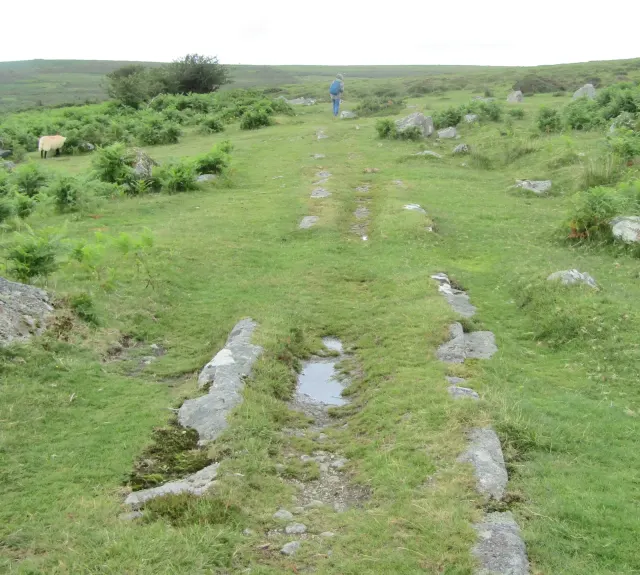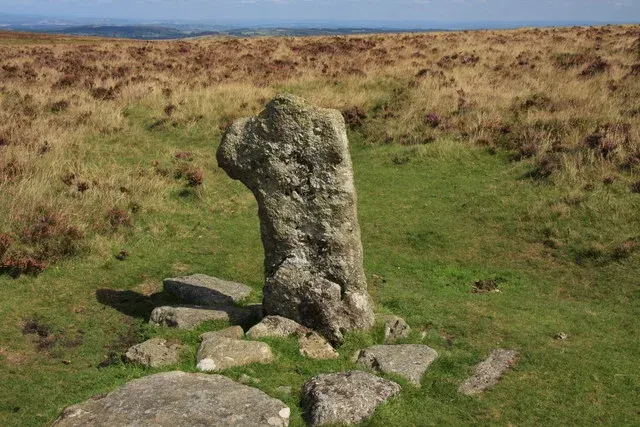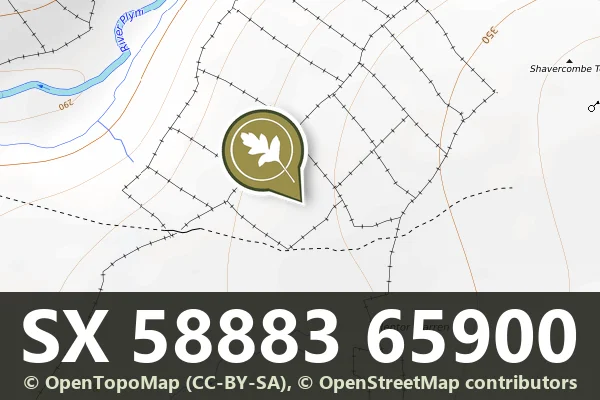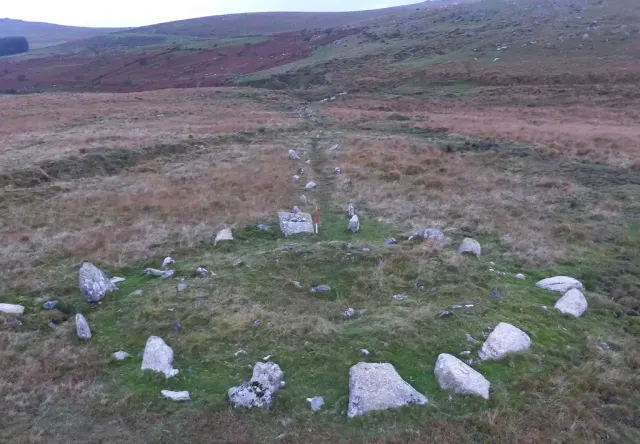
Hart Tor North stone rows cairn
Bronze Age stone rows and cairn hidden in the open moorland, weathered monuments to Dartmoor's ancient inhabitants.
Dartmoor's archaeology and heritage - antiquities, historic buildings and museums.
Bronze Age stone rows and cairn hidden in the open moorland, weathered monuments to Dartmoor's ancient inhabitants.

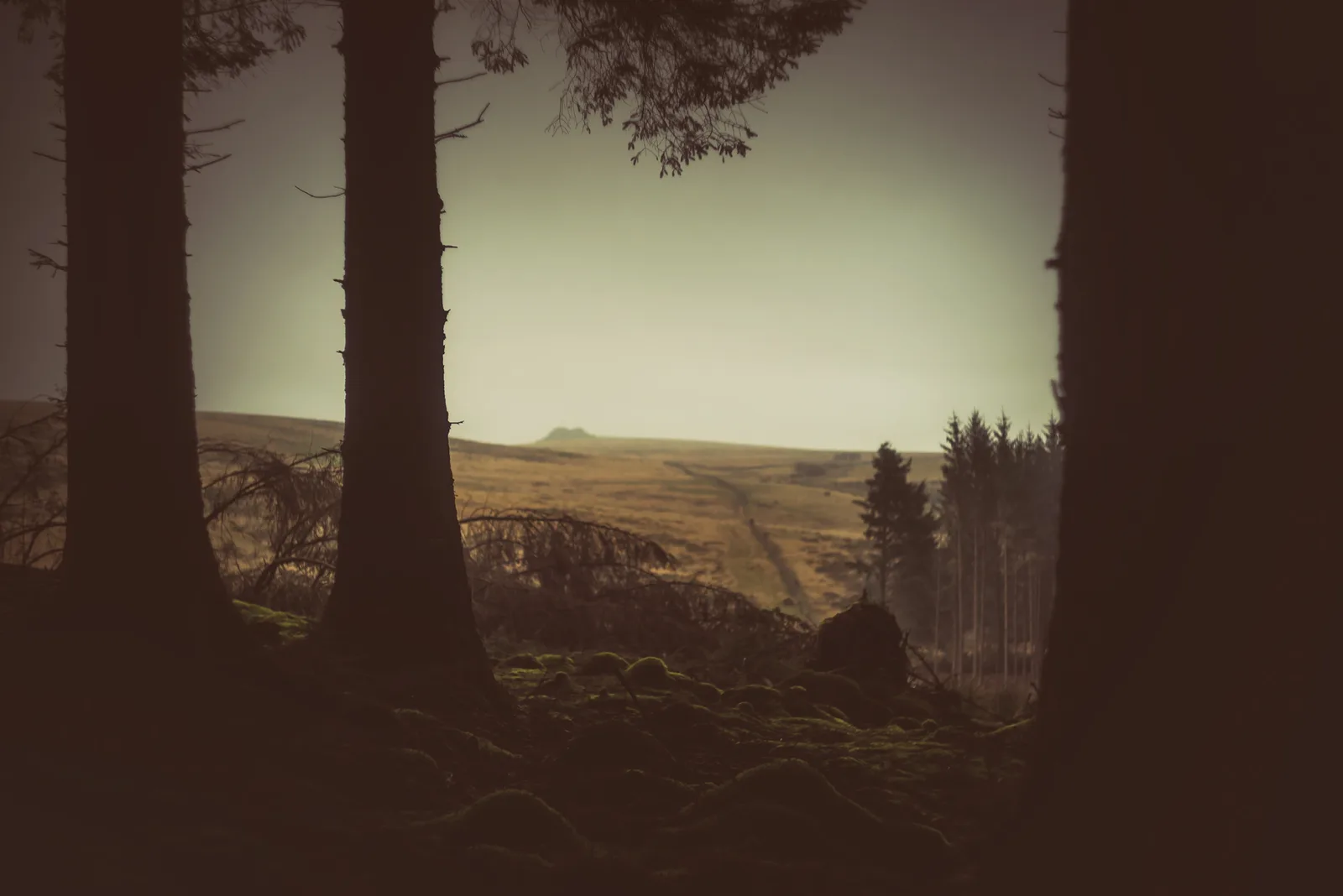
Which Dartmoor place is in the far distance?
A listed farmhouse on the open moor, likely medieval in origin, with the character of generations of moorland settlement.
Hawson Cross: a Latin cross 2.18 m high on a triangular road island by Stumpy Oak, with an original head and arms on a mostly modern shaft, restored in 1952 and on the Monks' Path.
Haytor Vale
A tramway built by George Templer in 1820 to carry granite from the Haytor Quarries down to the Stover Canal at Ventiford, a fall of about 1,300 feet over roughly ten miles. Unusually, its rails were grooved granite setts rather than iron, cut and laid directly into the moor.
A late medieval cross, 1.76 m high with chamfered, splayed arms and pointed stops, set in a square socket stone at a T-junction; it dates from about 1500 and was secured in 1868.
Mill Leat, Buckfastleigh
Iron Age hilltop fort with sweeping views across Dartmoor, where ancient ramparts still command the moorland skyline.
Finlake, Bovey Tracey
A historic showground nestled on the edge of Dartmoor, where rural traditions and community gatherings have shaped local life for generations.
Hentor Warren between the Shavercombe and Hentor Brooks: three hut circle settlements, ten cairns, a ring cairn, the Willings Walls Reave, two medieval farms, 35 pillow mounds, leats and Second World War mortar pits.