- Height: 418 m (Treks and Tors); 428 m (Dartefacts); 1,426 ft (Crossing, 1902)
- Grid reference: SX 583 712 (Treks and Tors)
Cramber Tor is on Walkhampton Common, near Princetown. William Crossing listed it in Amid Devonia's Alps (1888) with that description, and in A Hundred Years on Dartmoor (1902) gave its height as 1,426 feet, in the vicinity of Black Tor and to the eastward of the Princetown and Dowsland road. Rowe's Perambulation uses it to place Crazy Well Pool, which lies south east of Stanlake, south west of Cramber Tor and a short distance from the Devonport leat. Crossing's footnote in The Ancient Stone Crosses of Dartmoor and its Borders adds that Newleycombe Lake rises on the southern slope of the high ground eastward of the tor.
The view
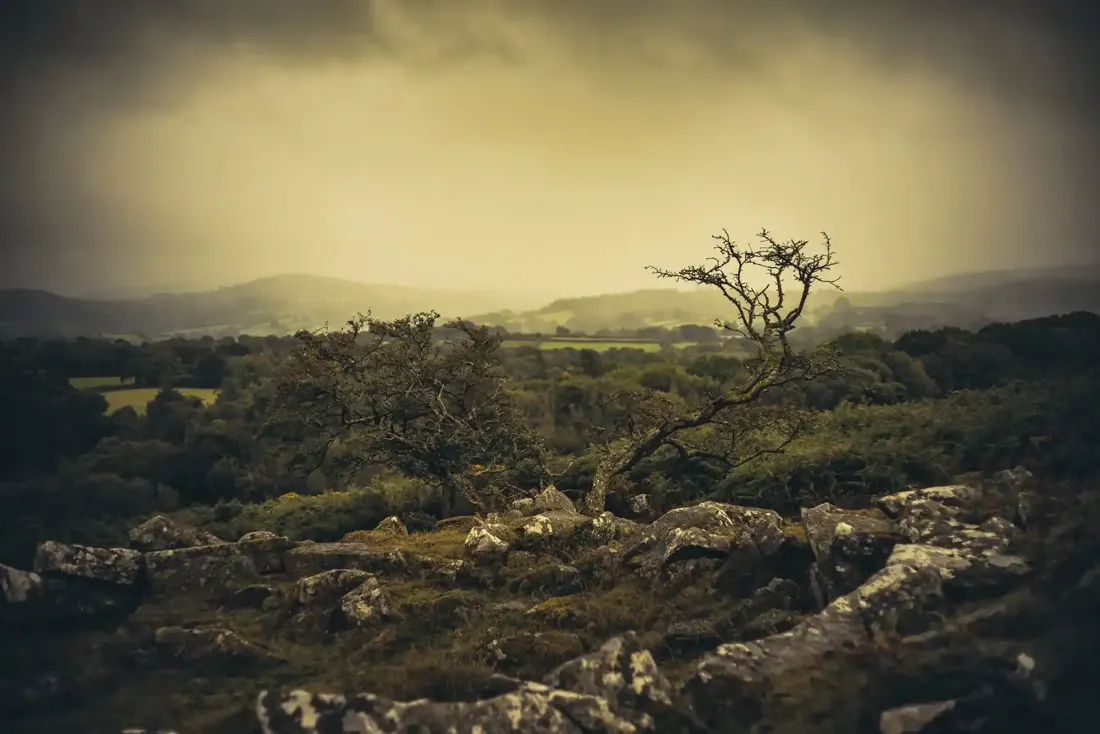
The Murray Handbook for Travellers in Devon and Cornwall says that beyond Syward's Cross the view from Cramber Tor, looking across Lethertor to Sheepstor, is "strikingly wild and grand". Crossing, in Gems in a Granite Setting (1905), picks Cramber Tor as a place to stand and see the stony hills above the valley of the Mew. In the Guide to Dartmoor (1914) it is a stage of his Excursion 2, about half a mile south by east of Hart Tor, reached by crossing the Hart Tor Brook and climbing the hill on the Princetown and Kingsett track, and he says the view southward is greatly extended once the tor is reached.
Today
Treks and Tors describes the tor as sitting on the western edge of a very large, quite boggy, upturned bowl of a hill, with a trig point at one side and the tor at the other. Views go down to Burrator and west towards Cornwall. The Devonport Leat curves around the southern side of the tor before tumbling down Raddick Hill and across the aqueduct. The easiest approach is from Norsworthy Bridge, along the forest track towards Crazywell Pool and up to the tor.
Sources
- Treks and Tors: Cramber Tor
- Dartefacts: Cramber Tor
- Rowe, A Perambulation of the Antient and Royal Forest of Dartmoor.
- William Crossing, Amid Devonia's Alps (1888).
- William Crossing, A Hundred Years on Dartmoor (1902).
- William Crossing, Gems in a Granite Setting (1905).
- William Crossing, The Ancient Stone Crosses of Dartmoor and its Borders.
- William Crossing, Guide to Dartmoor (1914).
- A Handbook for Travellers in Devon and Cornwall (Murray).