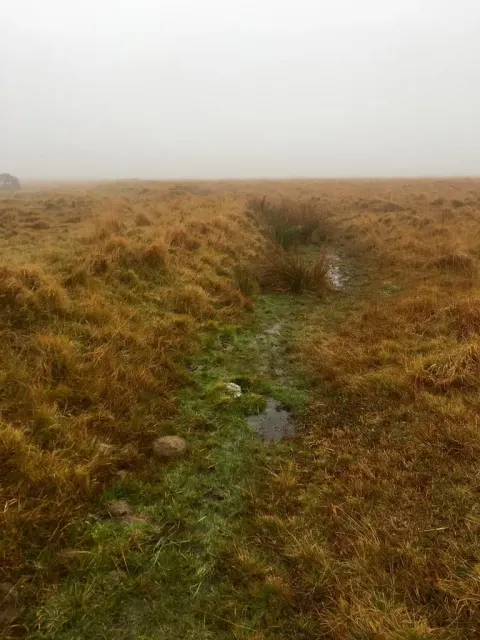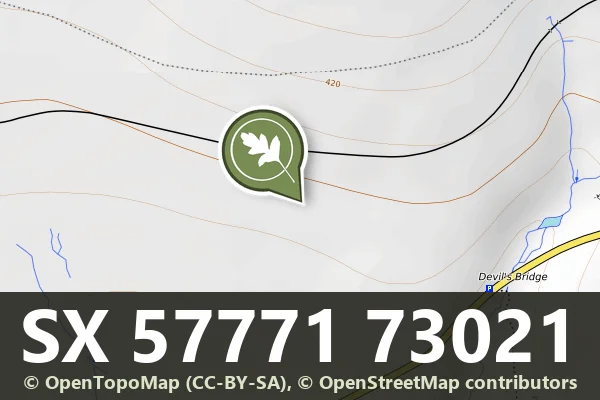
Small cairn in the White Hill cairnfield
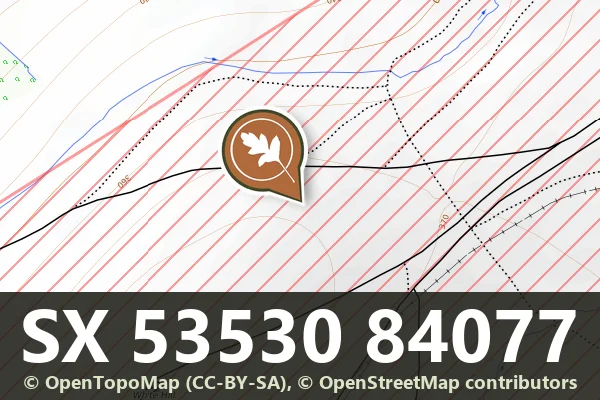
A small oval cairn, 3.8 m by 3 m and 0.2 m high, one of twenty-six mounds in a cairnfield on the west slope of White Hill above Lydford.
Showing listings tagged “Bronze Age” Show all listings
A small oval cairn, 3.8 m by 3 m and 0.2 m high, one of twenty-six mounds in a cairnfield on the west slope of White Hill above Lydford.
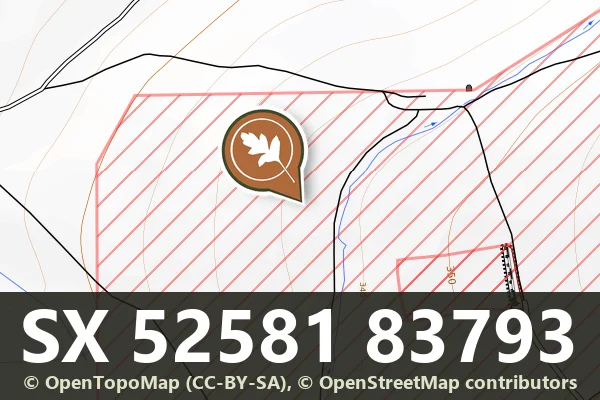
Prehistoric field boundaries and later settlements on the high moor between Shovel Down and Long Ridge.
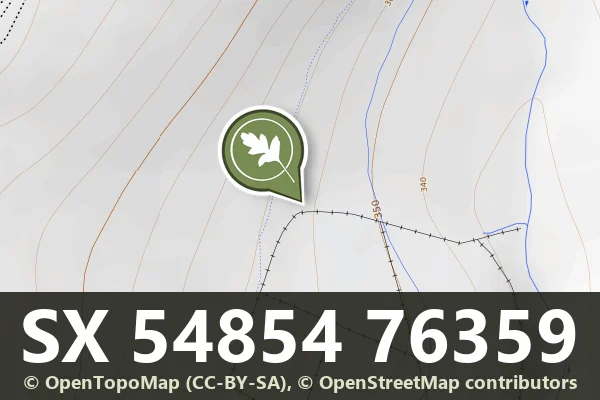
Two cairns, 5 m across and 4 m by 3 m, at the north-east edge of the White Hill cairnfield.
Two small hut circles, 3.7 m and 4.2 m across inside, with rubble walls 1.7 m wide, above the North Teign near the confluence of the Gallaven and Walla Brooks.
The Cosdon triple stone row, known as The Cemetery: 138 m long, three rows with at least 118 stones, ending in a cairn with two joined cists, dug in 1896.
A setting of fourteen stones up to 0.55 m high in a ring 4 m across, probably the kerb of a vanished cairn, made of quartz-schorl rather than granite.
A tor cairn on the summit of High Willhays, southern England's highest point: two curved banks against the east face of a rock outcrop, enclosing 13.5 m by 5.5 m.
A small hut circle 2.3 m across inside with a wall 1.6 m wide and a doorway to the south-south-west, at the south-east edge of the North Hessary Tor settlement, 7 m from the Walkhampton Common reave.
Two stone hut circles, 4.1 m and 6.2 m across inside, terraced into a slope beside the Great Western Reave.