Roundhouse on Teigncombe Tor
Teigncombe, Chagford
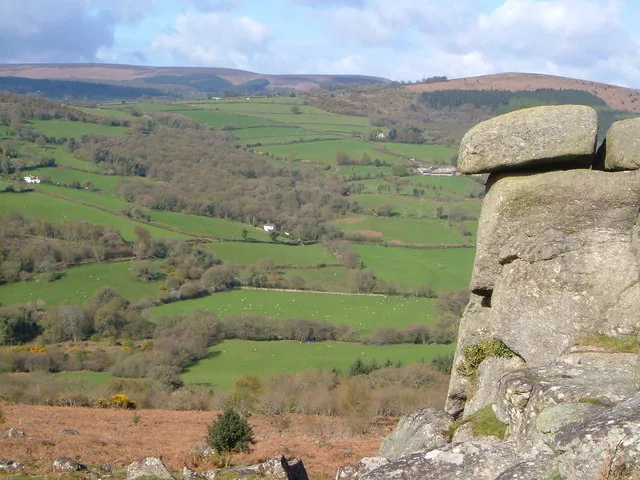
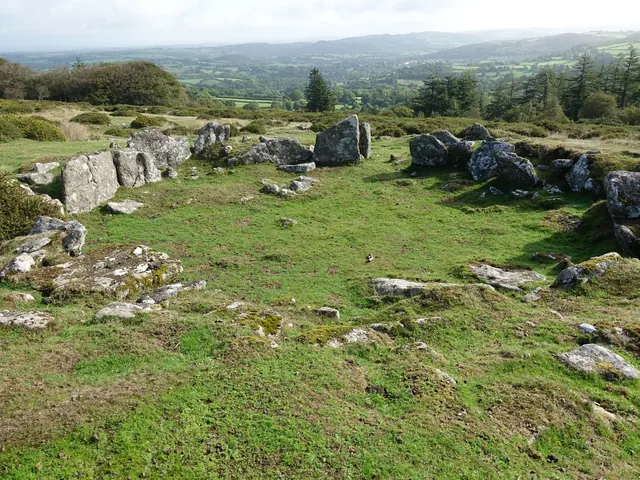
One of the prehistoric stone roundhouses on Teigncombe Tor, on the slope below Kestor above Teigncombe.
Showing listings tagged “Iron Age” Show all listings
Teigncombe, Chagford
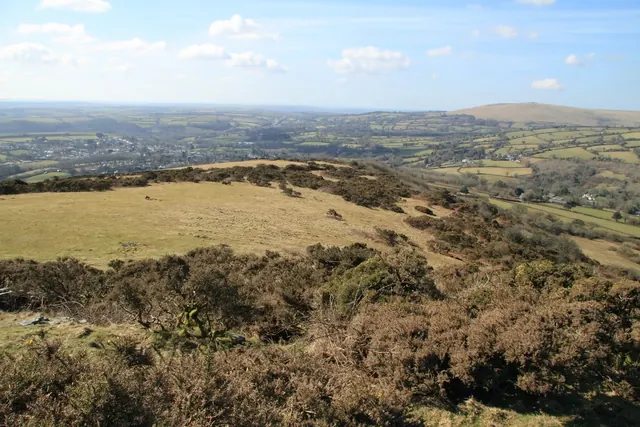
One of the prehistoric stone roundhouses on Teigncombe Tor, on the slope below Kestor above Teigncombe.
South Brent
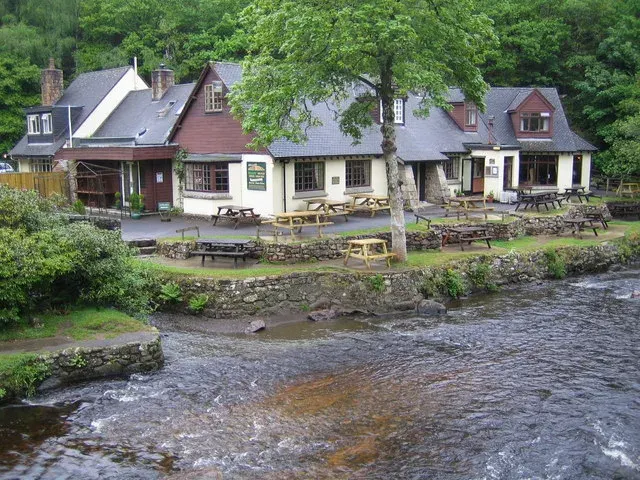
A steep 311 m hill above South Brent with an Iron Age hillfort, the ruins of St Michael's chapel, crags of non-granite rock and an Ordnance Survey trig pillar.
Drewsteignton
Prestonbury Castle is an Iron Age hill fort located on a hilltop near Drewsteignton, some 240 metres above sea level. It stands overlooking the Teign Valley and is close to two other hill forts, about 2 km away.
“Dwellers in the hilly parts of Devon, on Dartmoor and Exmoor, and in the villages bordering upon them, are as deeply imbued with faith in witches, as their forefathers were in the days when Alfred was king.”
Who wrote this?
A Wild Hunt legend tied to an Iron Age fort above the River Plym, popular in Dartmoor folklore but of uncertain age and origin.
Moretonhampstead
A granite tor of 319 m at the north-west end of Lustleigh Cleave, with an oval Iron Age hillfort on the hilltop above it.
Berra Tor is a small, low tor under trees on the south western edge of Dartmoor, near Buckland Monachorum.
A prehistoric circular earthwork on the moorland northeast of Kelly College, likely an Iron Age or Bronze Age settlement.
An oval earthwork 49 m by 48 m inside, on the south-east side of Huccaby Tor, with a slight platform that may be a hut circle.
Iron Age enclosed settlement south-east of Archerton, visible as earthwork remains on open moorland.