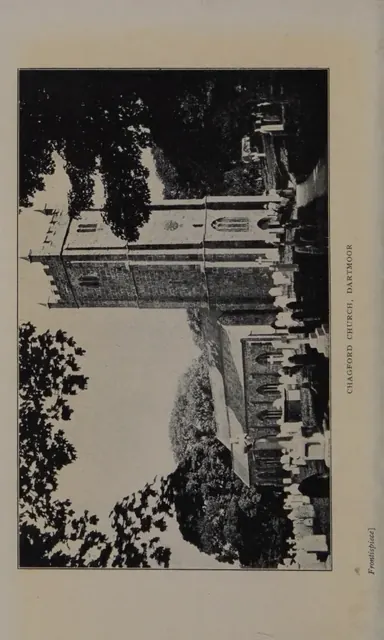
Some Dartmoor Saints and Shrines: studies in experimental religion among the homely folk
Lewis Henry Court's 1927 study of religion among the people of Dartmoor, published in London by Morgan & Scott.
Showing listings tagged “Churches and chapels” Show all listings
Lewis Henry Court's 1927 study of religion among the people of Dartmoor, published in London by Morgan & Scott.
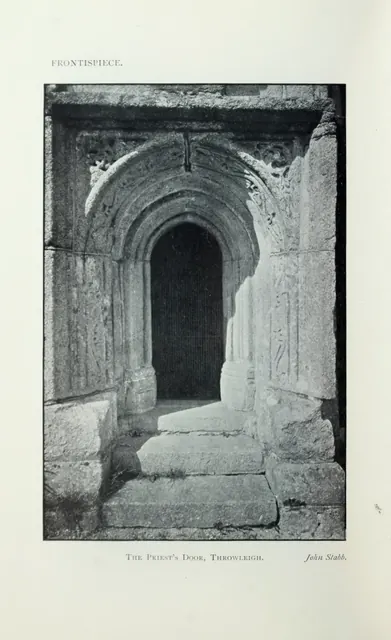
John Stabb's 1909 description of objects of interest in the old parish churches of Devonshire.
South Brent
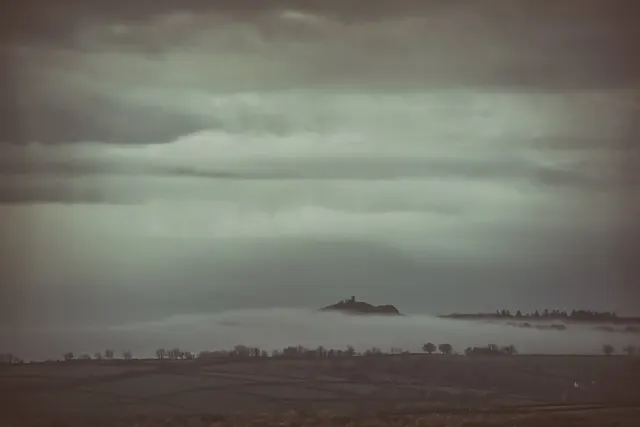
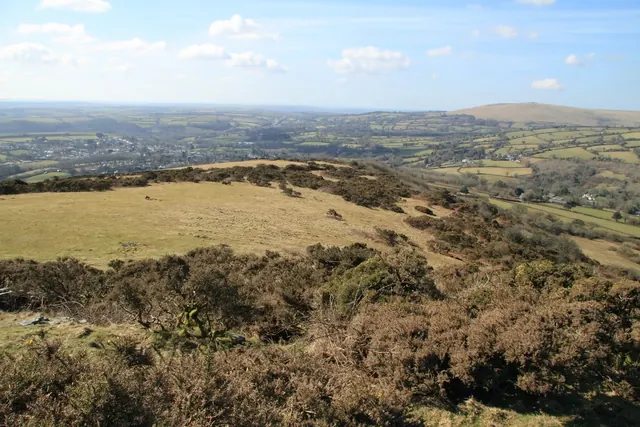
A steep 311 m hill above South Brent with an Iron Age hillfort, the ruins of St Michael's chapel, crags of non-granite rock and an Ordnance Survey trig pillar.
“The peat glowed as though it were red-hot, and night brooded on the eastern face of every hill.”
Who wrote this?
North Brentor, Tavistock
Brentor Church, St Michael de Rupe, is the parish church of Brentor and one of the iconic landmarks of West Devon, founded in 1130 on the summit of Brent Tor. The church believes it is the highest working church in southern England.
Ashburton
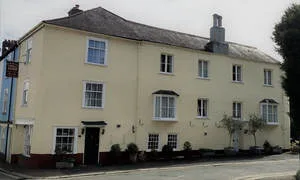
We are close to Ashburton town centre and next to the beautiful St Andrew's parish church.
Moretonhampstead
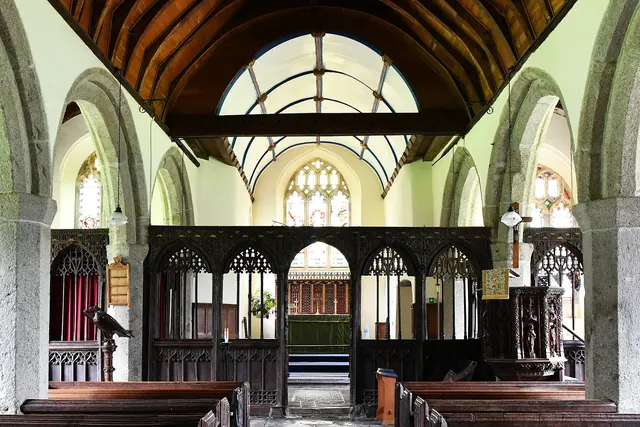
Grade I listed medieval parish church in Moretonhampstead centre, notable for its early fifteenth-century tower and traditional Devon wagon roof.
Grade I listed medieval church dedicated to St John the Baptist, a landmark of stone and faith on the Dartmoor landscape.
A listed stone cottage that served the practical needs of a parish churchyard, likely dating from the 17th or 18th century.
Drewsteignton
Grade I listed 15th-century parish church at the heart of Drewsteignton village, overlooking the Teign Gorge.
Photograph by Glavind Strachan Photography“This shaggy monster, heather-clad, with unctuous black fen rolling ten feet thick over its granite ribs, was his God.”
Also on Our DartmoorHut circle near Dendles Wood — A stone hut circle with a 6.6 m inner area and a double upright-stone wall, on a south-west-facing slope above Broadall Lake.