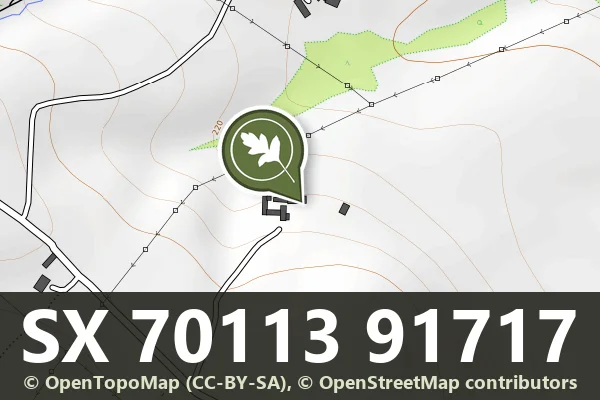
Preston Farmhouse
A Grade II* listed farmhouse on the edge of Dartmoor, built in the medieval or early modern period and substantially altered over centuries.
Showing listings tagged “Historic England” Show all listings
A Grade II* listed farmhouse on the edge of Dartmoor, built in the medieval or early modern period and substantially altered over centuries.
A circular Grade II* dovecote 6.28 m across with a corbelled domed roof, about 250 nesting holes in 11 tiers and a low Gothic door, restored in 1977, at Pridhamsleigh.
Most of the Throwleigh Common coaxial field system, with six settlements including at least 27 hut circles, a reave, at least 27 cairns, part of the 19 km Bradford Leat and two boundary stones.
Listed building on Dartmoor. Historic England list entry 1260196.
A Grade II* listed farmhouse on Dartmoor, likely medieval in origin with later additions, set in the moorland landscape.
Old books sometimes spell "Hen Tor" differently. Which of these is one of those spellings?
A Grade II* listed farmhouse with its front garden wall, standing on Dartmoor with roots in the post-medieval farming tradition.
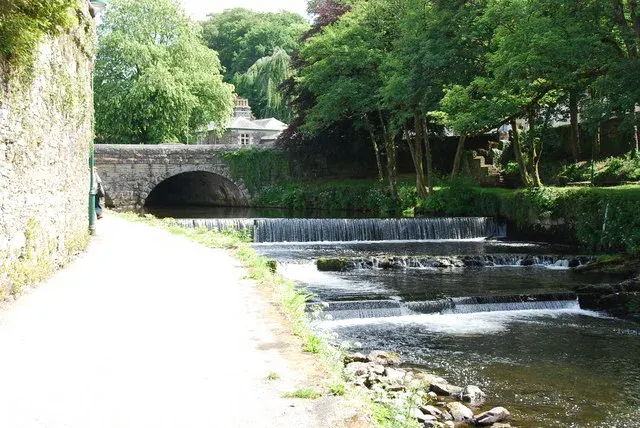
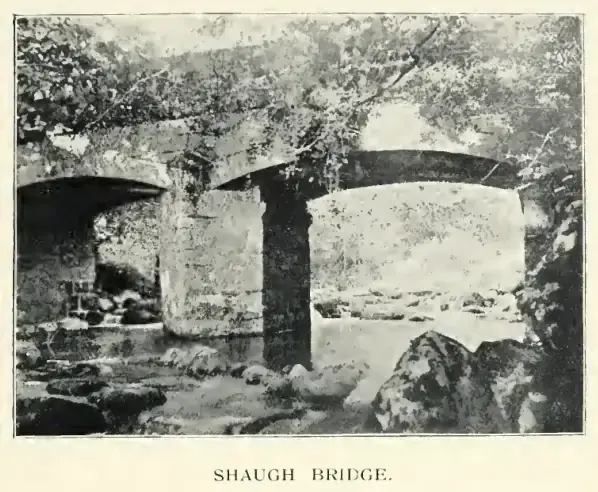
A low two-arched bridge of dressed granite over the East Webburn, the arches meeting on an islet; a gate pillar on the north side suggests it was once gated.
A grade II* listed farmhouse with surviving garden walls, likely medieval or early modern in origin, standing on Dartmoor's slopes.
Three early Christian memorial stones of the 5th and 6th centuries in the vicarage garden at Tavistock, known as the Nepranus, Sabine and Nabarr stones.
Plate from A Hundred Years on Dartmoor, page 35, 1901“The atmosphere of Dartmoor deserves particular notice ; it is at all times humid. The rain, which frequently falls, almost without intermission, for many weeks together, is generally small; and resembles more a Scotch mist than a shower.”
Also on Our DartmoorDouble Stone row - Remains of pinion arm — Bronze Age stone rows and a mysterious mechanical fragment weathered into Dartmoor's granite landscape.