Cairns & Barrows
Drizzlecombe cairns
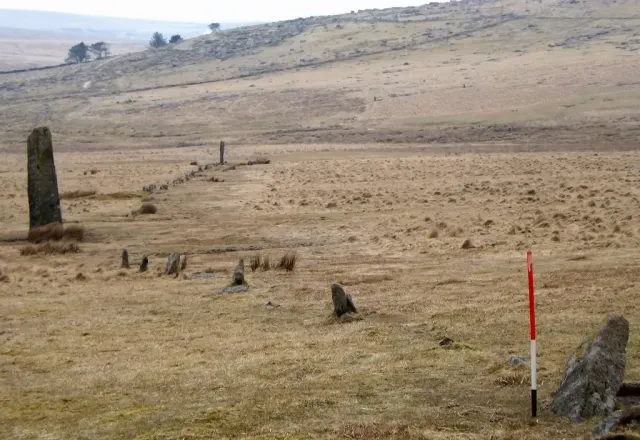
Five Bronze Age cairns among the Drizzlecombe stone rows, each within about 180 m of a row.


Showing listings tagged “Bronze Age” Show all listings
Five Bronze Age cairns among the Drizzlecombe stone rows, each within about 180 m of a row.
Teigncombe, Chagford
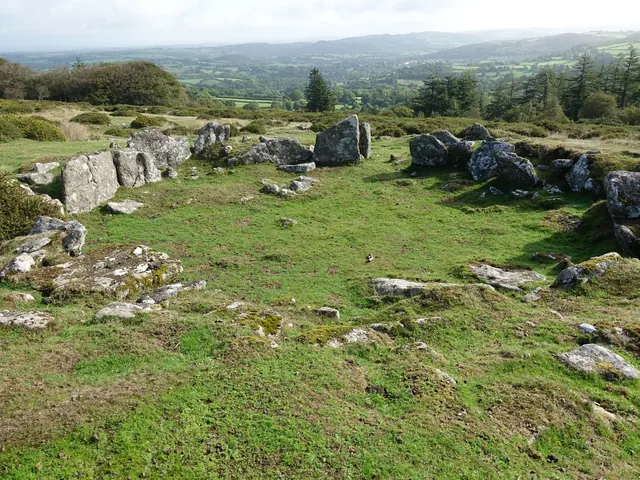
One of the prehistoric stone roundhouses on Teigncombe Tor, on the slope below Kestor above Teigncombe.
Ugborough, Ivybridge
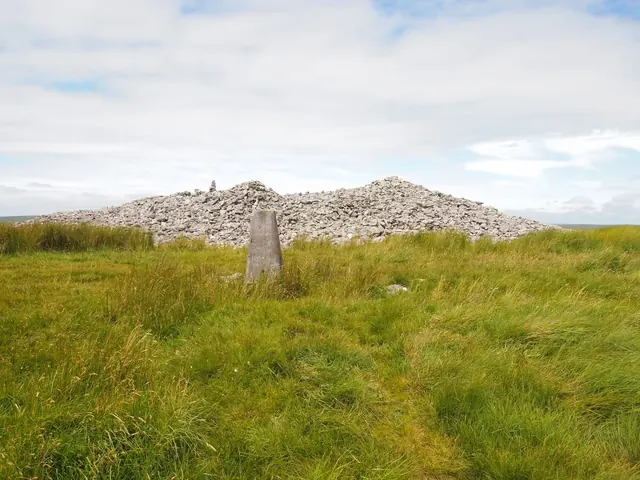
The 464 m top of Ugborough Moor, crowned by three huge Bronze Age cairns and an Ordnance Survey trig pillar, once called Three Barrows Tor.
Old books sometimes spell "Sheeps Tor" differently. Which of these is one of those spellings?
Cornwood, Ivybridge
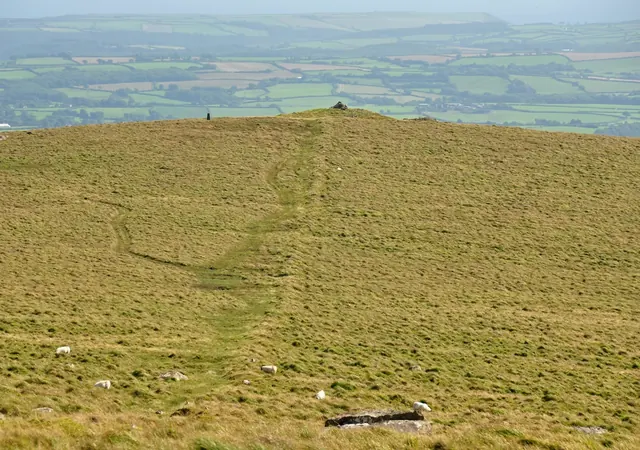
A 429 m hill on the south-west edge of the moor above Cornwood, with a summit cairn seen from Plymouth, an Ordnance Survey trig pillar and prehistoric settlements on its slopes.
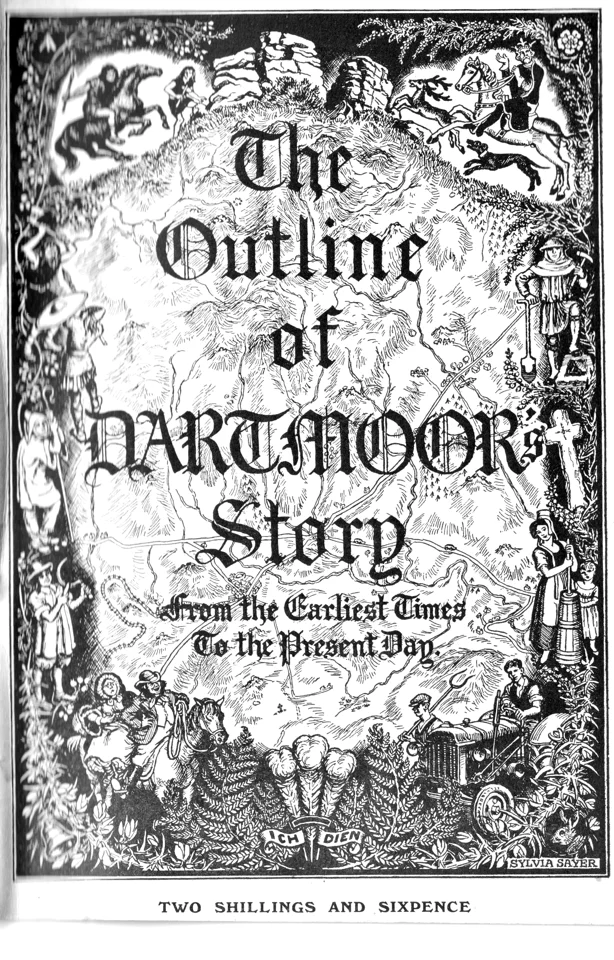
A 1951 booklet written and illustrated by Sylvia Sayer that gives newcomers to Dartmoor a bird's-eye history of the moor, from the earliest times to the present day.

A free guide to Dartmoor's prehistoric settlements, stone rows, circles and cists, with walks planned round public transport, site tables, GPS data and scans of the old exploration reports.
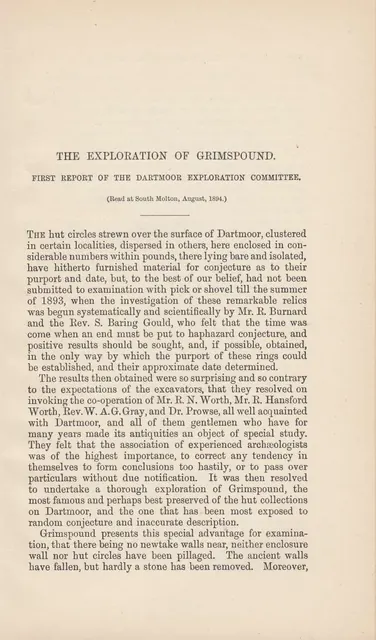
The Devonshire Association committee that dug, surveyed and re-erected Dartmoor's hut circles, stone rows and cairns from 1893, with eleven reports by 1906 and a twelfth in 1935.
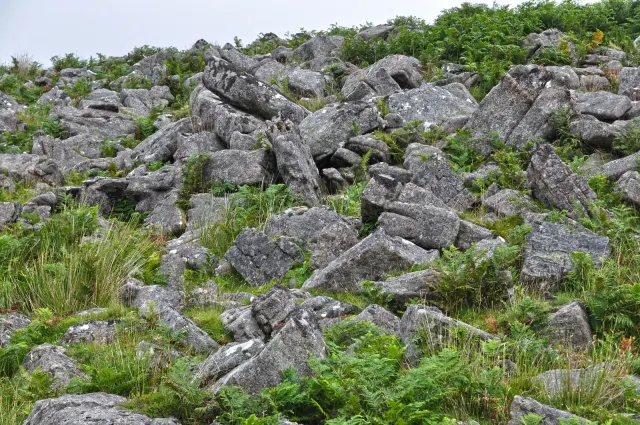
One of the largest unenclosed hut circle settlements on Dartmoor: dozens of stone huts on a south-facing slope above the River Tavy, dug by the Dartmoor Exploration Committee in 1905.
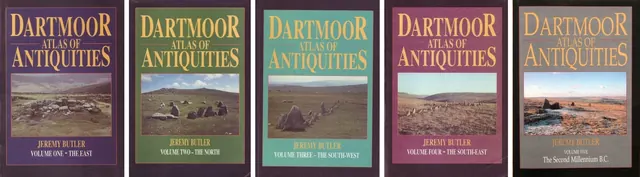
Author of the five-volume Dartmoor Atlas of Antiquities (Devon Books, 1991 to 1997) and first recipient of the Dartmoor Society Award, in 1998.
 Photograph by Glavind Strachan Photography
“I was going to a little world, isolated, away from the madding crowd, and with miles of wild moorland, and rushing streams, which whispered, the former of snipe, plover and woodcock, the latter of salmon and trout.”
Also on Our DartmoorOwlacombe Burrow Rock — Owlacombe Burrow Rock is a non-gneissic rock face located near Haytor Vale, standing about 400 metres east of the minor road to Manaton.
