
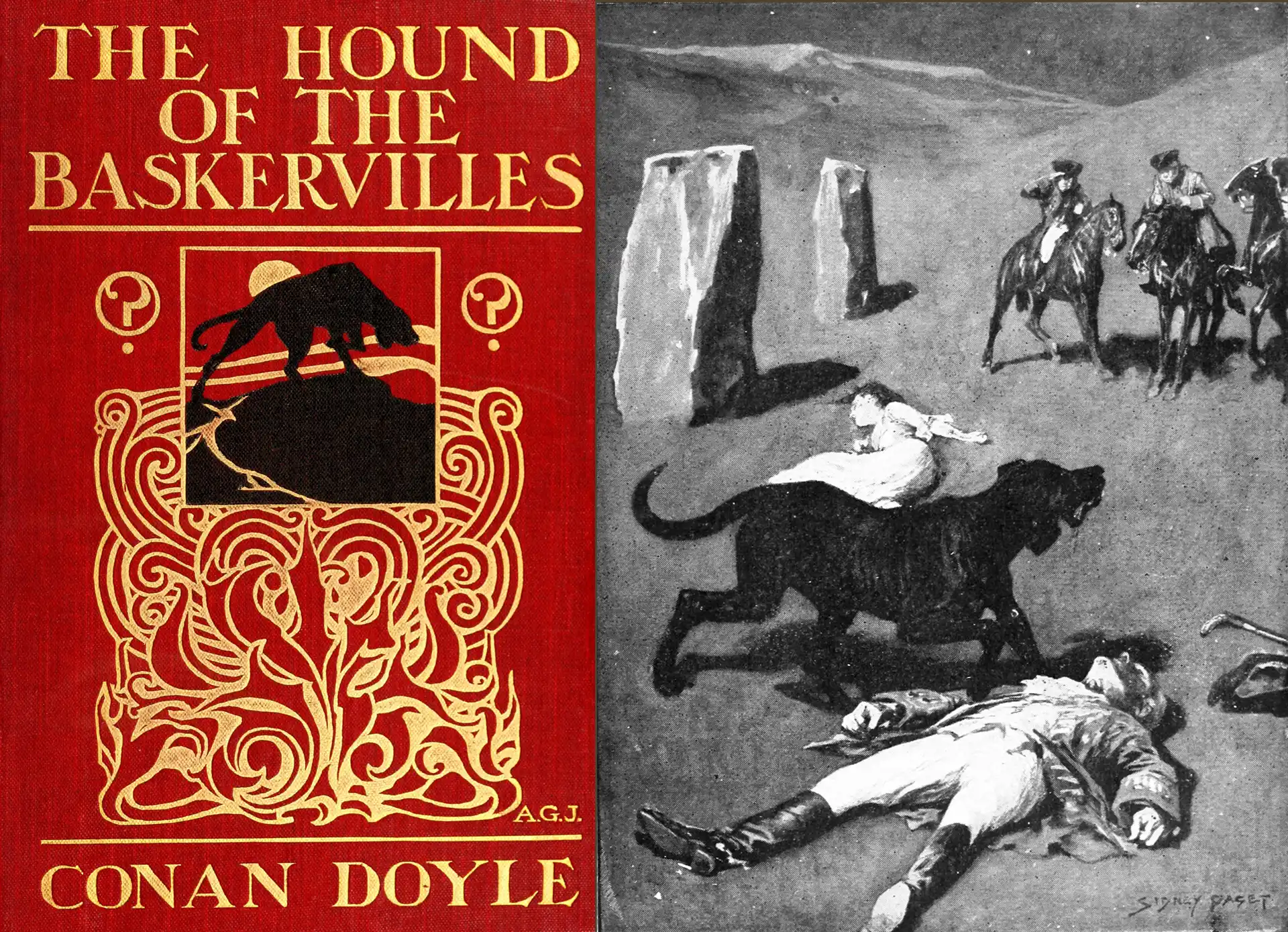
In the summer of 1901, a doctor-turned-novelist checked into the Duchy Hotel in Princetown with fourteen miles of moor still in his boots. He was there to write a ghost story, and the man who had led him onto the moor to find one was a Devon journalist half his age who grew up on its edge.
Arthur Conan Doyle and Bertram Fletcher Robinson had met the year before, coming home from the Boer War on the same ship. Robinson, a journalist who grew up on the edge of the moor, had spent his childhood hearing its ghost stories - according to History Today's account, Doyle "listened eagerly to my stories of the ghost hounds, of the headless riders and of the devils that lurk in the hollows - legends upon which I had been reared, for my home lay on the borders of the moor." In the spring of 1901 the two men were on a golfing holiday together in Norfolk when a storm drove them indoors, and Robinson began telling Doyle about a phantom hound.
The trip to Dartmoor
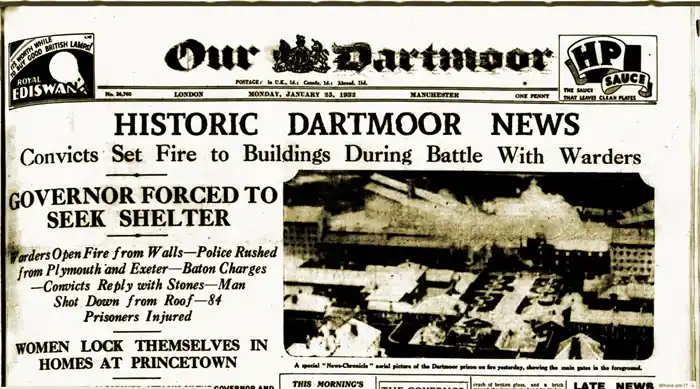
Doyle went to see the moor for himself. He and Robinson stayed partly at Robinson's own home and partly at Rowe's Duchy Hotel in Princetown, within sight of the prison whose governor, deputy governor, chaplain and doctor all found reason to call on "Mr Sherlock Holmes" during his stay - to Doyle's visible irritation, by Robinson's account. Doyle wrote to his mother from the hotel that June: "We did 14 miles over the Moor today and we are now pleasantly weary." The building is now the National Park's Princetown visitor centre.
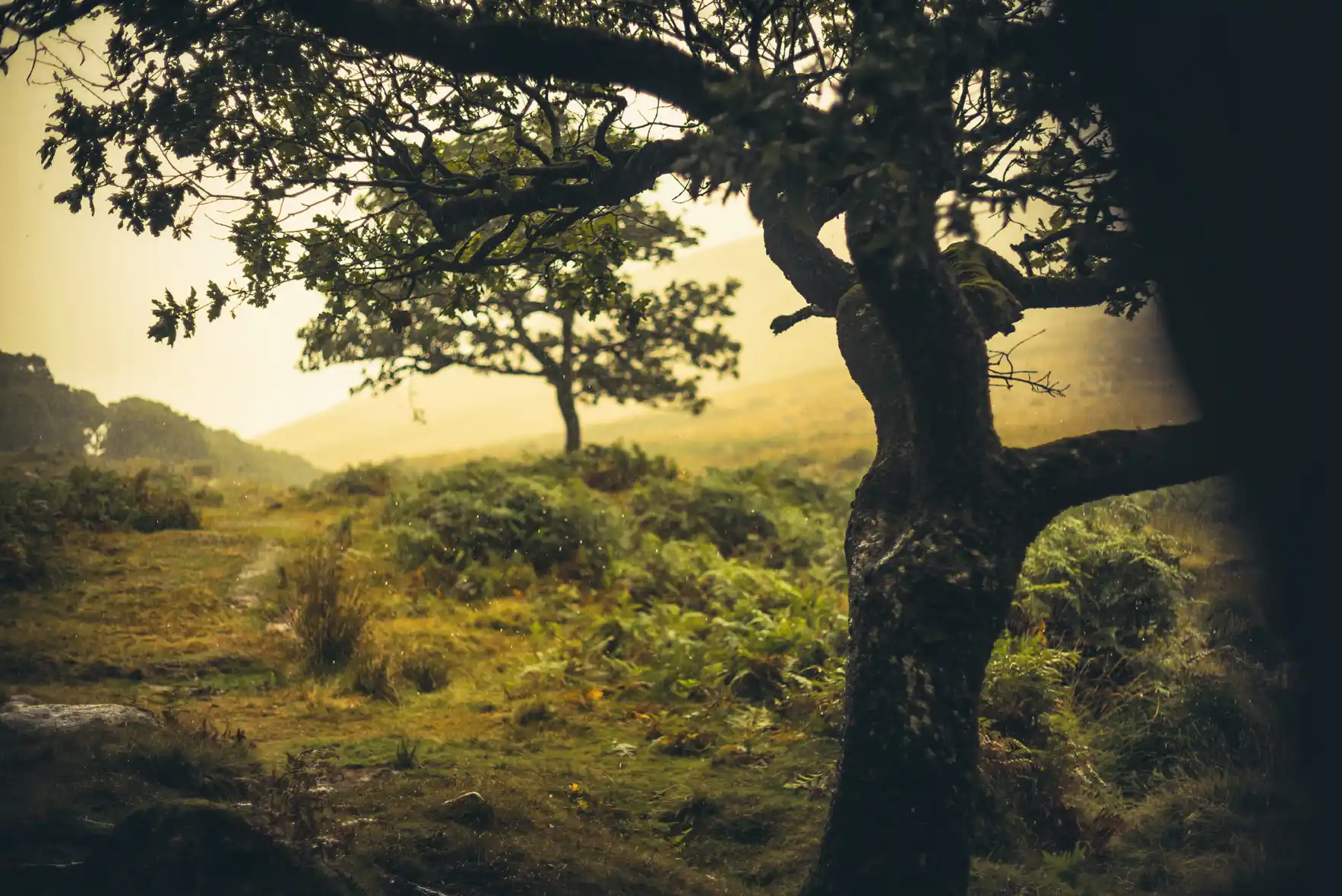
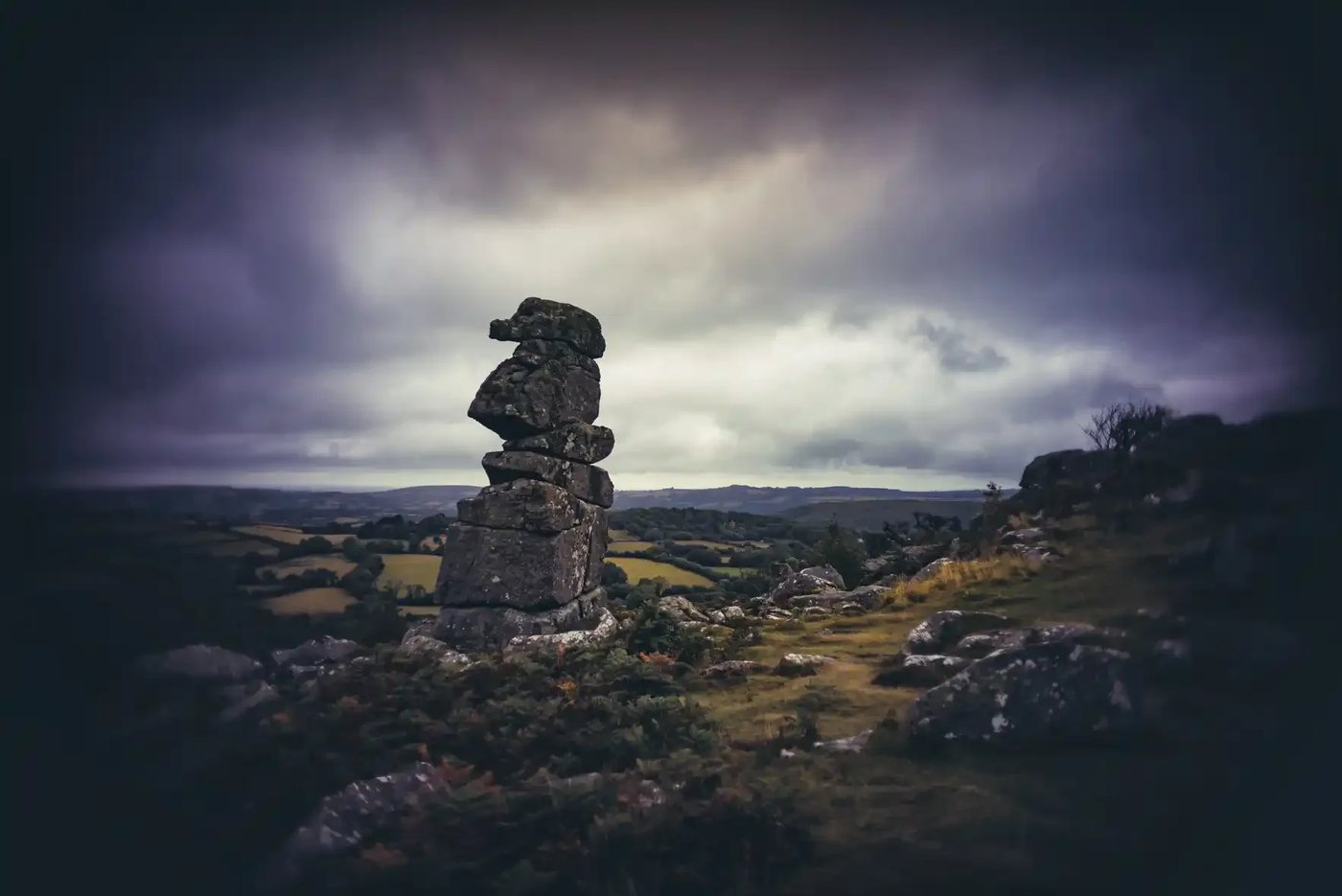
Out on the moor, real places went into the book more or less as they stood. Fox Tor and its mire, near Whiteworks, are widely said to be the model for the novel's Great Grimpen Mire - a vast, boggy, abandoned tin-working landscape that still unsettles walkers who stray off the path. Which real house became Baskerville Hall is less settled: three candidates on or near the moor's southern edge - Fowelscombe, Hayford Hall and Brook Hall at Buckfastleigh - have all been proposed by different writers, and none matches Doyle's description exactly. It was very possibly not one house but several, filed down into one on the page.
"My dear Robinson, It was to your account of a West-Country legend that this tale owes its inception. For this and for your help in the details all thanks. Yours most truly, A. Conan Doyle."
— dedication, The Hound of the Baskervilles (1902)
Whose legend was it?
The specific legend Robinson told Doyle has never been pinned down for certain, and Doyle's own later account of it is careful not to name anyone. Writing after the book's success, he said only that his story "was really based on nothing save a remark of my friend Fletcher Robinson's that there was a legend about a dog on the Moor connected with some old family." No location, no name.
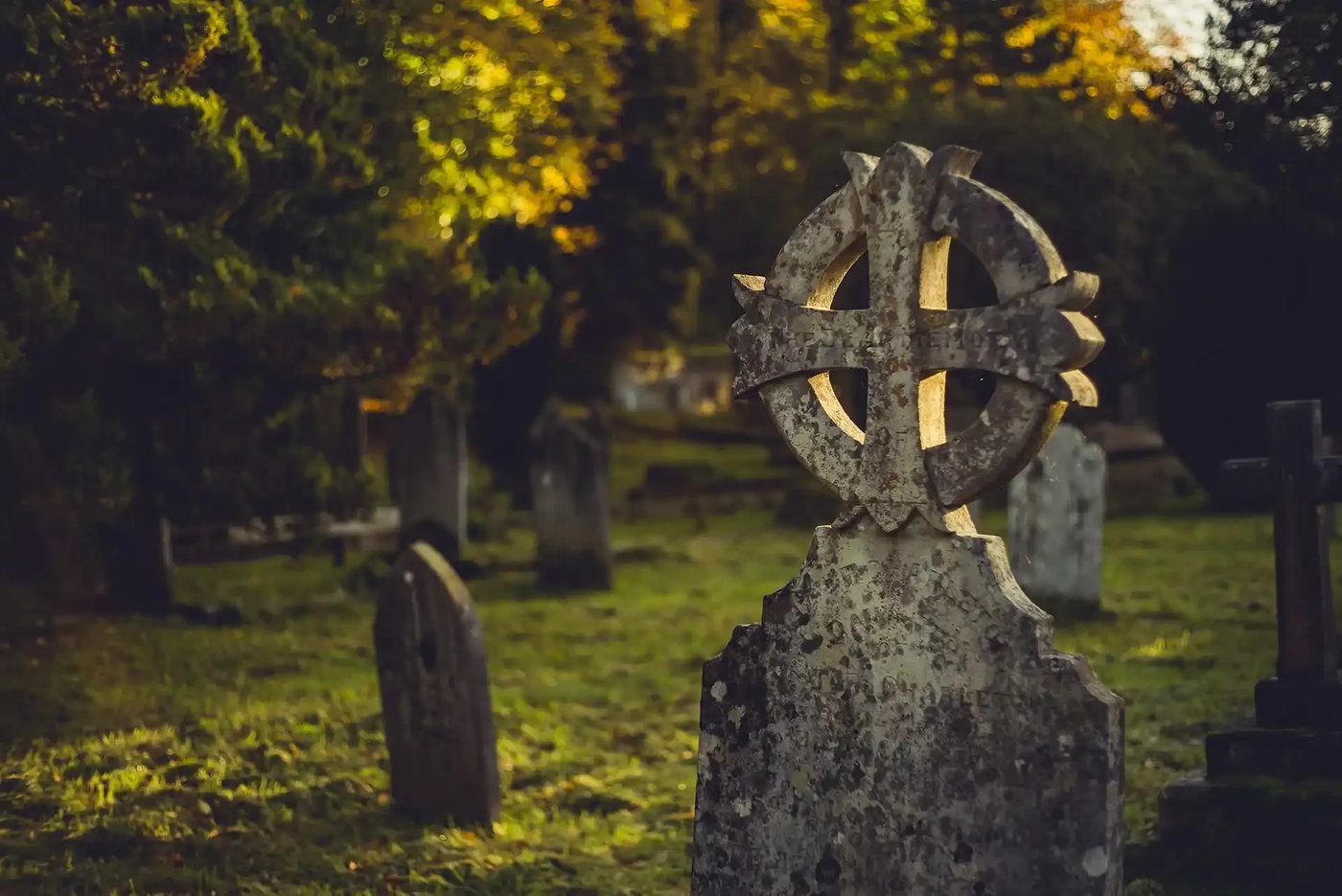
The legend most often connected to the book belongs to Squire Richard Cabell of Brook Hall, near Buckfastleigh, who died in 1677 with a reputation bad enough that his neighbours built a stone "penthouse" over his tomb, with iron bars across the front, to keep him in. A phantom pack was said to come baying across the moor the night he was buried, and to run with him still. The folklorist Sabine Baring-Gould recorded the tomb and the story in 1907 - the same year Doyle wrote his vague account above. The Cabell tomb is a real, listed structure and still stands in the churchyard at Buckfastleigh. Whether it is genuinely the legend Robinson told Doyle, or a story later Sherlockians and tour guides have attached to the book because it fits so well, is not something either man ever confirmed in writing. Treat it as the leading candidate, not a settled fact.
Credit, and what happened to it
Doyle originally wanted Robinson's name on the book with his own - he told his editor "I must do it with my friend Robinson and his name must appear with mine." That didn't happen. When the story began its serial run in the Strand Magazine in August 1901, running through to April 1902, it carried a footnote instead: "This story owes its inception to my friend, Mr. Fletcher Robinson, who has helped me both in the general plot and in the local details." The book followed in March 1902, dedication and all.
Robinson never publicly objected, but he didn't entirely let it go either - a byline on one of his own later books described him as "Joint author with Sir Arthur Conan Doyle in his Best Sherlock Holmes Story The Hound of the Baskervilles." He died young, in January 1907, officially of typhoid and peritonitis after a visit to Paris. A writer's theory in 2000 that Doyle had poisoned him over the credit dispute led to a request to exhume his grave; Exeter's Consistory Court rejected it in 2008. There is no evidence for the poisoning claim beyond the theory itself.
Arthur Conan Doyle never lived on Dartmoor and never claimed to. What he took from it was a fortnight's walking, a friend's stories, and a hotel with a very good view of the prison. The Hound of the Baskervilles is the only Sherlock Holmes novel with a real moor for a setting, and it is Fletcher Robinson's moor as much as Doyle's.