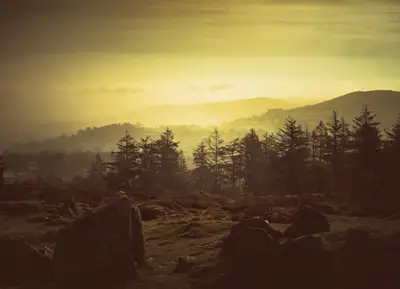
Photo © Ruth Sharville, CC BY-SA 2.0, via Wikimedia Commons
Bonehill
Bonehill is a hamlet about 1 km (under a mile) north-east of Widecombe-in-the-Moor church, in the parish of Widecombe, on the eastern side of Dartmoor. It is a cluster of old farmsteads with granite longhouses. The earliest record found by E H T Whitten, whose 2009 book on the hamlet is the main study of it, is of the children of John Smerdon being born there in 1570. Whitten's records run through the mid-nineteenth century, and the book includes ownership tables for 1680 to 1750.
A second book, Tim Whitten's The Lords of Widecombe and Farmers of Bonehill, was published by the Widecombe History Group in 2019. In the 1980s the Dartmoor National Park Authority recovered a collection of horse-drawn farm vehicles from Bonehill, which later belonged to Jim Ford. The Devonshire Association reviewer Tom Greeves noted that the 2009 book has no index and some typing errors.
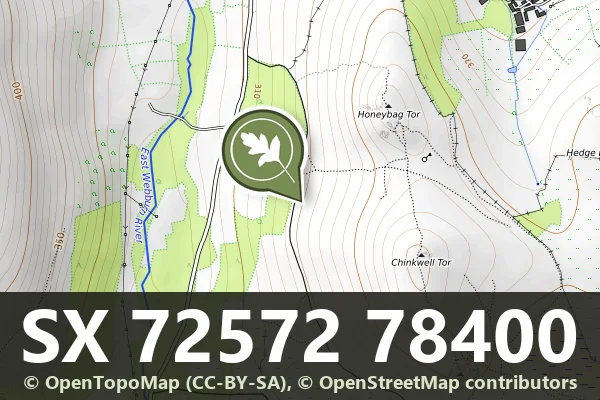
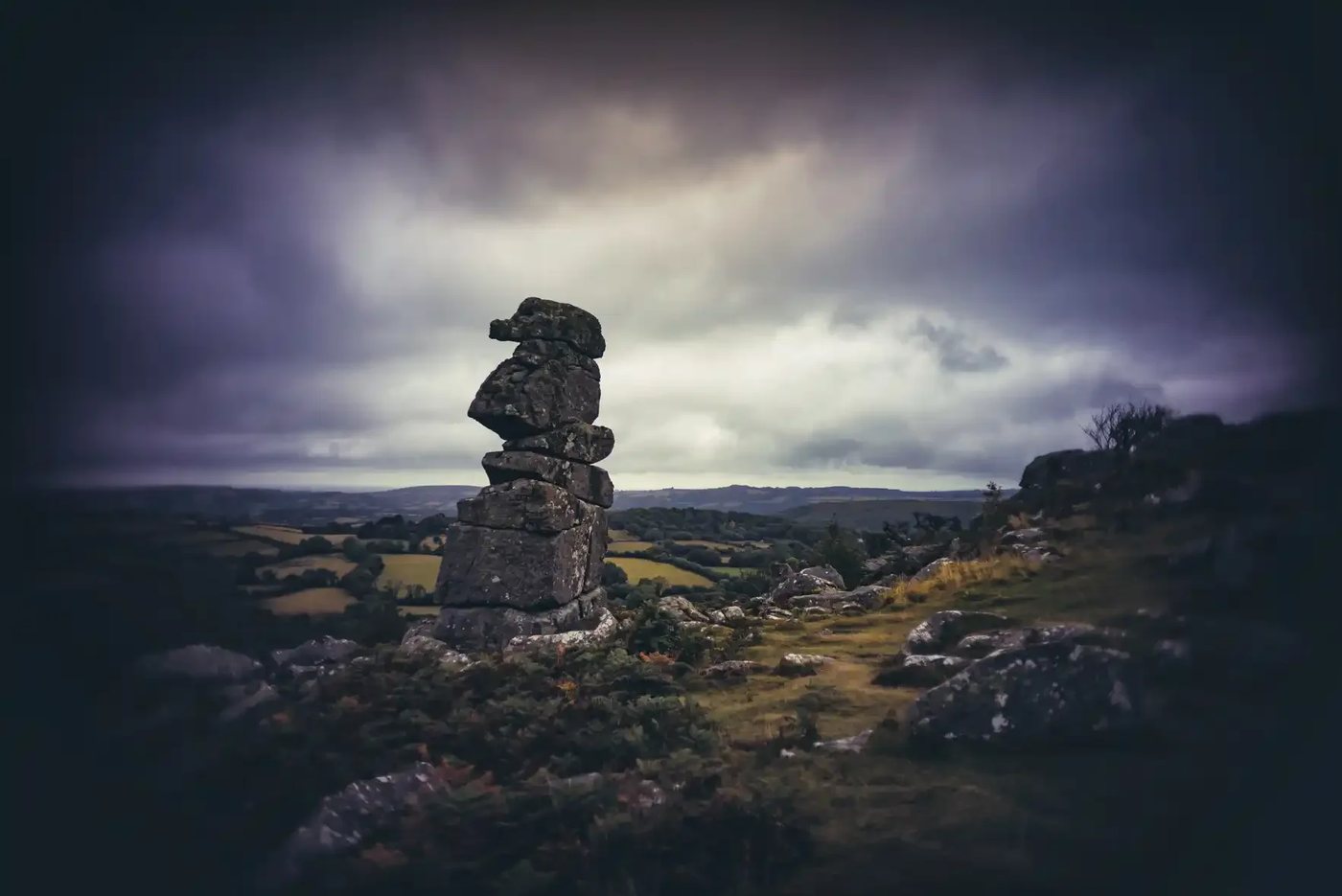
Bonehill Rocks, a granite outcrop at 393 metres above the hamlet, overlook the East Webburn River and Widecombe. They are used for climbing and bouldering, and three car parks are close by. The ridge continues north with Bell Tor, Chinkwell Tor and Honeybag Tor. The name of the rocks is uncertain. They may be the 'Charbetor' on Colonel Mudge's 1809 Ordnance Survey map, but William Crossing's work suggests that name belongs to Sharp Tor near Chinkwell.
Bonehill on the map
In Bonehill
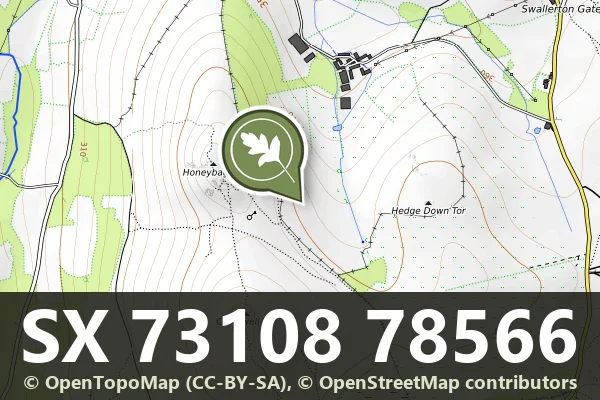
Hut Circle E of Honeybag Tor
Bonehill, Moretonhampstead
Bronze Age stone foundations on open moorland, where Dartmoor's earliest inhabitants built shelter against wind and weather.
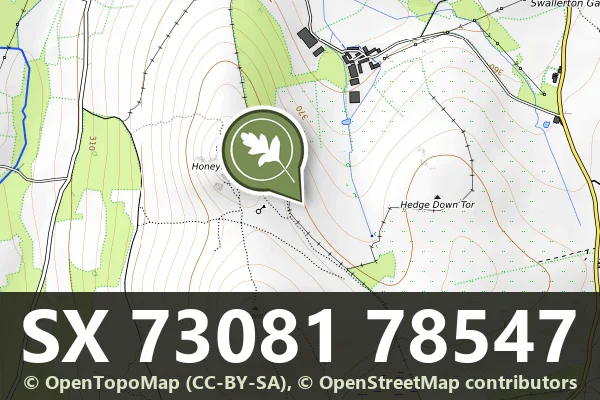
Hut Circle SE of Honeybag Tor
Bonehill, Moretonhampstead
Bronze Age foundations set into Dartmoor's granite bedrock, where ancient families sheltered within circles of stone.